
How Much Power Can One Wind Turbine Produce
Ever wondered how much juice one of those giant windmills can actually make? It's kind of mind-blowing when you think about it.
We're talking about wind turbines, of course! Those towering structures are converting wind energy into electricity. How much, exactly? Let's dive in.
Wind Turbine Power: A Big Range
The power a single wind turbine can generate varies wildly. Think of it like cars. A tiny little electric car isn't going to have the same power as a huge pickup truck, right?
Must Read
Wind turbines are similar. Size, blade length, and wind speed all play a huge role.
Small Turbines: Powering a Home
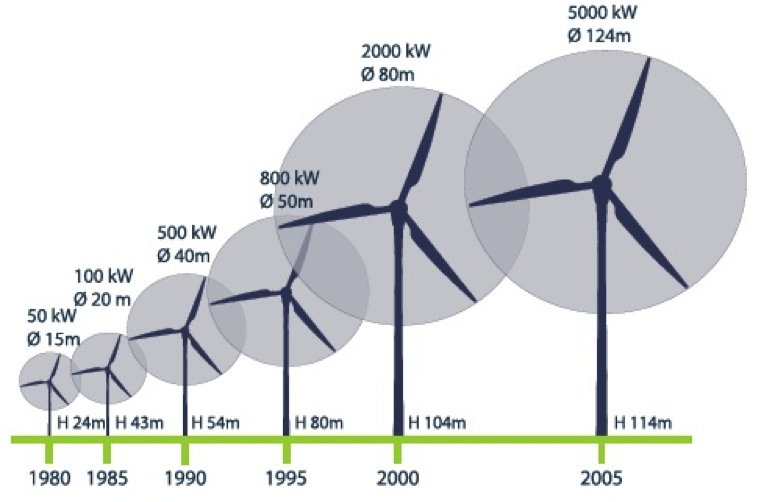
Let's start small. Tiny turbines are great for powering individual homes or small businesses. These might generate anywhere from a few kilowatts (kW) to maybe 100 kW.
A kilowatt is a unit of power. Think of it as how quickly energy is being used or generated.
Imagine a small turbine happily spinning away, keeping your lights on and your fridge humming. Neat, huh?
Utility-Scale Turbines: The Big Players
Now, let's talk about the giants! These are the turbines you see in wind farms. They are what can give you the chills. These massive machines can generate serious power.
We're talking megawatts (MW) here. One megawatt is equal to 1,000 kilowatts. So, these bad boys are producing a lot of energy.
A single utility-scale turbine can typically produce anywhere from 2 MW to 8 MW! Isn't that impressive?
Factors Affecting Power Output
It's not as simple as just slapping up a turbine and watching the electricity flow. Several factors affect how much power a turbine actually churns out.
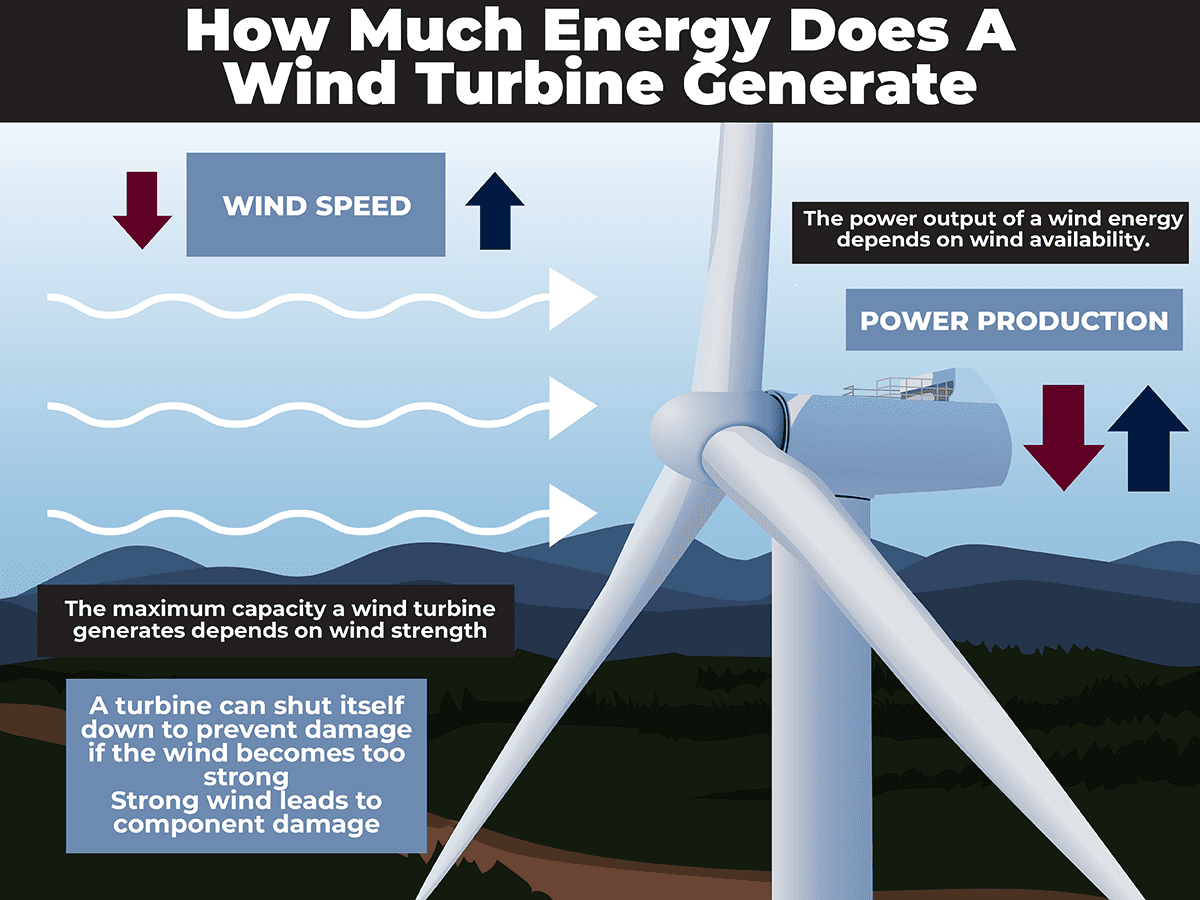
Wind speed is the biggest one. Duh! No wind, no power. The faster the wind, the more power the turbine generates. It's all about that kinetic energy!
Turbine size also matters. Bigger blades capture more wind. Taller towers reach stronger, more consistent winds. It's like finding the perfect spot for a kite!
Wind Speed: The Key Ingredient
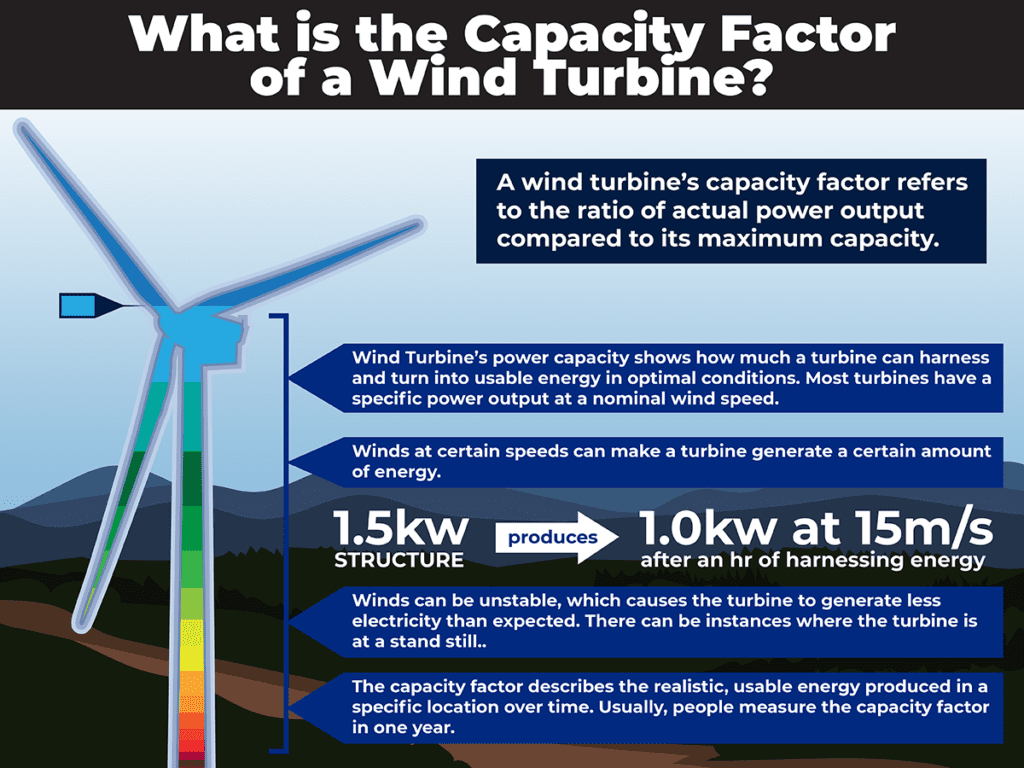
Wind speed isn't constant. It changes throughout the day and year. Turbines don't produce their maximum power all the time.
They have something called a "capacity factor." This is the percentage of time a turbine actually operates at its maximum potential. This is usually around 30-50%.
So, even though a turbine can produce 5 MW, it might only average 1.5-2.5 MW over the long term. Mother nature is always in charge!
Location, Location, Location
Where you put a wind turbine matters a lot! Windy areas are obviously the best. Think open plains, hilltops, and coastal regions.

Offshore wind farms are becoming increasingly popular. The wind is stronger and more consistent out at sea. It can be more expensive, but it is often worth the investment.
Imagine the raw power of the ocean winds being harnessed to power our cities! Epic.
What Does That Power Actually Do?
Okay, so a wind turbine makes a few megawatts. But what does that actually mean? How many homes can it power? Great question!
A typical American home uses around 10,000 kilowatt-hours (kWh) of electricity per year. Now, let's do some math!
A 3 MW wind turbine with a 35% capacity factor can generate roughly 9,200,000 kWh per year. Divide that by 10,000 kWh per home, and you get 920 homes!
Powering a Community
So, a single 3 MW turbine can power almost a thousand homes. Pretty cool, right? Wind farms can have dozens, even hundreds, of turbines.
Think about the impact. Wind energy is a clean, renewable source of power. It helps reduce our reliance on fossil fuels. It also helps combat climate change!
It's like having a superpower that helps protect the planet. You can't directly see it, but it's there working hard.
The Future of Wind Power
Wind power is only getting bigger and better. Technology is improving all the time.
Turbines are becoming more efficient. They are able to capture more wind energy. Innovations in blade design and tower height are making a big difference.
We're also seeing more offshore wind farms being developed. These projects have the potential to generate vast amounts of clean energy.
Bigger, Better Turbines
Imagine turbines that are even taller and more powerful than what we have today! Some experimental turbines are already pushing the boundaries of what's possible.
Think of giant turbines that can generate 12 MW or more! These behemoths could power thousands of homes with a single machine.
The future of wind power is bright! Wind energy is a key part of our transition to a cleaner, more sustainable energy future.
Wind Energy: It's Kind of a Big Deal
So, how much power can one wind turbine produce? It depends! But even the smallest turbines can make a difference.
The bigger turbines are real powerhouses, capable of powering hundreds or even thousands of homes.
Wind energy is a clean, renewable resource that's helping us create a brighter future. Isn't that something to get excited about?
Next time you see a wind turbine, take a moment to appreciate the technology. Remember the sheer amount of power it's harnessing from the wind!
Who knows, maybe you'll even be inspired to learn more about renewable energy. The possibilities are endless!
Consider this, wind energy isn't just some futuristic idea. It's happening right now and is a major player in today's and tomorrow's electricity generation portfolio!
So, there you have it! From powering a single home with a small turbine to powering a small town with a larger one, wind turbines provide clean and reliable energy. Check it out sometime!