
How Much Power Can Be Generated By A Wind Turbine
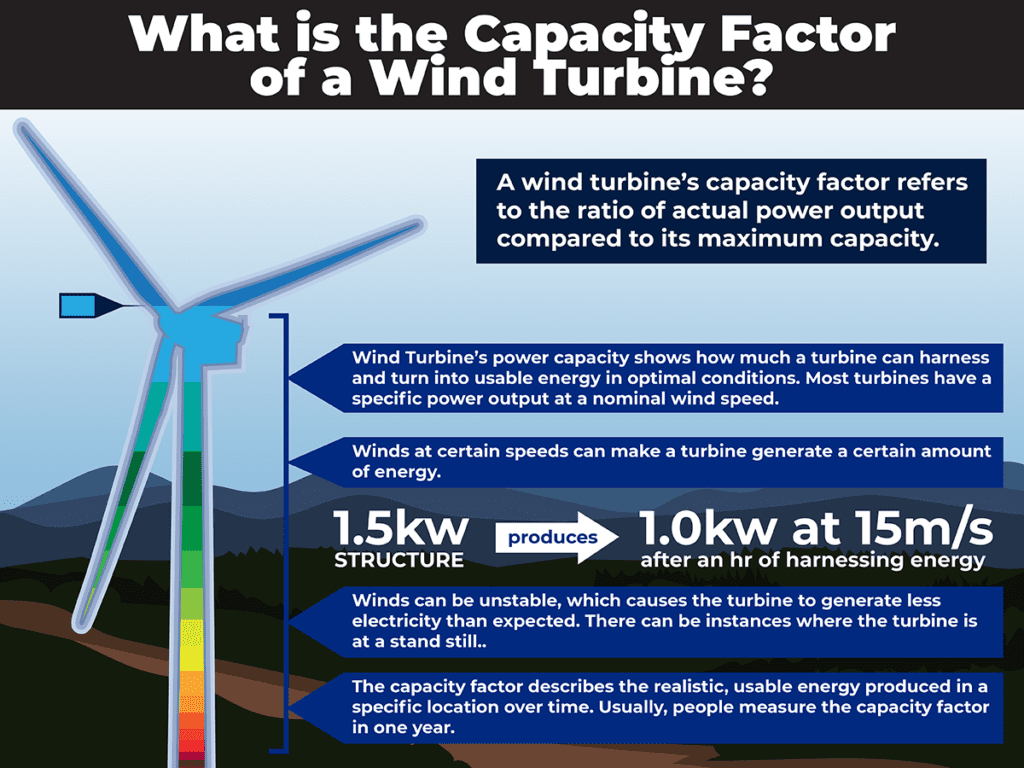
Ever looked at a wind turbine and wondered, "Wow, how much juice can that thing actually make?" It's a fascinating question! These modern marvels are spinning constantly, harnessing the wind's energy. But translating that wind into usable electricity? That's where the magic happens.
Size Matters (And So Does Location!)
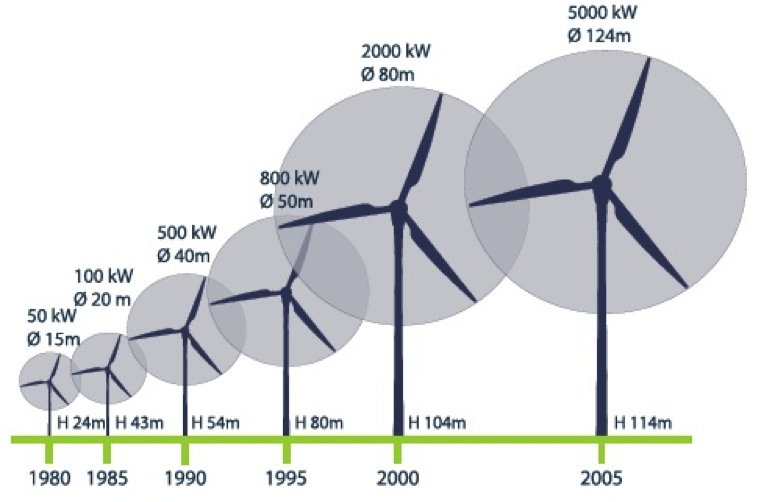
Think of it like this: a tiny toy windmill won't power your house, right? Wind turbine power output depends heavily on size. The bigger the blades, the more wind they can catch. A typical home wind turbine, the kind you might see on a farm, might generate enough electricity for a single household. We're talking somewhere in the range of 5 to 15 kilowatts (kW).
But the real powerhouses are the utility-scale turbines you see in wind farms. These behemoths can generate megawatts (MW) of electricity! One megawatt is a thousand kilowatts. A single, modern utility-scale turbine can often produce 2 to 5 MW. That's enough to power hundreds, sometimes even thousands, of homes!
Must Read
And it's not just about size. Location is crucial. A wind turbine stuck in a valley with barely any breeze won't do much good. They need consistent, strong winds to really crank out the power. That's why you see wind farms in places like wide-open plains, coastal areas, or on mountaintops. Think of places like the Great Plains in the US, or the blustery coastlines of Europe. These spots are prime real estate for wind energy.
More Than Just Blades: The Engineering Wonders
It's easy to focus on the spinning blades, but there's a whole lot of tech happening inside that tower. A gearbox (in some designs) increases the rotational speed of the blades to a speed suitable for the generator. Then, the generator converts that mechanical energy into electrical energy. It's all incredibly efficient and designed to maximize power production.
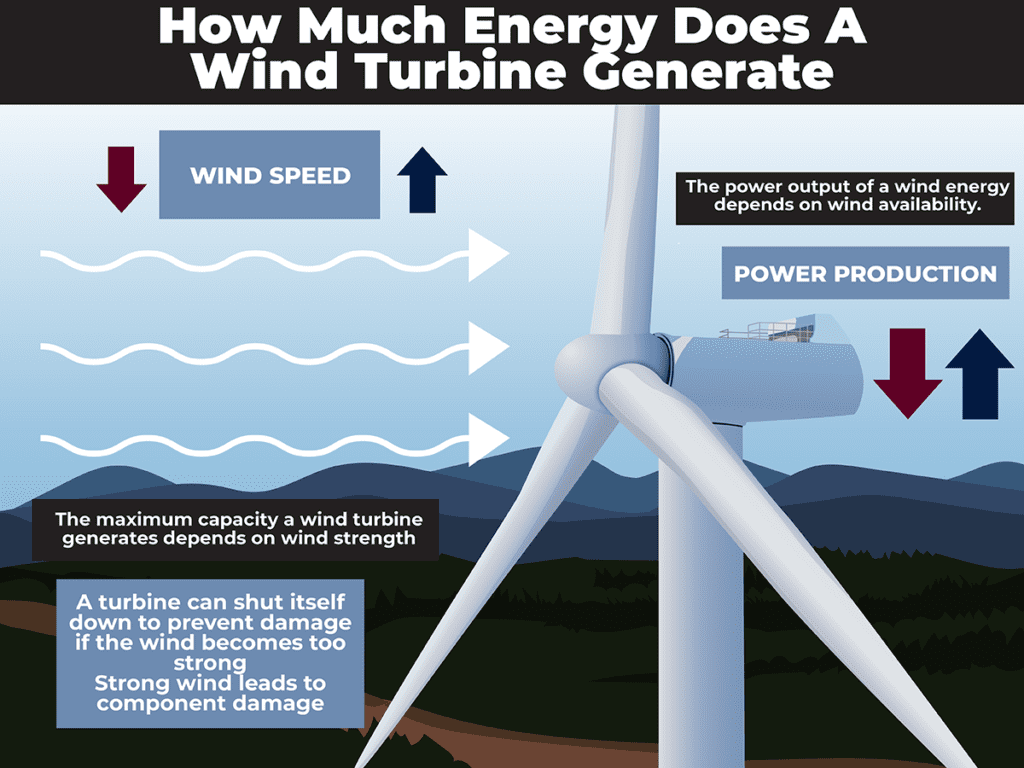
Modern wind turbines also have sophisticated control systems. These systems can adjust the angle of the blades to optimize energy capture. They can even shut the turbine down during extreme weather conditions to prevent damage. It's not just a giant fan; it's a smart piece of engineering.
"The beauty of wind energy is that it's a clean, renewable resource,"said Dr. Eleanor Vance, a leading wind energy researcher. "And as technology improves, we're able to extract more and more power from the wind."
The Fun Factor: Watching the Power Spin
Okay, let's be honest. There's something undeniably cool about watching a wind turbine spin. It's like a giant, elegant dancer gracefully moving with the wind. Knowing that each rotation is generating clean electricity adds another layer of awe. It's a tangible reminder that we can harness the power of nature to fuel our lives.

Think about it: you're driving down the highway and see a field of wind turbines. Each one is silently working, converting an invisible force into something useful. That's a pretty amazing feat of engineering and a symbol of our commitment to a sustainable future.
The amount of power a wind turbine can generate is truly astounding. From powering a single home to lighting up an entire city, these machines are playing a crucial role in our energy future. So next time you see one, take a moment to appreciate the science, the engineering, and the sheer power of the wind!
Why is this important to know?
Understanding the capabilities of wind turbines isn't just a fun fact. It helps us appreciate the potential of renewable energy and make informed decisions about our energy future. Knowing that a single turbine can power hundreds of homes can shift our perspective on the value of clean energy sources.
Wind power is continually advancing. New designs, taller towers, and even floating wind farms are pushing the boundaries of what's possible. Keep an eye on this exciting field; it's only going to get more powerful!
So, the next time someone asks you, "How much power can a wind turbine generate?" you can confidently answer, "A whole lot!" And maybe even spark a conversation about the amazing potential of wind energy.
