
How Much Kilowatts Does A Solar Panel Produce
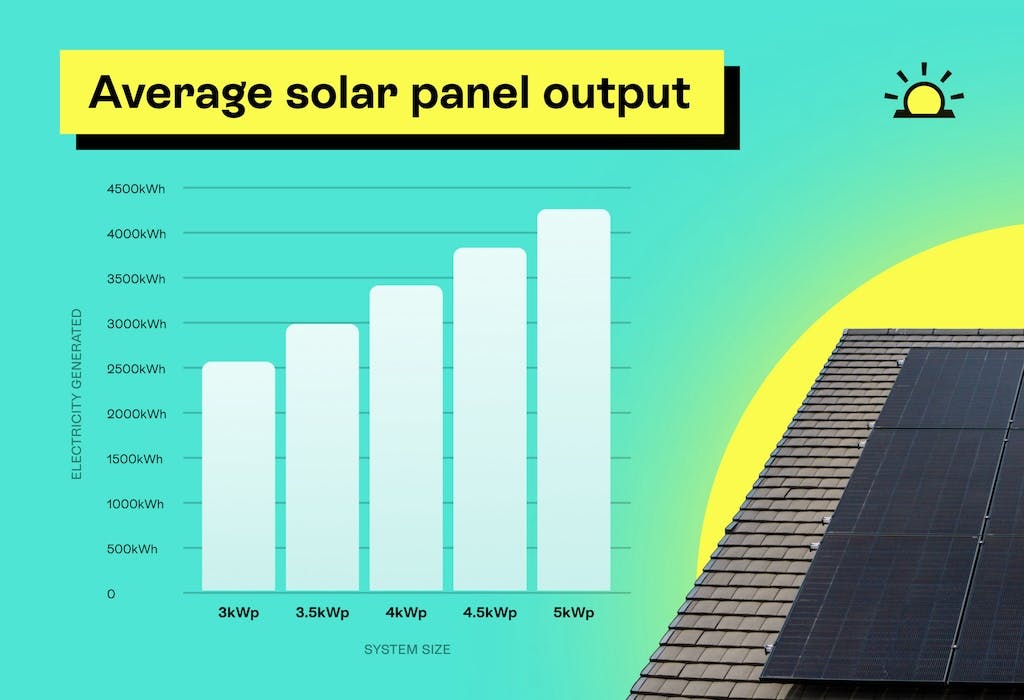
Okay, let's talk solar panels! You're thinking of joining the sunshine-powered revolution? Awesome! But maybe you're wondering, "How much juice does one of those sparkly rectangles actually make?"
Think of it like this: a solar panel is like a tiny, tireless, sunlight-munching robot. But instead of munching metal, it's converting photons (sunlight particles) into sweet, sweet electricity! And the question becomes, how much electricity?
The Kilowatt Question: Let's Break it Down
The answer isn't as simple as "one panel equals X kilowatts." It depends on a bunch of factors, like a solar panel's age, location, and the time of day.
Must Read
First, let’s get our terms straight. We're talking about kilowatts (kW), which is a measure of power. Think of it like the speed of your electricity.
Think of a light bulb. If you had ten 100-watt light bulbs turned on, that’s 1000 watts or 1 kW! Simple, right?
Nameplate Power: The Ideal Scenario
Every solar panel has a "nameplate power" rating. This tells you the maximum kW it can produce under ideal conditions.
Imagine a perfect day: bright sunshine, cool temperatures, and the panel perfectly angled towards the sun. The manufacturer basically tested the panel in their sunny dreamland laboratory.
Most residential solar panels these days are rated between 300 watts to 400+ watts. That's 0.3 kW to 0.4 kW per panel at peak performance.
Real-World Production: A Bit More Nuanced
But… (there's always a "but," isn't there?) Real life isn't a sunshine-filled dreamland laboratory. Clouds happen. Shadows creep in.
So, in reality, a 350-watt panel probably won't always be cranking out 0.35 kW. It's more like it can reach that peak, but the average output will be lower.
Think of it like your car's MPG. Your car can get 40 MPG on the highway, but in city traffic? More like 25! Same idea with solar panels.
Factors Affecting Solar Panel Output
So, what are these sneaky factors that affect how much kW a solar panel spits out?
* Sunlight Availability: This is a no-brainer. More sun = more power. A panel in sunny Arizona will generally produce more than a panel in rainy Seattle.* Panel Angle and Orientation: Solar panels are happiest when they're facing the sun directly. An angle that chases the sun throughout the day is ideal.* Temperature: Believe it or not, solar panels actually work better in cooler temperatures. Excessive heat can reduce their efficiency.* Shading: Shade is the enemy! Even a little bit of shade can significantly reduce a panel's output.* Panel Age: Like all things, solar panels degrade over time. Their output gradually decreases, usually by a small percentage each year.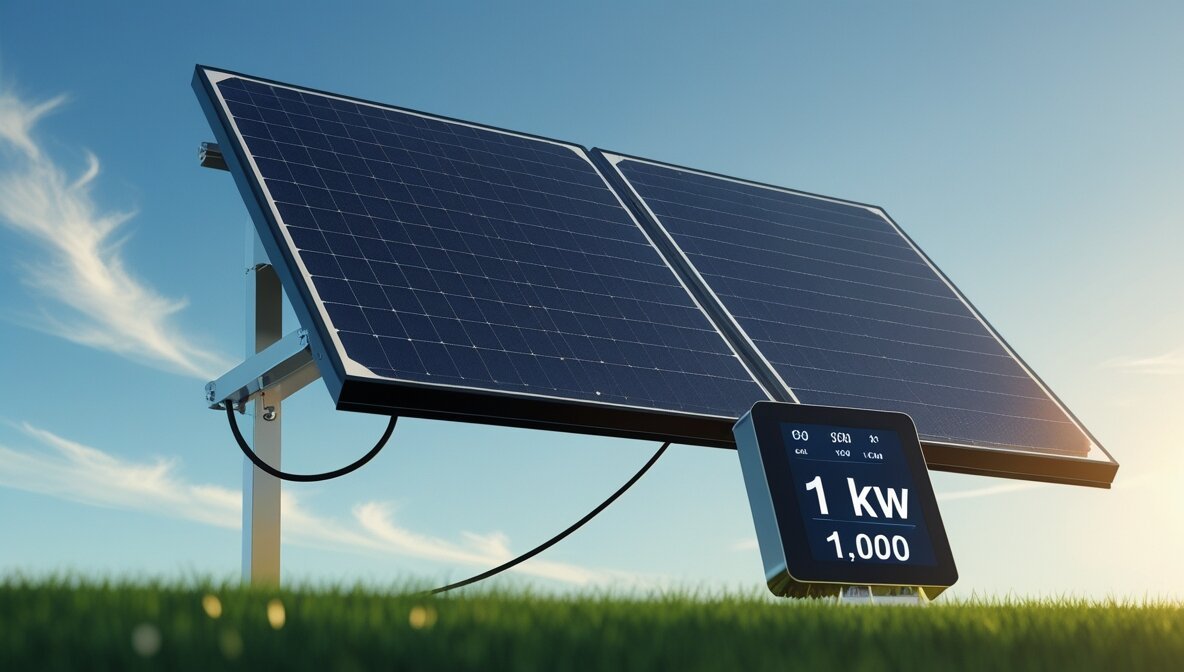
Location, Location, Location
Your location plays a huge role. San Diego, California, will yield significantly more electricity than, say, Bangor, Maine.
But don't despair if you don't live in the sunniest place on Earth! Solar panels can still be a great investment even in less sunny climates. It just might take more panels to get the same amount of power.
Angle and Orientation: Chasing the Sun
Ideally, your panels should be angled and oriented to maximize sunlight exposure. In the northern hemisphere, that usually means facing south.
Some fancy solar systems even have trackers that automatically adjust the panel's angle throughout the day, like a sunflower following the sun. Pretty cool, right?
Temperature: Cool Under Pressure (or Sunlight)
It seems counterintuitive, but solar panels prefer cooler temperatures. When they get too hot, their efficiency drops.
That's why good ventilation around the panels is important. This allows excess heat to dissipate, keeping the panels running optimally.
Shade: The Solar Panel's Kryptonite
Shade is the mortal enemy of solar panels. Even a small amount of shade can drastically reduce a panel's output.
Before installing solar panels, carefully assess your roof for any potential shading from trees, chimneys, or other structures.
Panel Age: The Inevitable Decline
Like all technology, solar panels degrade over time. Their output gradually decreases, typically by a small percentage each year.
Most solar panels come with a performance warranty that guarantees a certain level of output for a specified period, like 25 years.
So, How Much Will One Panel Produce?
Okay, back to the original question. Let's say you have a 350-watt panel in a moderately sunny location.
On an average day, that panel might produce around 1.4 kilowatt-hours (kWh) of electricity. Remember, kilowatt-hours are a measure of energy use, like how much electricity you use in a month. Kilowatts are how fast you can use that electricity.
One kWh is about enough to run your fridge for a few hours, or watch TV for quite a while! This 1.4 kWh depends on a lot of factors.
Now, imagine you have ten of those panels! That's 14 kWh per day, on average. That can make a big difference in your electricity bill!
Estimating Your Solar Needs
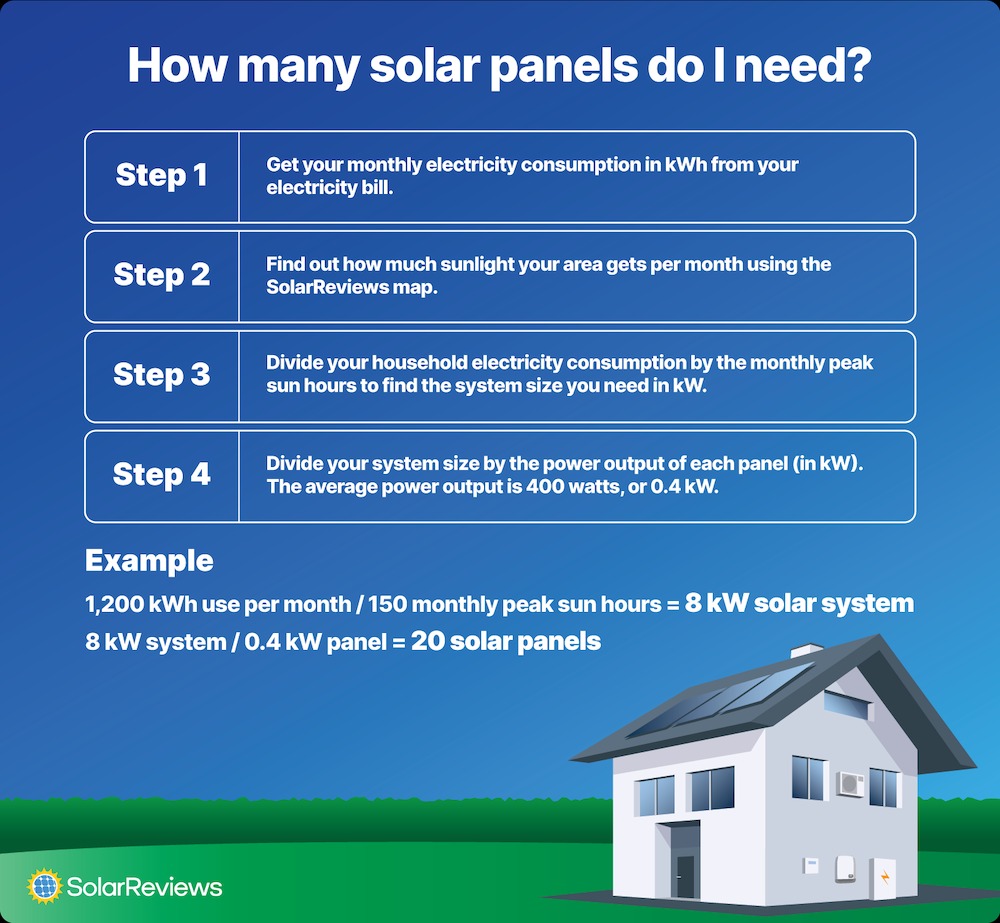
The best way to figure out how many panels you need is to look at your electricity bill. How many kWh do you use each month?
A solar installer can help you estimate how many panels you'll need to offset your electricity consumption based on your location, roof orientation, and other factors.
Don't be afraid to get multiple quotes from different installers! Compare their estimates and ask lots of questions.
The Bottom Line: Solar Panels Are Awesome!
While it's tough to give a precise kW number for a single solar panel, hopefully you now have a better understanding of the factors involved.
Solar panels are a fantastic way to generate clean, renewable energy and save money on your electricity bill. And help to combat the worst effects of climate change!
So, go forth and embrace the power of the sun! You won't regret it.
Disclaimer: This article is intended for general informational purposes only and does not constitute professional advice. Consult with a qualified solar installer for personalized recommendations.