
How Much Is An Average Electricity Bill Per Month

Hey friend! Ever stare at your electricity bill and wonder if you're powering a small city with just your Netflix binging and fridge's late-night snack parties? You're not alone! Everyone asks, "What's a normal electricity bill anyway?" Let's dive in and demystify those kilowatt-hours.
The Big Picture: Averages, Averages Everywhere!
Okay, so the average electricity bill in the US dances around $175 per month. But hold on! Before you panic (or pat yourself on the back), remember that's just an average. Think of it like saying the average height is 5'9". That doesn't mean everyone is 5'9"! (I wish, says me, standing at a modest 5'4").
This average is influenced by a ton of things. We're talking location, location, location! And not just because it sounds cool like in real estate. Your climate makes a HUGE difference. Are you sweating through a scorching summer in Arizona? Or bundled up against the frosty winds of Maine? Your air conditioner and heater are energy hogs, plain and simple. They’re like the teenage boys of the appliance world: always eating, never satisfied!
Must Read
What's Eating Up Your Watts? The Usual Suspects
Let’s play energy detective! Who are the usual suspects in your high bill caper?
- Air Conditioning & Heating: We already called them out, but seriously, these are the biggest culprits. Using them efficiently, like setting your thermostat a little higher in summer and a little lower in winter, can save a bundle. Even better, install a smart thermostat for even greater savings!
- Appliances: That old refrigerator you inherited from your great-aunt Mildred? Probably guzzling energy like it’s going out of style. Look for Energy Star appliances when you upgrade. And remember, even seemingly small appliances like your coffee maker and toaster oven add up!
- Lighting: Swapping out those old incandescent bulbs for LEDs is a no-brainer. It’s like giving your wallet a high five every month. Plus, LEDs last forever (almost!).
- Electronics: "Vampire energy!" These are devices that suck power even when they're turned off. Unplug chargers and electronics when not in use. Yes, even your phone charger that's just sitting there doing nothing. It's secretly plotting against your bank account.
Location, Location, Location (Seriously!)
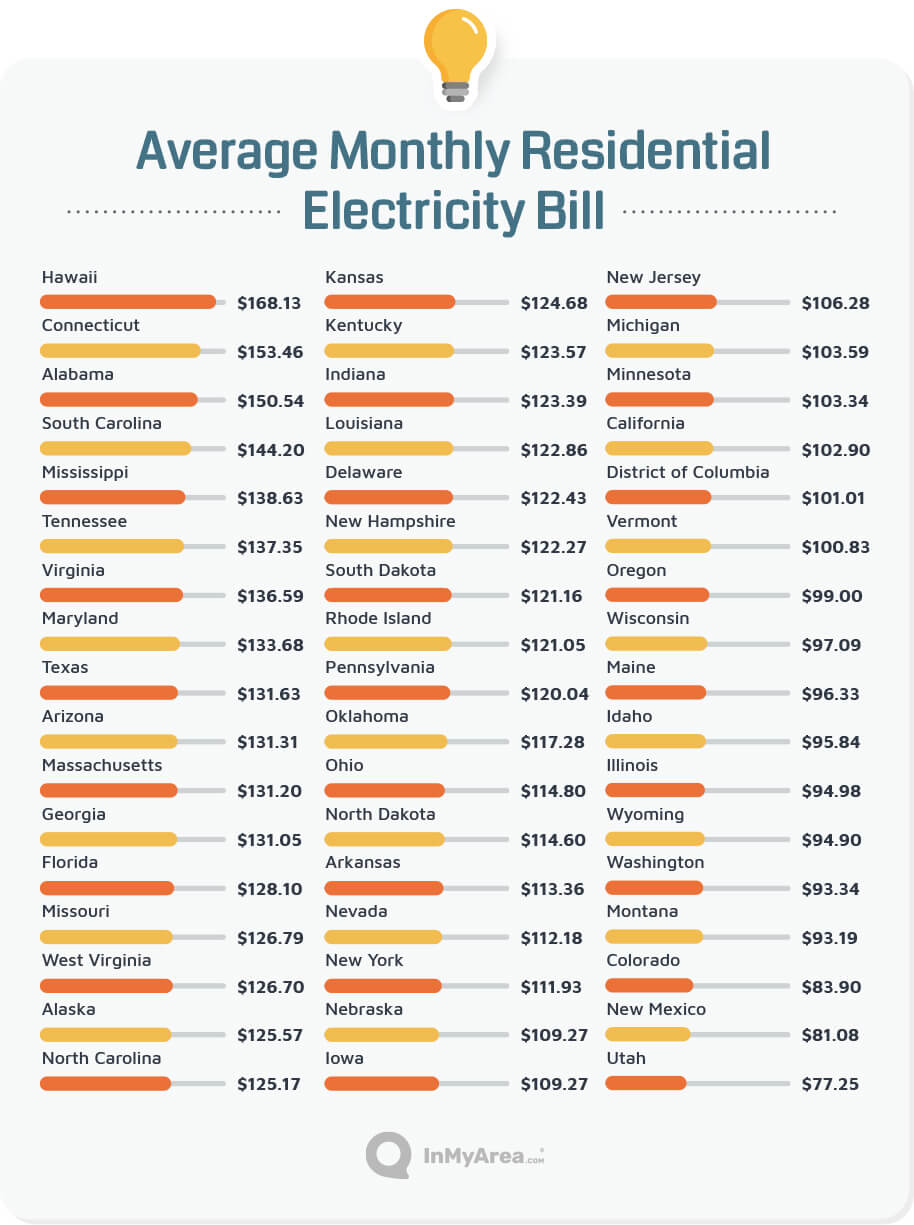
Electricity prices vary wildly across the country. States with abundant and cheap energy sources (like hydropower or natural gas) tend to have lower rates. Think of Washington State with all its dams. States that rely on more expensive sources (like imported fossil fuels) tend to have higher rates. Places like Hawaii pay a premium.

To get a really accurate picture of what’s normal for you, check out average electricity bills in your state. A quick Google search will do the trick!
Beyond the Average: Taking Control!
So, what can you do to rein in those energy costs? Plenty!
.png)
- Conduct an Energy Audit: Many utility companies offer free or low-cost energy audits. They'll come to your home and point out areas where you're losing energy. It's like having a personal energy guru!
- Seal Those Leaks: Caulk around windows and doors to prevent drafts. It's a cheap and easy way to make a big difference. Think of it as giving your house a cozy hug.
- Use Appliances Wisely: Run your dishwasher and washing machine only when they're full. And wash clothes in cold water whenever possible.
- Embrace Natural Light: Open those curtains and let the sunshine in! Who needs artificial light when you've got the real deal? Plus, sunshine is free (and good for your soul!).
The Feel-Good Finale
Look, electricity bills can be a downer, but they don't have to be! By understanding what influences your bill and taking a few simple steps to conserve energy, you can take control and save money. Plus, you'll be doing your part to help the environment. That's a win-win! So, go forth and conquer those kilowatt-hours! You’ve got this!
Remember, even small changes add up. So, celebrate every little victory – like unplugging your phone charger. You’re a champion!
![Average Electricity Bill By State [Infographic] - Best Infographics](https://www.best-infographics.com/wp-content/uploads/2025/03/13/Average-Electricity-Bill-By-State.jpg)