How Much Horsepower For A Garage Door Opener
Okay, let's talk garage doors. Not the most glamorous topic, I know. But stick with me, because figuring out the right horsepower for your garage door opener is like choosing the right-sized engine for your car. Too small, and you'll be sputtering uphill. Too big, and well, you might just be wasting money and energy. So, how much "oomph" do you really need?
Why Horsepower Matters (and Why You Should Care)
Think of your garage door as that one friend who always needs help moving. It's heavy, a bit awkward, and definitely not something you want to lift by yourself. Your garage door opener is the friend with the pickup truck, doing all the heavy lifting. And that lifting power? That's horsepower, my friends. Choosing the right horsepower makes all the difference between a smooth, reliable opening and closing, and a grumpy, struggling opener that sounds like it's about to give up the ghost.
Now, you might be thinking, "Hey, it's just a garage door. Why should I care so much about horsepower?" Well, imagine trying to drive a monster truck with a lawnmower engine. Frustrating, right? The same principle applies here. An underpowered opener will wear out faster, struggle in cold weather, and might even damage your door. An overpowered one is overkill and probably cost you more upfront.
Must Read
Decoding the Horsepower Mystery: What's the Magic Number?
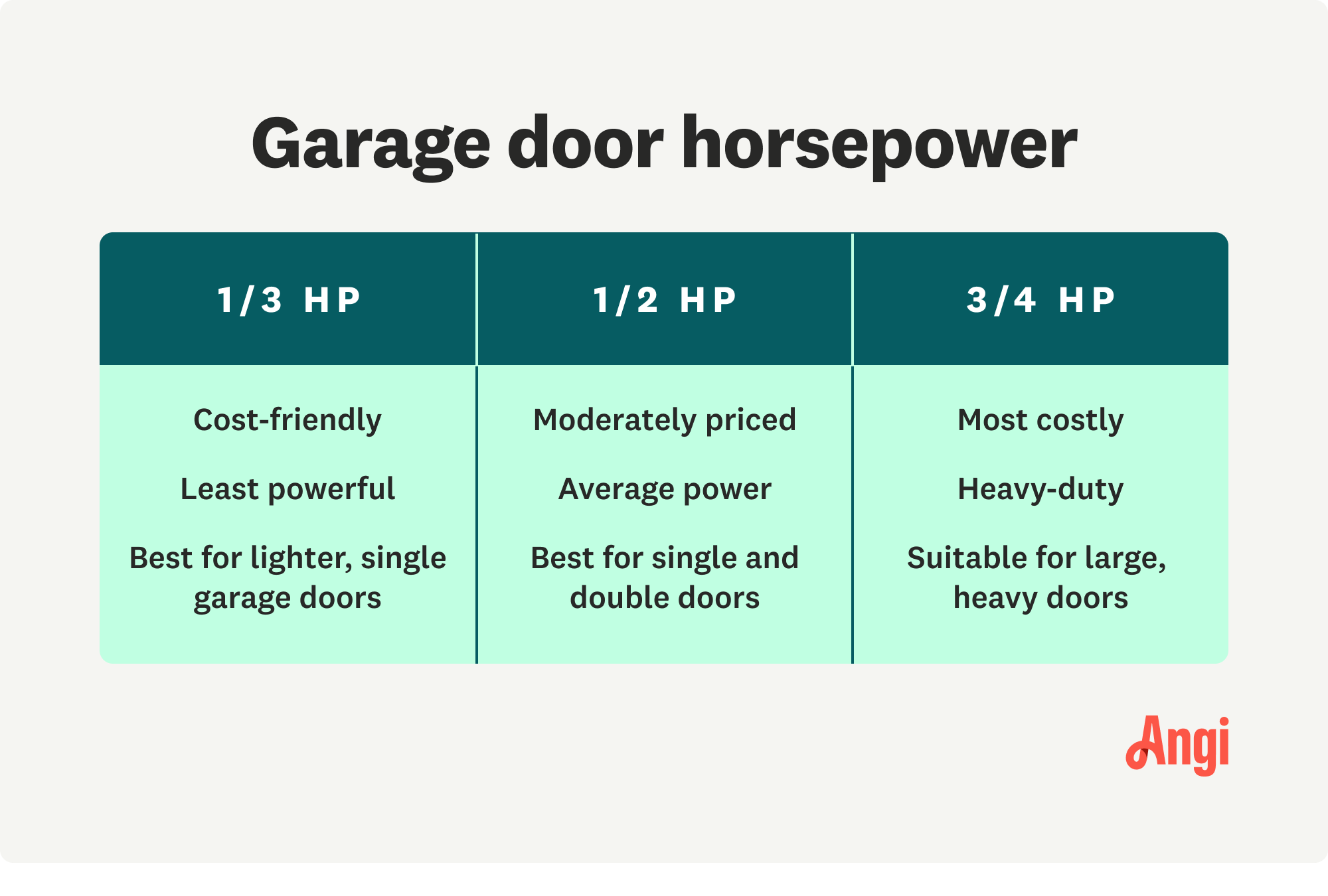
Generally, garage door openers come in three common horsepower options: 1/2 HP, 3/4 HP, and 1 HP. Think of it like this:
- 1/2 HP: This is your standard, everyday engine. It's perfect for single-car garages with lightweight doors – think single-layer aluminum or steel doors. If your door isn't overly heavy and you're not planning on using it 20 times a day, this might be all you need.
- 3/4 HP: Consider this the "Goldilocks" option – just right for many homes. It's a good choice for double-car garages with moderately heavy doors, like insulated steel or wood doors. It’s also a solid choice if you live in a climate with harsh winters, where the cold can make the door heavier to lift.
- 1 HP: This is the heavy-duty, muscle-bound option. You'll need this if you have a really heavy door – like a solid wood carriage-style door – or if you have a particularly large double-car garage door. It's also a good choice if you use your garage door a lot, like a small business operating from home.
Choosing the right horsepower is like picking the right tool for the job. You wouldn't use a butter knife to chop wood, right? So, you wouldn't use a 1/2 HP opener for a massive wooden door.
Factors That Affect Your Horsepower Needs: It's Not Just About the Door
It's not just about the door's weight. Here are a few other things to consider:
- Door Material: As mentioned earlier, wood doors are generally heavier than aluminum or steel. Insulated doors are also heavier than non-insulated ones.
- Door Size: A double-car garage door will naturally be heavier than a single-car door.
- Spring Condition: Properly balanced springs are crucial! If your springs are weak or broken, the opener has to work much harder, regardless of horsepower. Get your springs checked and maintained regularly! Think of them as the shock absorbers – they make the whole ride smoother.
- Climate: Cold weather can make garage doors stiffer and harder to lift. If you live in a cold climate, consider bumping up the horsepower.
- Frequency of Use: Do you open and close your garage door multiple times a day? If so, you might want a more powerful opener to handle the extra wear and tear.
When in Doubt, Go Bigger (But Not Too Big!)
Generally, it's better to err on the side of slightly more horsepower than not enough. A slightly overpowered opener will run cooler and last longer than one that's constantly struggling. However, there's no need to go completely overboard. A 1 HP opener on a lightweight single-car door is probably unnecessary.
The Bottom Line: Do Your Homework!
Choosing the right horsepower for your garage door opener is an important decision that can affect the performance and longevity of your opener. Take the time to assess your needs, consider the factors mentioned above, and don't be afraid to consult with a professional. A garage door installer can help you determine the best horsepower for your specific situation and ensure that your opener is properly installed and maintained. They can also help assess your springs and ensure they are in tip-top shape!
And remember, a smooth-running garage door opener is a happy garage door opener. And a happy garage door opener means one less thing to worry about in your busy life. That's a win-win, wouldn't you say?