How Much Energy Is A Kilowatt
.png)
Have you ever looked at your electricity bill and felt like you were staring at a secret code? All those numbers, terms like kilowatt, and prices – it can feel a bit overwhelming, right? But what if we told you that understanding one tiny word, kilowatt, can actually be pretty fun and super empowering? It’s like unlocking a new level in the game of life, giving you a superpower to understand energy.
Meet the Kilowatt: Your Energy Decoder Ring
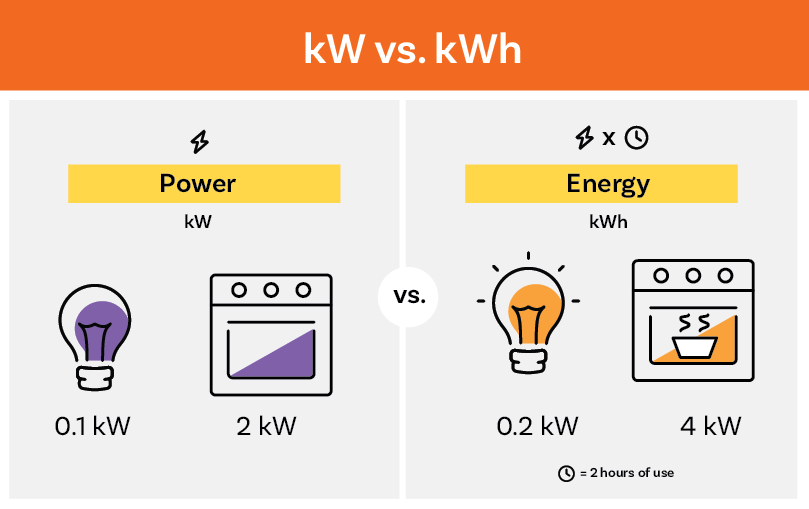
So, what exactly is a kilowatt? In simple terms, think of it as a measure of power. It tells you how fast electricity is being used or produced. Imagine you’re driving a car. The kilowatt is like the car’s speed – how quickly it’s going. A small scooter might have a low kilowatt rating, while a powerful sports car would have a much higher one. It’s about the "oomph" of electrical activity.
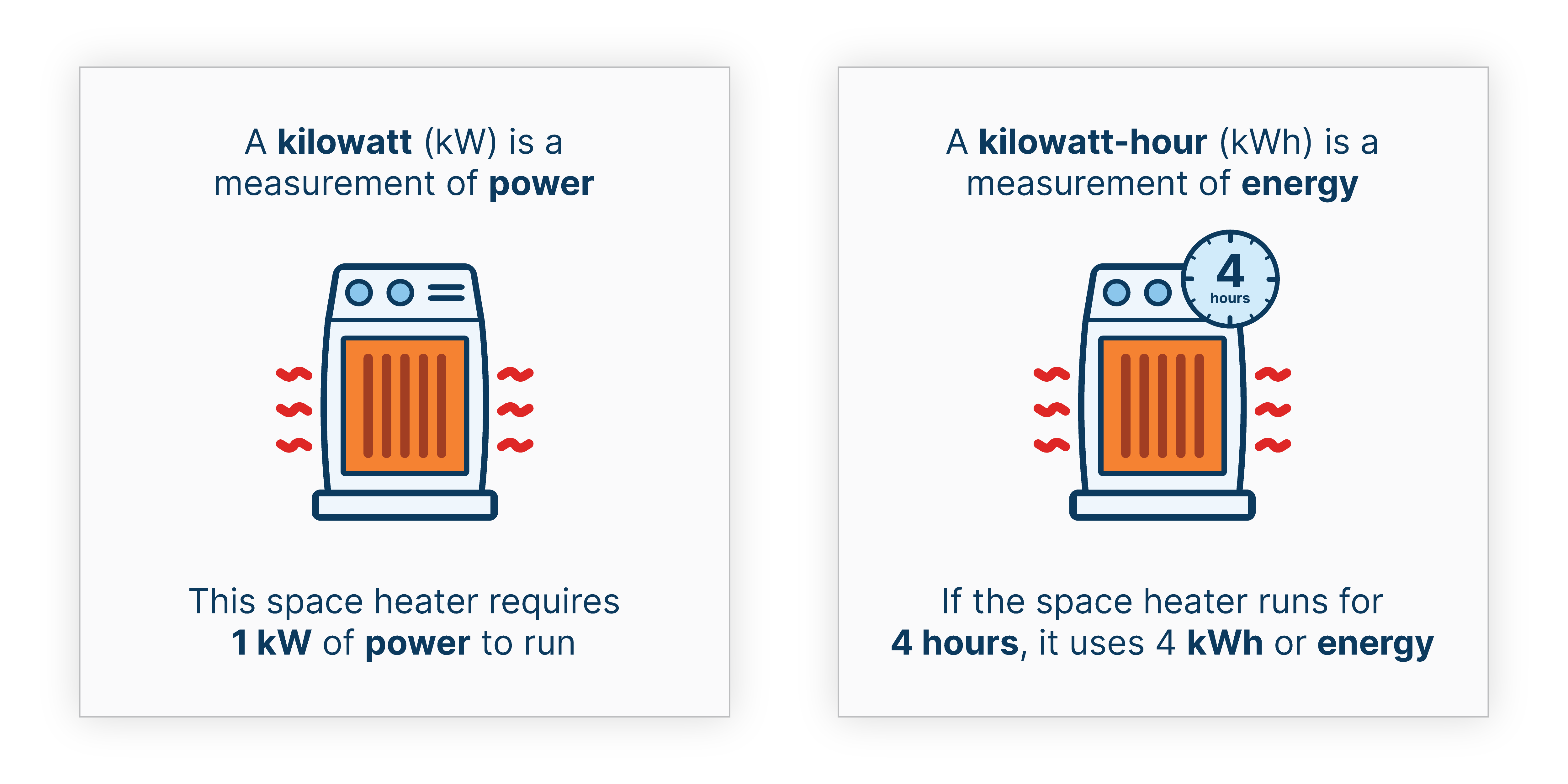
Now, here’s where it gets really interesting and where the "energy" part comes in. While a kilowatt tells you how fast energy is being used, a kilowatt-hour (kWh) tells you how much total energy has been used over time. If the kilowatt is your car's speed, then the kilowatt-hour is the total distance you’ve traveled. It’s like saying "I'm driving at 60 mph" versus "I drove 100 miles today."
Must Read
A kilowatt is the "how fast," and a kilowatt-hour is the "how much."
When you see charges on your electricity bill, they’re usually for kilowatt-hours, because that’s the actual energy you’ve consumed. So, while the prompt asks "How Much Energy Is A Kilowatt," it's really the kilowatt-hour that measures the energy you're paying for. Knowing what a kilowatt means is the first step to understanding that bigger picture.
Why Understanding Kilowatts Is Surprisingly Fun!
Why should you care about this technical-sounding stuff? Because it makes the invisible visible! It's satisfying to know what’s really powering your life.
1. Become an Energy Detective
Once you grasp the concept of a kilowatt, you start seeing the world differently. You’ll notice the little power ratings on your appliances. A small LED light bulb might use only 10 watts, while an old incandescent bulb might gobble up 60 watts. Your hair dryer? Probably a mighty 1500 watts – that’s 1.5 kilowatts of power! Suddenly, you're an energy detective, solving the mystery of energy hogs.
The fun begins! You can start comparing. Running that 1.5 kilowatt hair dryer for an hour would use 1.5 kilowatt-hours of energy. But running a 10-watt LED bulb for 150 hours would use the same amount of energy. You gain a whole new appreciation for efficient devices.
2. Superpower Your Savings
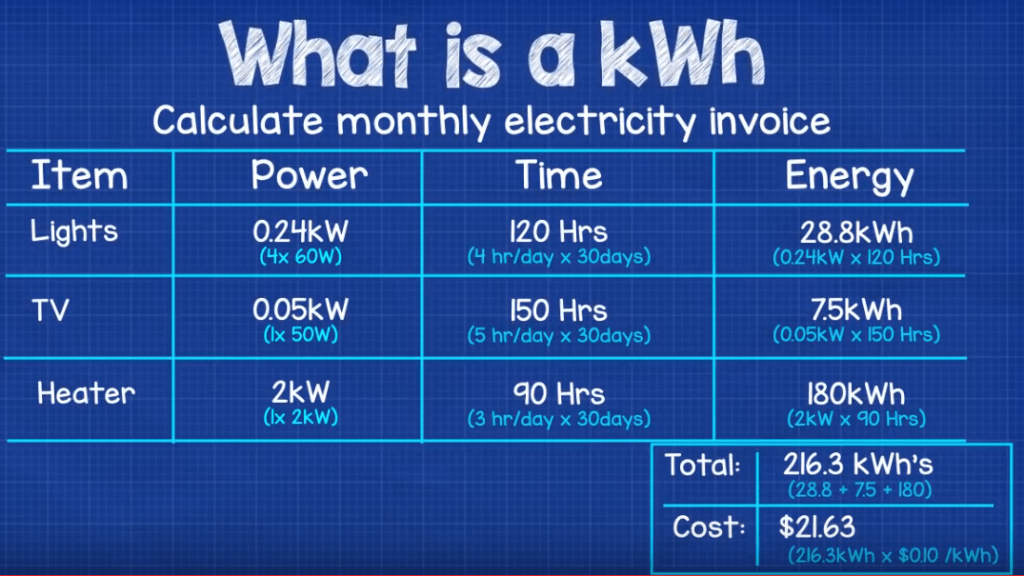
Understanding kilowatts isn’t just academic; it’s practical! You can literally save money. By knowing which appliances draw a lot of kilowatts and for how long, you can make smarter choices. Maybe you don't need to run that old space heater on full blast for hours. Perhaps unplugging unused electronics (which still draw a tiny amount of kilowatts) starts to make sense. It’s like having a secret money-saving strategy up your sleeve.
3. Connect to the Bigger Picture
Beyond your home, kilowatts connect you to the vast world of energy. When you hear about solar panels, their capacity is in kilowatts. Electric car charging stations? Their speed is in kilowatts. A fast charger might pump out 150 kilowatts of power! Understanding this simple unit helps you grasp bigger news stories about renewable energy, power grids, and even climate change. It’s like understanding the language of energy.
So, the next time you see the word kilowatt, don’t shy away! Embrace it. It’s not just a technical term; it’s a key to understanding your home, your impact, and the world around you. Learning about it is an easy step towards becoming more informed and empowered. Go ahead, become an energy guru – it’s more entertaining than you think!