How Much Energy Does Nuclear Energy Produce

Ever found yourself gazing at a brightly lit city skyline or flicking a light switch, and wondered about the sheer, mind-boggling amount of energy it takes to power our modern world? It's a fun thought experiment, isn't it? Our insatiable need for reliable power often brings us to some truly fascinating corners of science, and one of the most compelling is nuclear energy. It might sound complex, but at its heart, it’s about unlocking incredible power from the tiniest particles, and trust me, it’s a topic well worth a relaxed, curious exploration!
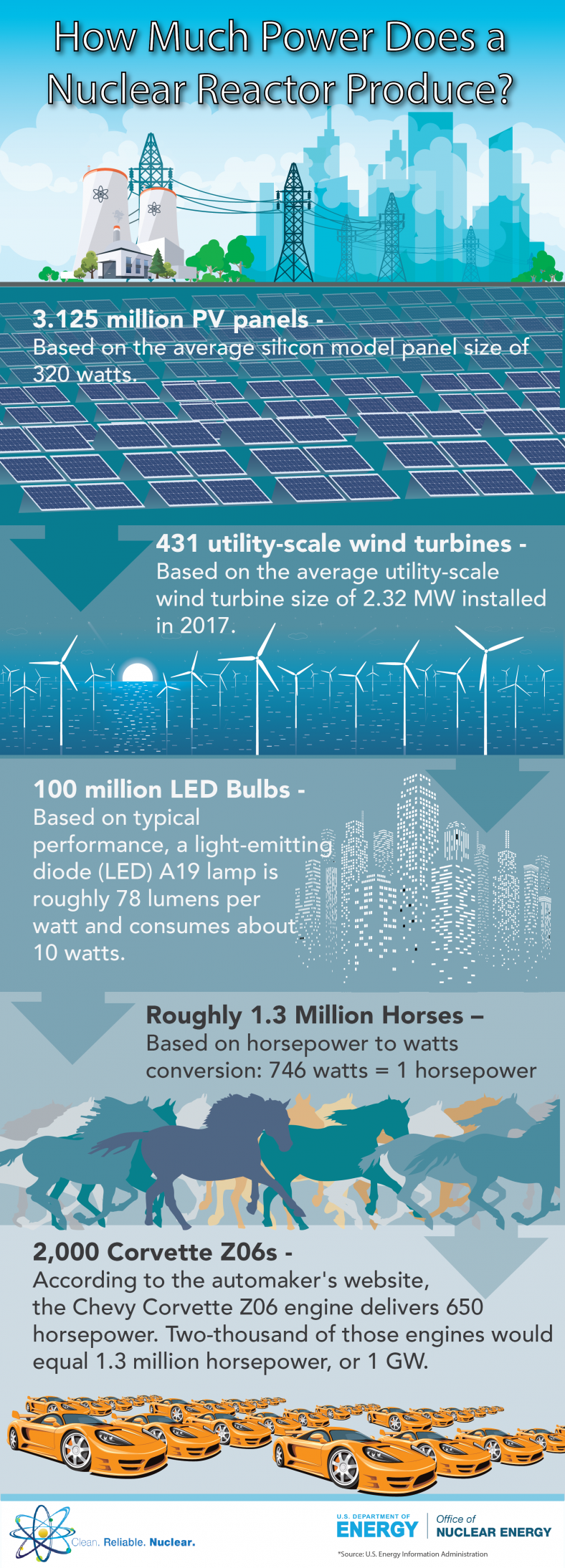
So, what exactly is the big deal with nuclear energy and how much power does it actually produce? Its primary purpose is to generate electricity – clean, consistent electricity – at an enormous scale. The magic really lies in its energy density. Imagine this: a single uranium pellet, roughly the size of your fingertip, can produce as much energy as 17,000 cubic feet of natural gas, 1,780 pounds of coal, or 149 gallons of oil. That's absolutely staggering! This translates into a huge benefit: minimal fuel, maximum output. Unlike solar or wind, which depend on weather conditions, nuclear power plants can run 24/7 for months, even years, providing a stable, base-load power source that doesn't emit greenhouse gases during operation. It’s like having an incredibly efficient, always-on battery for our grids, significantly contributing to a lower-carbon future.
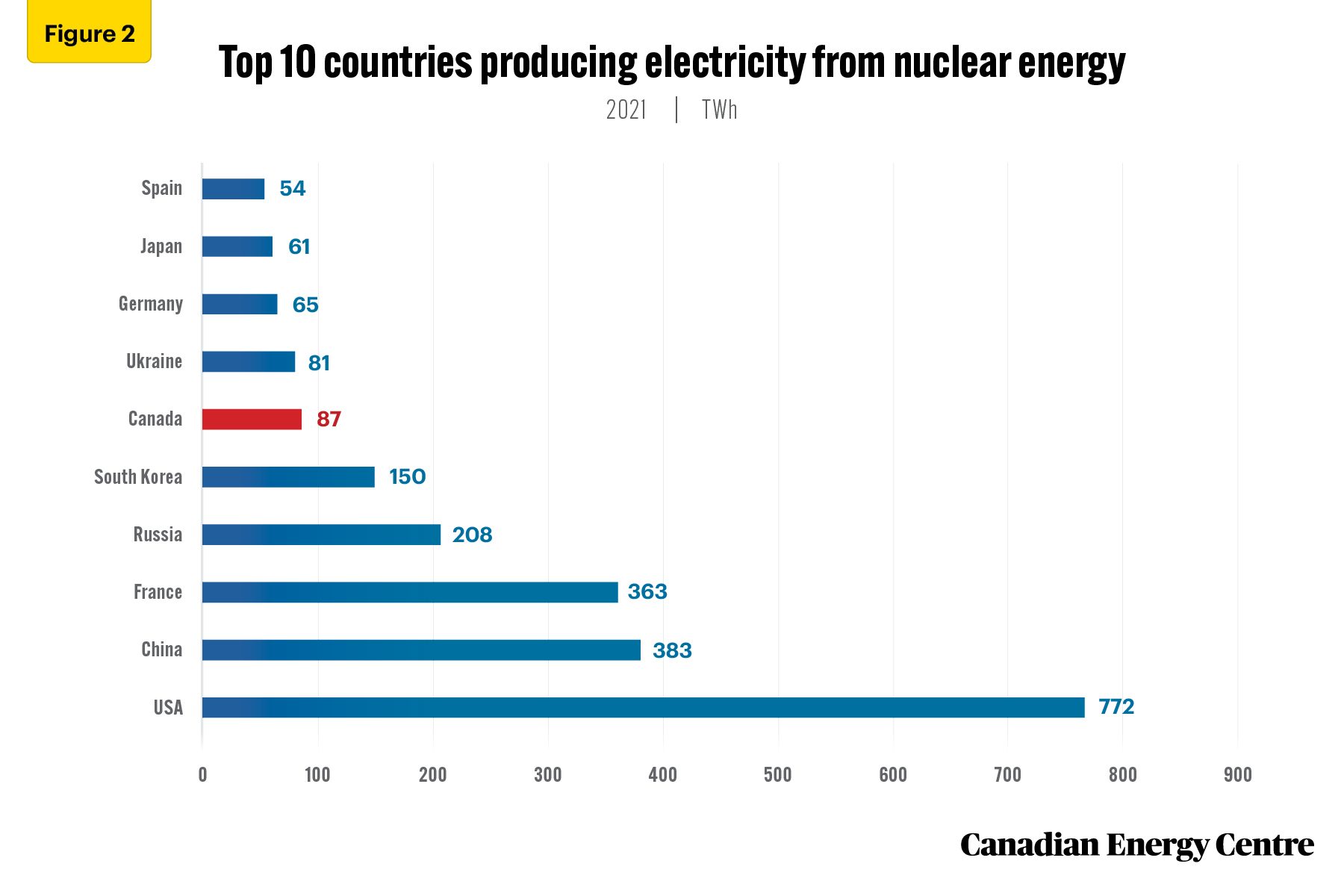
Where does this incredible power show up in our lives? Well, if you live in France, nearly 70% of your electricity likely comes from nuclear plants. In the U.S., about 20% of the nation's electricity comes from nuclear, powering millions of homes and industries across the country. Think about the factories running, the hospitals operating, and the data centers humming – much of that foundational power could be coming from a nuclear reactor. Beyond just lighting up our homes, understanding nuclear energy is crucial for anyone interested in STEM fields. It opens doors to careers in engineering, physics, and environmental science, pushing boundaries in reactor design (like exciting Small Modular Reactors or SMRs) and safety innovations. It's a field that constantly asks "what if?" and "how can we do it better?"
Must Read
Feeling a little more curious about this powerhouse? Exploring it is easier than you might think! Start by checking out reputable websites like the U.S. Department of Energy (DOE), the International Atomic Energy Agency (IAEA), or educational platforms that explain the basics of nuclear fission in simple terms. Watching documentaries on energy production or climate change often features segments on nuclear power, giving you a visual sense of its scale. You could even look for virtual tours of nuclear power plants, which some operators offer online. Don't be afraid to read different perspectives and engage in respectful discussions. By understanding how much energy nuclear power truly produces and its role in our world, you're not just learning about science; you're gaining insight into a vital piece of our energy puzzle and potentially shaping your own views on a sustainable future.