
How Much Energy Does A Light Bulb Use Per Hour

Hey there, energy enthusiasts! Ever wondered about the little things that add up in our homes? Like… how much juice does that humble light bulb actually slurp down? It's a question that pops into my head every time I flip a switch, and honestly, it's way more interesting than you might think! Let’s dive in, shall we?
Watt's Going On? Understanding the Basics
First, let's talk about watts. You've probably seen this word plastered all over your light bulb packaging. A watt (W) is basically a unit of power, measuring how much energy something uses per second. Think of it like this: the higher the wattage, the more energy that bulb is demanding.
So, how does this translate to hourly usage? Well, we need to bring in another term: kilowatt-hour (kWh). One kilowatt-hour is equal to 1,000 watts used for one hour. It's the standard unit your electricity bill uses, so it’s kind of a big deal. Think of it as the real currency when it comes to powering your life.
Must Read
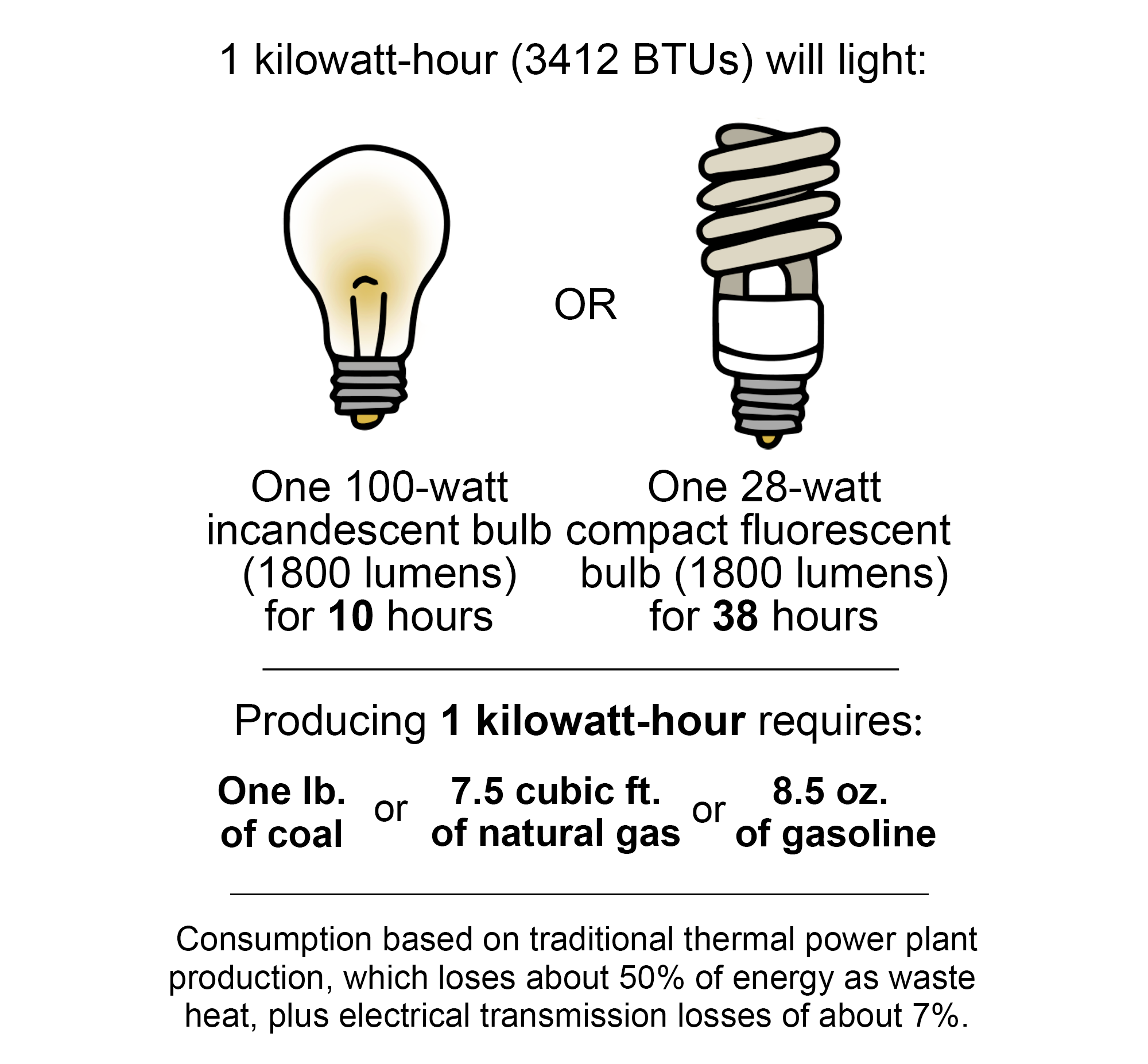
Now, let’s say you have a good old 60-watt incandescent bulb. How much energy does that use per hour? Easy peasy: 60 watts / 1000 watts per kilowatt = 0.06 kWh. So, that 60-watt bulb burns through 0.06 kWh every hour it's lit. Seems small, right?
Different Bulbs, Different Appetites
But wait! Not all light bulbs are created equal. Remember those old-school incandescent bulbs? They're notorious energy hogs. Thankfully, we have much better options these days. Think about it: are you still rocking those dinosaurs?

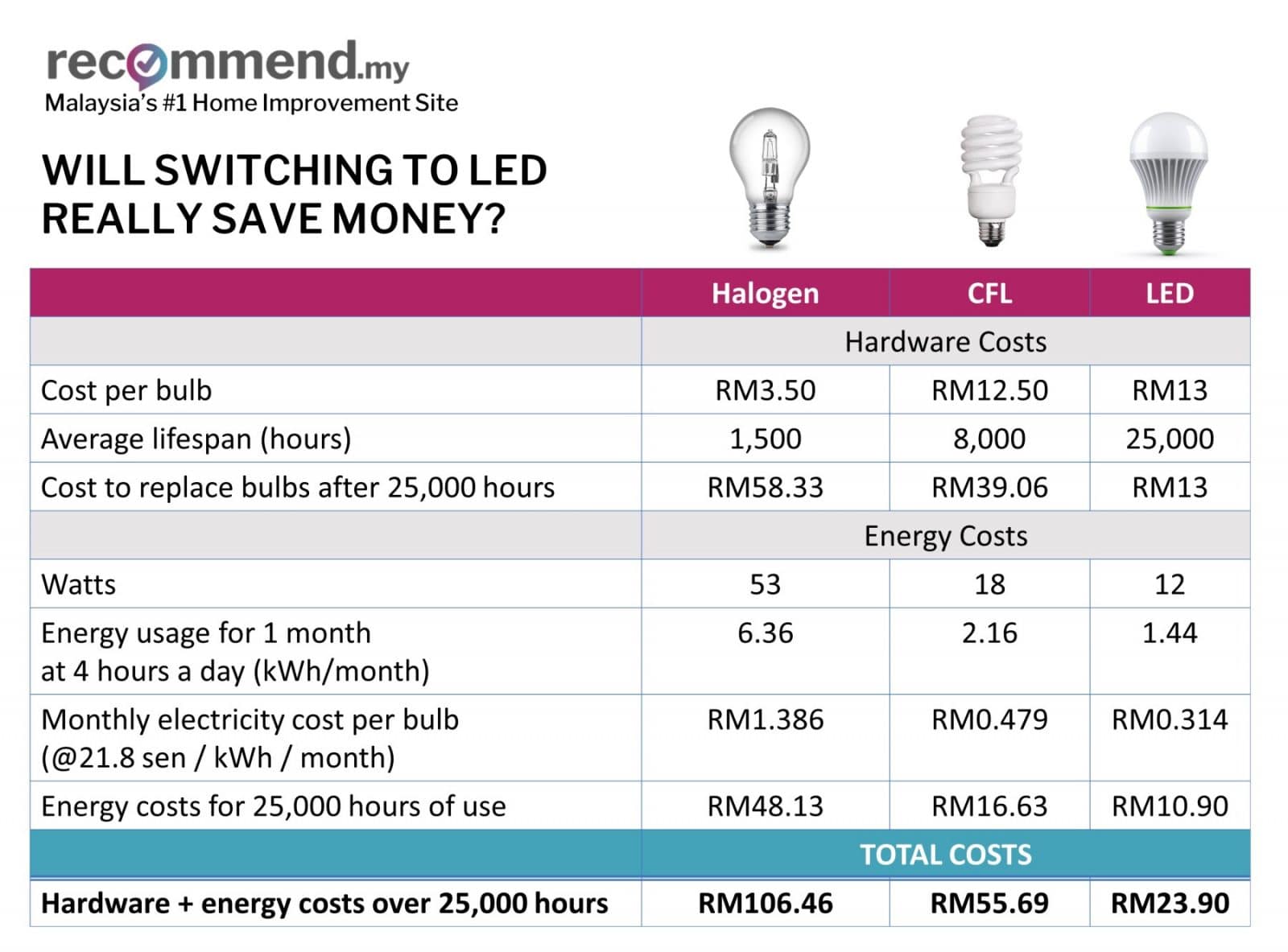
Compact Fluorescent Lamps (CFLs) and Light Emitting Diodes (LEDs) are the rockstars of energy efficiency. They produce the same amount of light as incandescent bulbs, but they use significantly less power. A CFL might use only 13-15 watts to produce the light equivalent of a 60-watt incandescent, while an LED could use even less – sometimes as low as 8-10 watts!
That means an LED bulb, using just 10 watts, only consumes 0.01 kWh per hour. That’s a huge difference compared to that 0.06 kWh from the old incandescent! Suddenly, those small numbers start to look pretty significant, don’t they?
Let's Get Real: The Cost of Light
Okay, so we know how much energy different bulbs use. But what does that actually cost you? Well, that depends on your electricity rate, which varies depending on where you live and your energy provider. Let’s say your electricity costs $0.15 per kWh (a pretty average rate in the US).
Using our 60-watt incandescent bulb example, running it for an hour would cost you: 0.06 kWh * $0.15/kWh = $0.009, or less than a penny. But think about that bulb burning for several hours a day, every day. Those pennies start adding up!

Now, let's do the math for our 10-watt LED: 0.01 kWh * $0.15/kWh = $0.0015, or just over a tenth of a cent per hour! Over the course of a year, switching to LEDs can save you a noticeable chunk of change. Who doesn't like saving money, am I right?
Beyond the Bulb: The Bigger Picture
Thinking about light bulb energy usage is cool because it opens up a whole world of energy awareness. It's a small thing, but it’s a gateway drug to thinking about bigger energy-saving strategies. Maybe you'll start unplugging chargers when they're not in use, or finally get around to weatherizing your windows. Small changes can have a big impact!
Think about it like this: swapping out incandescent bulbs for LEDs is like switching from driving a gas-guzzling monster truck to a fuel-efficient hybrid. Both get you from point A to point B, but one does it with a whole lot less environmental impact (and saves you money in the long run!).
So, next time you flip a light switch, remember those little watts buzzing around. Understanding how much energy a light bulb uses is a simple way to become a more conscious energy consumer and a friendlier neighbor to our planet. Plus, you'll have some seriously impressive trivia to drop at your next dinner party. "Did you know...?" Guaranteed conversation starter!
Now, go forth and illuminate wisely!