How Much Electricity Will Solar Panels Produce
Okay, gather 'round, friends! Let's talk solar panels. You're thinking about slapping some sun-catchers on your roof and sticking it to the man (the electric company, that is)? Excellent choice! But before you start picturing yourself swimming in a Scrooge McDuck vault filled with money saved on energy bills, let's get real about how much juice those shiny rectangles are actually going to generate.
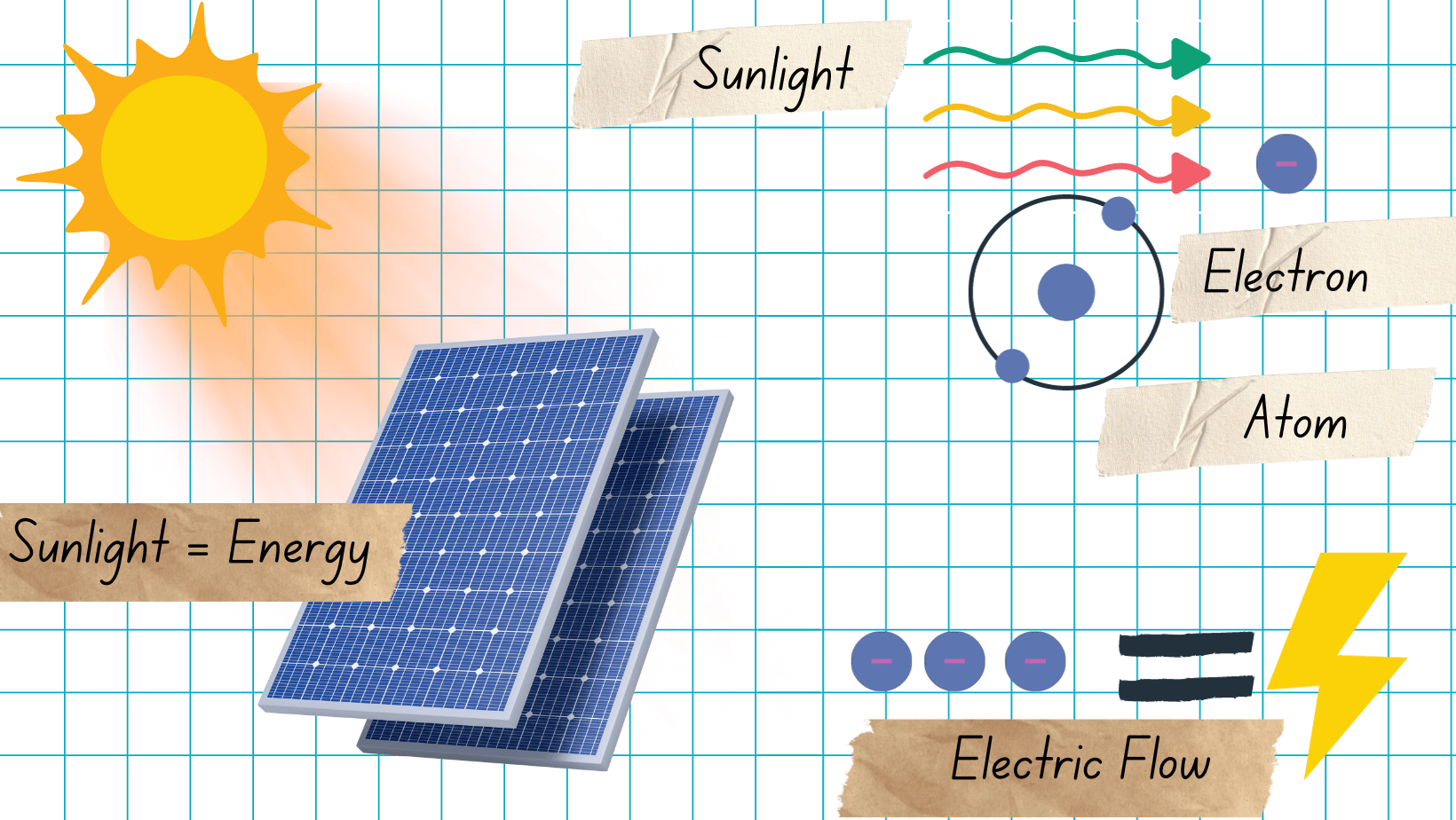
Think of it like this: solar panels are like houseplants. They need sunlight to, well, live and produce. But even the most green-thumbed among us can't guarantee a jungle indoors, just like you can't magically summon sunshine on a cloudy day. So, how do we estimate the output?
The "Watt's Up?" with Panel Power
First, you gotta know about watts (W). That's the power rating of your solar panel, like its "potential." A typical residential solar panel might be rated at, say, 300-400W. Now, this is under ideal conditions – think perfect sunshine, perfect angle, no dust, and maybe a unicorn gently fanning the panel to keep it cool. In reality, you're probably closer to reality where dust happens!
Must Read
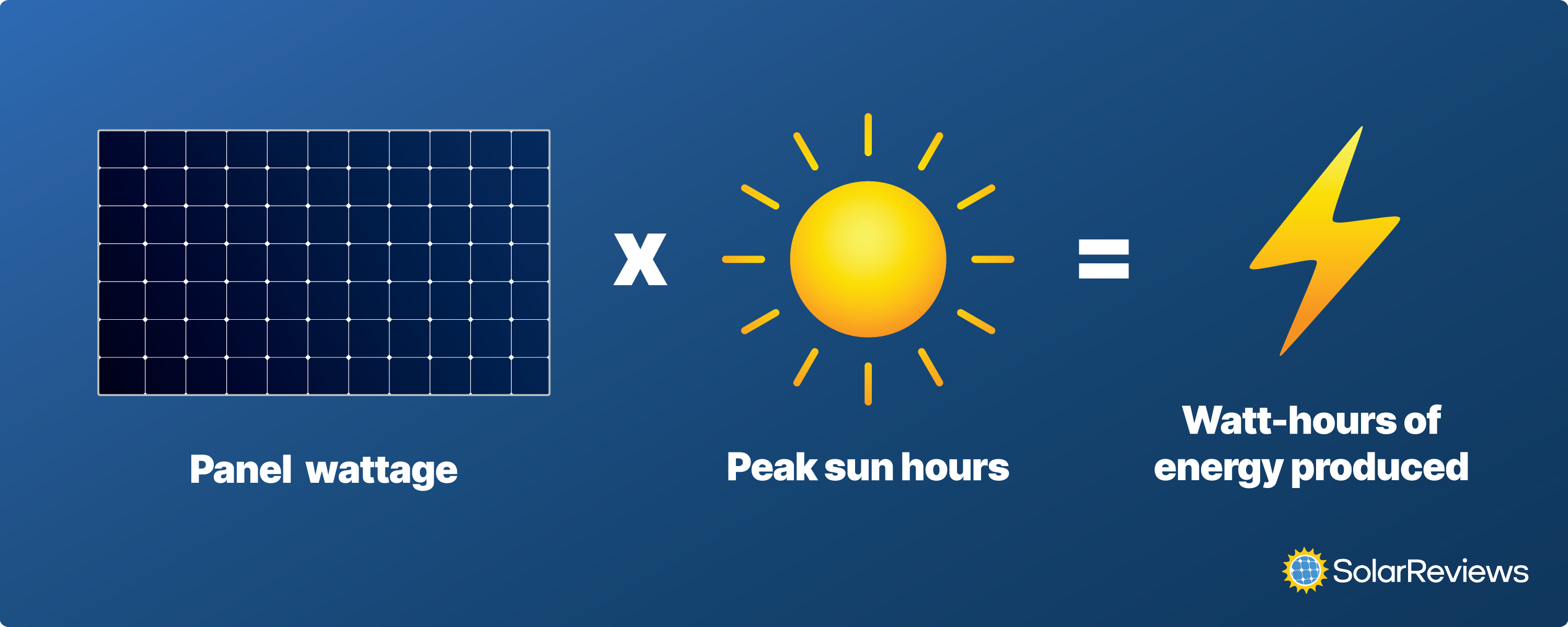
Now, here's the kicker: just because your panel is rated at 300W doesn't mean it's pumping out 300W every second of the day. That's where peak sun hours come in. These are the hours in a day when the sun's intensity is equivalent to the ideal conditions used to rate the panel. Think of it like concentrated sunlight. The magic number of peak sun hours varies wildly depending on where you live.
Arizona? You're probably basking in glorious rays all day long. Seattle? Well, let's just say you might be better off investing in a good raincoat and a strong cup of coffee. You can usually find peak sun hour data for your specific location online. It's like checking the weather forecast, but instead of rain, you're checking for solar potential!
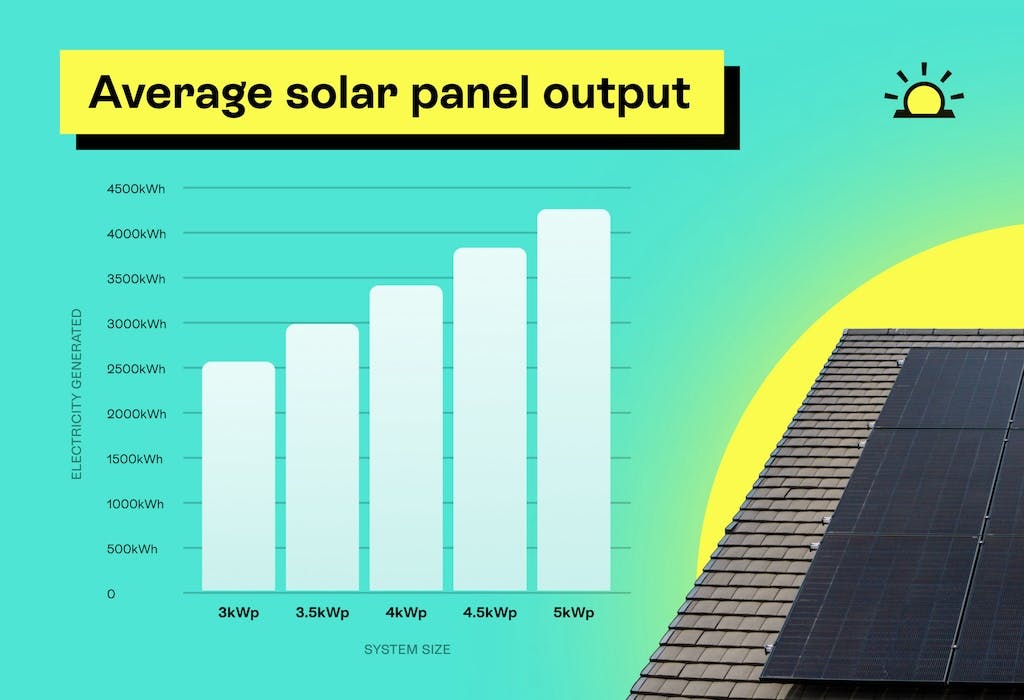
![How much electricity do solar panels produce? [UK, 2025]](https://images.prismic.io/sunsave-website/Z64Jh5bqstJ9-lRu_Cutyourenergybillswithsolar-final-.png?auto=format,compress)
Doing the Math (Don't Panic!)
Okay, time for some very basic math. Don't worry, I promise it won't require calculus. If you have a 300W panel and you get 5 peak sun hours a day, the calculation goes like this: 300W x 5 hours = 1500 watt-hours (Wh) per day. Now, since we usually talk about electricity in kilowatt-hours (kWh), we divide by 1000: 1500 Wh / 1000 = 1.5 kWh per day. Boom! You've generated 1.5 kWh from one panel.
To figure out your system's total output, multiply that number by the number of panels you're planning to install. So, if you have 10 panels: 1.5 kWh/panel x 10 panels = 15 kWh per day. Easy peasy, lemon squeezy!
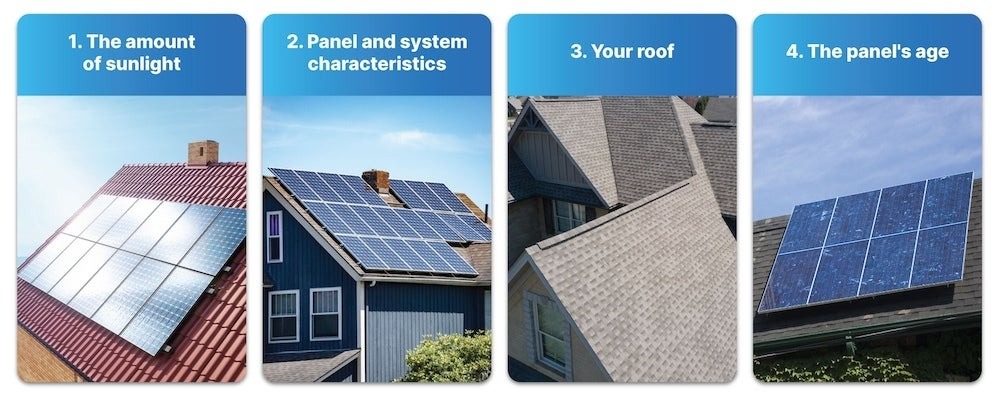
Of course, this is a super simplified calculation. There are other factors to consider, like:
- Panel efficiency: Some panels are just better at converting sunlight into electricity than others.
- Panel angle and orientation: Are your panels facing directly south at the perfect angle for maximum sun exposure? Or are they awkwardly angled towards your neighbor's prize-winning petunias?
- Shading: Trees, buildings, even that pesky satellite dish can cast shadows that dramatically reduce output.
- Temperature: Surprisingly, solar panels don't love being super hot. Their efficiency actually decreases as the temperature rises. Think of them as preferring a pleasant spring day over a scorching summer scorcher.
- Inverter efficiency: The inverter converts the DC electricity produced by the panels into AC electricity that your home can use. Inverters aren't perfect, so there's always some energy loss.
These things are all important, but they don't need to be scary. A good solar installer will take all of these factors into account when designing your system and give you a realistic estimate of its output.
Reality Check: Managing Your Expectations
Let's be honest, you're probably not going to achieve the maximum theoretical output from your solar panels every single day. But that's okay! The goal is to offset a significant portion of your electricity bill, and even a partially sunny day can generate a surprising amount of power.
Think of it as a long-term investment in a brighter, cleaner future (and a smaller electricity bill). You're not just generating electricity; you're contributing to a more sustainable world. Plus, you get to brag to your friends about how you're powered by the sun! Just don't be that person who brings it up at every opportunity.
So, how much electricity will solar panels produce? The answer, as always, is "it depends." But with a little research, a good installer, and a healthy dose of sunshine, you can get a pretty good idea of what to expect and start reaping the rewards of solar power. Now, go forth and harness the power of the sun! But maybe wait until it stops raining first.