
How Much Electricity Does An Air Purifier Use
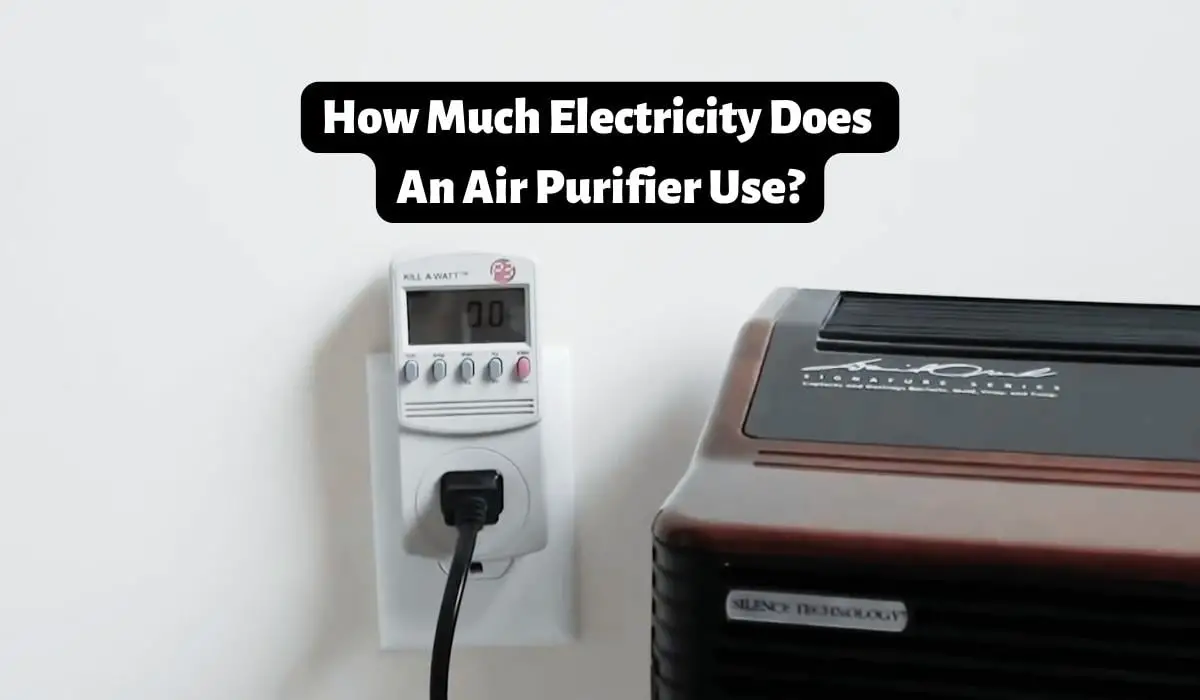
Okay, so picture this: you've finally caved and bought an air purifier. Maybe your allergies were acting up, or perhaps you just wanted to banish those mystery kitchen smells. Good for you! But now it's humming away in the corner, doing its thing, and a little voice in the back of your head pipes up: "Wait, how much is that costing me?"
Sound familiar? You're not alone. We all want clean air, but nobody wants an electric bill that looks like it just ran a marathon. So, let's grab a virtual coffee, shall we? Because we're about to chat about how much juice your air purifier actually sips.
Relax, It's Not a Power Hog
First things first, take a deep breath (of wonderfully purified air, perhaps?). The good news is, air purifiers are generally not energy vampires. They’re more like those polite houseguests who hardly touch anything in the fridge. We're talking about appliances that, for the most part, use very little electricity.
Must Read
Think about it this way: your fridge? That's working 24/7, keeping your oat milk chilly. Your TV? Probably drawing a fair bit when you're binging that new series. Your air purifier? It's often drawing less power than a standard incandescent light bulb. Seriously!
Let's Get a Little Technical (But Still Casual!)
So, what are we talking about in real numbers? Most residential air purifiers use anywhere from 5 watts on their lowest setting to around 50-75 watts on their highest. Some super powerful ones for huge spaces might hit 100-200 watts, but those are the big guns, not your typical bedroom buddy.
To put that in perspective, a 60-watt light bulb uses, well, 60 watts. Your laptop charger might pull 60-90 watts. See? Your air purifier is probably just chilling, barely ticking over.
What Makes 'Em Sip More (or Less)?
Of course, there are a few things that can influence how much electricity your little clean-air hero uses:
-
Fan Speed is King (or Queen): This is probably the biggest factor. Running your purifier on the lowest, quietest setting uses a tiny amount of power. Crank it up to "turbo blast the cat dander" mode, and yeah, it’s going to draw more. But how often do you truly need to run it at max?
-
Size Matters (of the Unit, That Is): A smaller, more compact air purifier designed for a bedside table will inherently use less power than a behemoth meant for an open-plan living room. Makes sense, right?
-
Extra Features: Does your purifier have a UV-C light for extra germ-zapping? Or an ionizer? These can add a few watts to the total. Not a huge jump, but something to keep in mind if you're ultra-conscious.
How Much Electricity Does an Air Purifier Use: Understanding Energy -
Filter Condition: Here's a sneaky one! If your filters are clogged to oblivion (ew!), your purifier has to work much harder to pull air through. That extra effort translates to more electricity. So, clean and replace those filters, folks!
The "So What Does It Cost Me?" Moment
Alright, let’s get down to brass tacks. Let's say your purifier averages about 30 watts, and you run it for 12 hours a day (which is quite a lot for many people!).
30 watts x 12 hours = 360 watt-hours per day.

360 watt-hours x 30 days = 10,800 watt-hours per month, or 10.8 kilowatt-hours (kWh).
Now, electricity prices vary wildly, but let's guesstimate around 15 cents per kWh. So, 10.8 kWh x $0.15/kWh = about $1.62 a month.
Did you just gasp? Probably not, because that's like, what, half a fancy coffee? Maybe a pack of gum? Even if you ran it 24/7 at 50 watts, you're likely only looking at a few bucks a month. We're talking pocket change, my friend.
My Hot Tips for Keeping it Super Thrifty:
-
Embrace "Auto Mode": Many purifiers have an auto mode that senses air quality and adjusts the fan speed accordingly. This is your best friend for energy efficiency because it only ramps up when it truly needs to.

How Much Electricity Does Air Purifier Use - Home Teat -
Regular Filter Maintenance: We talked about it, but it bears repeating. Clean filters mean less strain on the motor, which means less electricity used. It’s a win-win!
-
Match Size to Room: Don't try to purify an entire open-plan apartment with a tiny unit meant for a bedroom. It'll just work its little heart out at max speed forever, using more power and probably failing to do the job properly.
The Bottom Line: Don't Sweat It!
Seriously, if you're enjoying cleaner, fresher air thanks to your air purifier, the electricity cost is likely the least of your worries. The benefits to your health, your allergies, and just the overall vibe of your home are almost certainly going to far outweigh the negligible cost of keeping it running.
So, go forth and breathe easy! Your wallet (and your lungs!) will thank you. Now, about that second virtual coffee...?