
How Much Electricity Does A Swamp Cooler Use
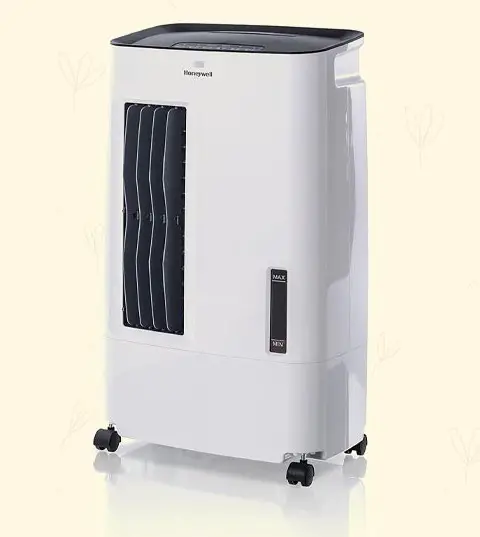
Okay, folks, let's talk about something seriously cool – or rather, something that makes things seriously cool: the mighty swamp cooler! Now, if you're picturing some weird contraption churning out bayou mist and alligator breath, hold on a sec. We're talking about evaporative coolers, those ingenious devices that use the magic of water to banish the heat. But a crucial question lingers: How much does this refreshing coolness cost in terms of electricity?
The Great Swamp Cooler Electricity Rundown
The short answer? Generally, swamp coolers are the frugal superheroes of the cooling world! Compared to their power-hungry air conditioning cousins, they sip electricity like a hummingbird sips nectar. But let's get into some specifics, because "frugal" is a relative term, especially when you're facing a scorching summer.
Think of it like this: your typical window AC unit is like a gas-guzzling monster truck, roaring down the highway, while a swamp cooler is more like a sleek, electric scooter, zipping through town on a single charge. Now, I'm exaggerating slightly, but the point is that the difference is pretty significant.
Must Read
Watt's Up With Watts? (Sorry, I had to!)
To understand how much juice your swamp cooler is using, we need to talk about watts. Watts measure the amount of power an appliance sucks up. Most swamp coolers use somewhere between 100 and 500 watts, give or take. Of course, this depends on the size of the cooler and the fan speed. A tiny desktop cooler might only use 50 watts, while a whole-house unit could creep closer to the 700-watt mark. But still, compare that to an AC unit – even a small one – that can easily gulp down 500 to 1500 watts! Suddenly, that swamp cooler is looking mighty attractive, right?
Let's put this into perspective with some everyday examples. Imagine you have a 100-watt light bulb. A small swamp cooler might use the same amount of power, or perhaps a bit more. A larger one might be comparable to running a refrigerator. See? Not so scary!

Calculating the Cost: From Watts to Dollars
So, how do we figure out the actual cost? Well, it's a little math-y, but don't worry, I'll make it painless. You need to know three things: the wattage of your swamp cooler, how many hours you run it per day, and the cost of electricity in your area (usually measured in cents per kilowatt-hour – kWh). You can find your electricity cost on your power bill, or by checking your local utility company's website.
Here's the super-simple formula:
(Wattage / 1000) x Hours Used per Day x Cost per kWh = Daily Cost
For example, let's say you have a 300-watt swamp cooler, you run it for 8 hours a day, and your electricity costs 15 cents per kWh.

The calculation would be: (300 / 1000) x 8 x $0.15 = $0.36 per day.
That's right, a measly 36 cents! You could probably find more change than that rattling around in your car.

Factors That Affect Electricity Usage
Now, before you start throwing all your AC units out the window and embracing the swamp cooler life, remember that a few factors can affect your electricity usage:
- Fan Speed: Higher fan speeds use more power, obviously.
- Size of the Unit: Bigger coolers generally use more electricity.
- How Often You Refill the Water: This doesn't directly affect electricity usage, but a dry swamp cooler is basically just a fan, and won't cool as effectively. So, you might end up running it longer or at a higher speed.
- Maintenance: A clean, well-maintained swamp cooler will run more efficiently. So, keep those pads clean and make sure everything is running smoothly!
The Bottom Line: Swamp Coolers are Electric Bill Heroes!
In the grand scheme of things, swamp coolers are generally pretty easy on your wallet when it comes to electricity. They're a fantastic option for cooling your home in drier climates, without sending your energy bill skyrocketing into the stratosphere. Just remember to choose the right size for your space, keep it clean, and enjoy that refreshing, economical coolness!
So go forth, embrace the swamp cooler life, and bask in the glory of affordable cooling! Just don't expect to see any alligators. 😉
