
How Much Electricity Do Christmas Tree Lights Use
Hey friend! Ever wondered if your Christmas tree lights are secretly plotting against your wallet? Let's dive into the electrifying world of holiday twinkle and see how much juice those festive strands are really sucking up. Spoiler alert: it's probably less scary than you think!
LED vs. Incandescent: A Lighting Showdown!
First things first: are you rocking the old-school incandescent bulbs or have you embraced the future with LEDs? This is crucial.
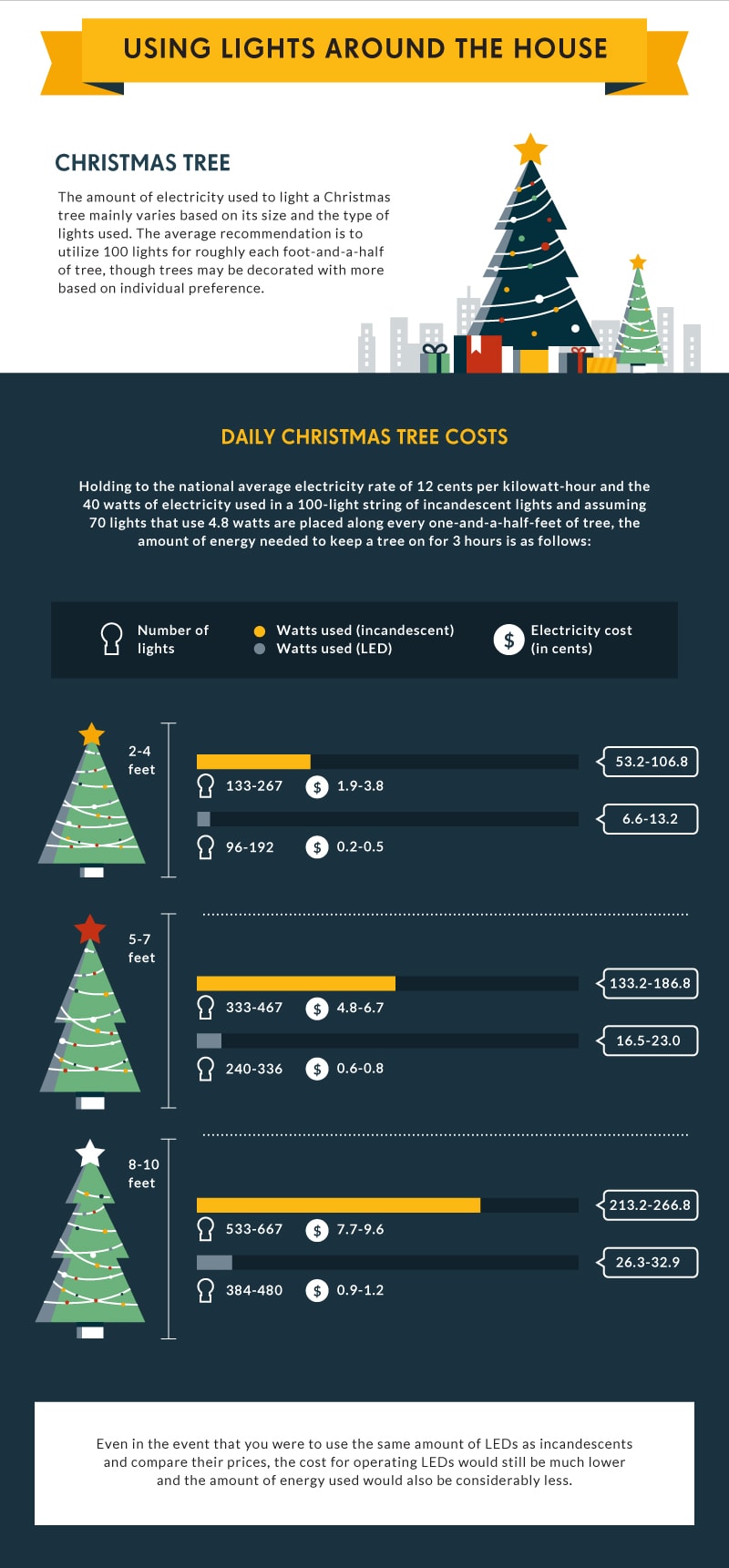
Incandescent lights are like your grandpa’s Cadillac – classic, but gas-guzzling. They turn a lot of energy into heat, not light. Think cozy warmth, but also… energy bills. Each bulb can gulp down around 0.4 to 1 watt.
Must Read
LEDs, on the other hand, are the Teslas of Christmas lights. They're super efficient. We're talking about using up to 75% less energy! Each LED bulb sips a mere 0.04 to 0.1 watts. That's like comparing a hummingbird to a hungry hippo.
So, which do you have? Time to investigate! A quick glance at the box (if you still have it) or a peek at the bulbs themselves should tell you.
String Theory: How Many Lights Are We Talking?
Okay, now that we know the type of bulb, let's count! How many lights are on your tree? Are you a minimalist with a single strand, or a Clark Griswold wannabe with enough lights to illuminate the entire neighborhood? No judgement either way!
More lights = more energy usage. Obvious, right? But let’s put some numbers to it. Imagine you have 100 incandescent bulbs. At 0.5 watts each, that’s 50 watts total.
Now, picture 100 LED bulbs. At 0.05 watts each, that’s just 5 watts! See the difference?
Calculating the Cost: Let's Do Some Math (But Not Too Much!)
Time for some super-simple math. Don't worry, we'll keep it breezy.
First, find your electricity rate. It's usually listed on your electricity bill in cents per kilowatt-hour (kWh). Let's say it's 15 cents per kWh. (This number can vary greatly depending on where you live.)
Remember our incandescent lights (50 watts)? To convert watts to kilowatts, divide by 1000. So, 50 watts = 0.05 kW.
Now, multiply the kilowatts by the electricity rate: 0.05 kW x $0.15/kWh = $0.0075 per hour. That's less than a penny per hour! But remember, that adds up over weeks.
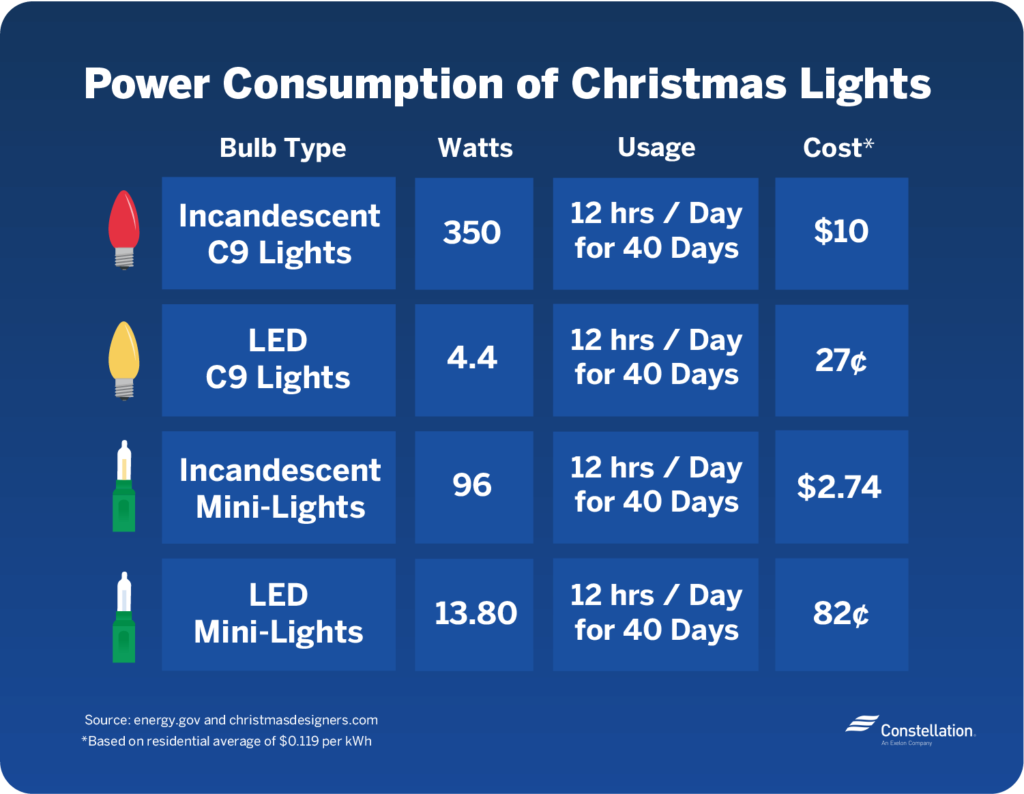
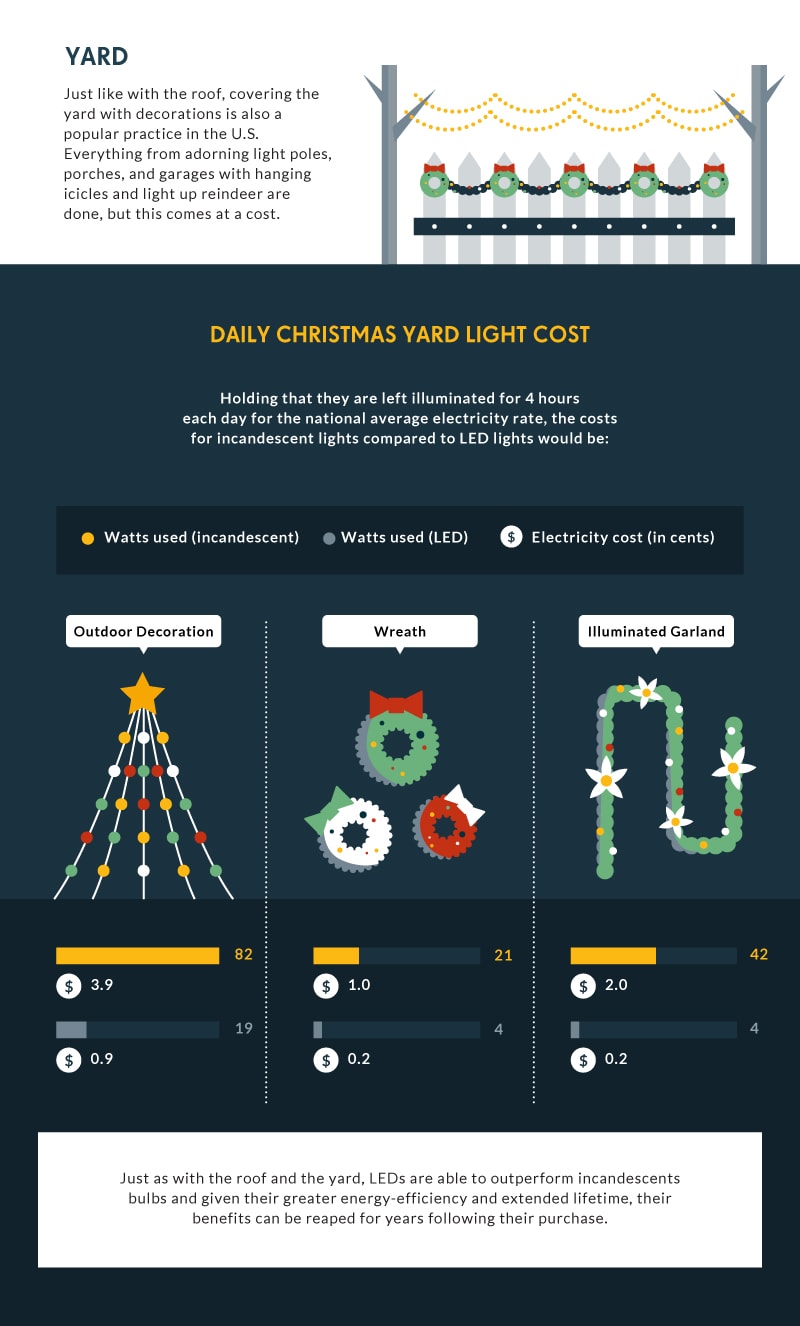
Let's say you leave those lights on for 6 hours a day for 30 days. That’s 180 hours. Multiply that by our hourly cost: 180 hours x $0.0075/hour = $1.35. That's the total cost for incandescent lights for the whole month!
Now, do the same calculation for the LEDs (5 watts = 0.005 kW): 0.005 kW x $0.15/kWh = $0.00075 per hour. Over 180 hours, that's just $0.14. Practically free!
Timers: Your Energy-Saving Superhero
Want to save even more? Get a timer! No need to keep those lights blazing all night long. Set them to turn on when it gets dark and off before you go to bed. This is an easy way to save energy (and money) without sacrificing the festive cheer.
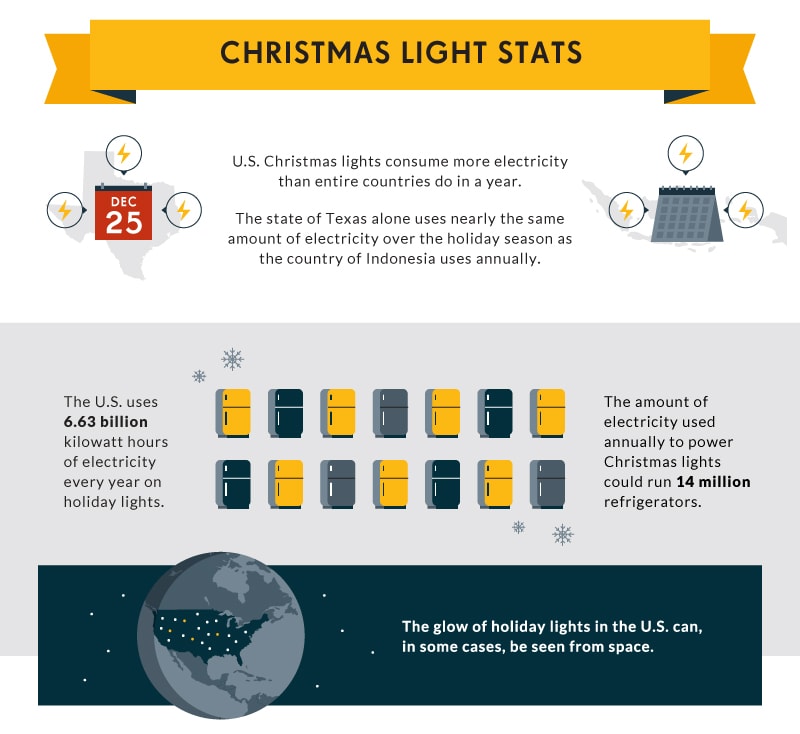
Plus, think about your neighbors! Light pollution is a thing, and they might appreciate a little darkness during the wee hours.
The Takeaway: Don't Stress Too Much!
Honestly? Christmas tree lights aren't usually a major energy drain, especially if you're using LEDs. The real energy hogs in your house are likely your heating/cooling system, water heater, and appliances.
So, go ahead and enjoy the twinkle! Don't let electricity bills steal your holiday joy. Just be mindful, make smart choices (LEDs!), and maybe invest in a timer. And hey, isn't it fun to know the numbers behind the sparkle?
Merry Christmas and Happy (Energy-Efficient) Holidays!