
How Much Does It Take To Charge An Electric Car
So, you're thinking about joining the electric revolution? Awesome! One of the first questions everyone asks is: "How much is this going to cost me?"
Let's dive into the wonderful world of electric vehicle (EV) charging costs, without needing a PhD in electrical engineering.
Understanding the Basics: Electricity and Your Car
Think of your electric car's battery like a giant rechargeable phone battery. Except instead of powering cat videos, it powers your commute!
Must Read
Electricity is measured in kilowatt-hours (kWh). Your home electricity bill probably shows your usage in kWh.
Your EV has a battery size, also measured in kWh. A bigger battery means more range, just like a bigger gas tank!
Home Charging: Your Personal Fueling Station
Charging at home is usually the cheapest and most convenient way to keep your EV juiced up. Imagine waking up every morning with a "full tank"!
To figure out your home charging costs, you need two pieces of information: Your electricity price (per kWh) and your car's battery size.
Your electricity bill should clearly state your cost per kWh. If not, hunt it down like it's the last slice of pizza!
Let's say your electricity costs $0.20 per kWh (this varies wildly depending on where you live and time of use). Now, picture a hypothetical EV with a 60 kWh battery. To fully charge that battery from empty, you'd need 60 kWh of electricity.
So, the math is simple: 60 kWh * $0.20/kWh = $12. Boom! That's the cost to fully charge from 0% to 100% at home in this scenario. Remember to check your local electricity rates to get the most accurate cost.
But realistically, you're probably not driving your car down to 0% every time. So, the cost to "top up" is much less.
For example, if you used 20 kWh worth of charge on your daily commute and you replenish it overnight, it would only cost around $4 to recharge at home (20kWh * $0.20/kWh = $4).

It's like only filling up your gas tank halfway each time. Way more manageable!
Public Charging: Fueling Up on the Go
Public charging stations are popping up everywhere! They're great for road trips or when you need a quick boost away from home.
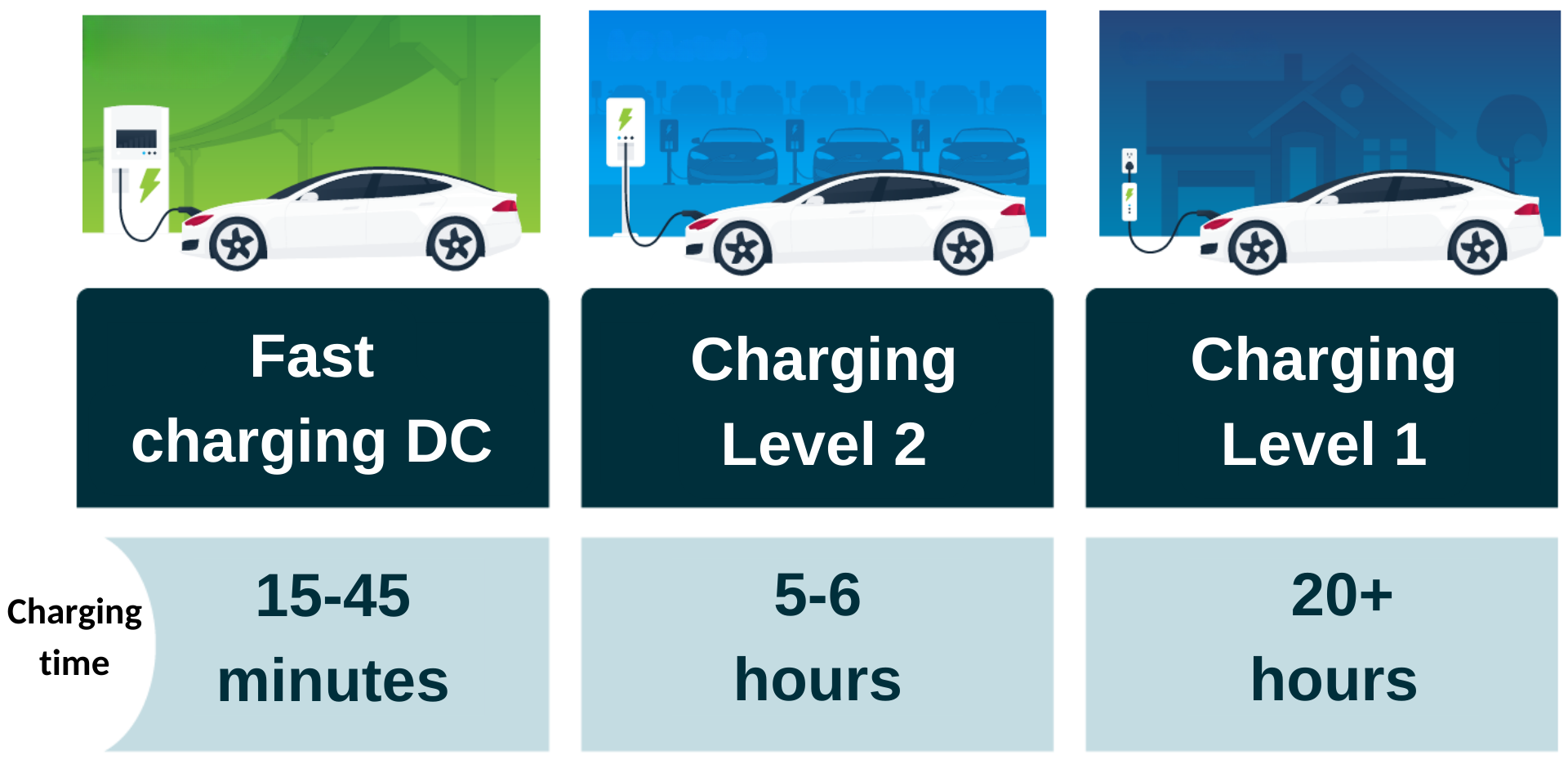
Public charging costs vary widely, based on a few factors. The charging speed (Level 2 or DC fast charging) is a big one. The network operator is another.
Level 2 chargers are typically slower and charge by the hour or by the kWh. They can add about 20-30 miles of range per hour.
Think of Level 2 charging as a leisurely brunch. It gets the job done, but it takes its sweet time.
DC fast chargers (also known as Level 3 chargers) are the speed demons of the EV world! They can add significant range in a short amount of time, often charging 80% in 30 minutes or so.
DC fast charging is like a shot of espresso for your EV – quick and powerful!
However, that speed comes at a price. DC fast charging is generally more expensive than Level 2 charging or home charging.
Some networks charge per kWh, while others charge by the minute. It's like comparing apples and oranges (or maybe electric cars and gas guzzlers!).

A typical DC fast charging session might cost you $0.30 to $0.50 per kWh. That same 60 kWh fill up we discussed earlier could cost anywhere from $18 to $30 at a public DC fast charger. Still cheaper than gas!
But keep in mind that it depends on the car. Some cars will charge faster than others at a specific charger. Also, the charging rate slows down as the battery gets closer to full.
Many public chargers also implement idle fees, where they start charging extra if you are still plugged in a certain amount of time after your vehicle is fully charged.
Factors Affecting Charging Costs: The Plot Thickens!
Alright, so we've covered the basics. But there are a few sneaky factors that can influence your charging costs.
Electricity rates vary. Peak hours (like evenings when everyone is cooking and watching TV) often have higher electricity rates. Charging overnight can save you money.
Your driving habits matter. Are you a lead-foot driver or a hypermiler? Aggressive driving drains the battery faster, just like in a gas car.
Weather conditions play a role. Extreme heat or cold can reduce battery efficiency. It's like your battery wearing a winter coat or sunblock!
Battery age and health affect efficiency. Older batteries may not hold as much charge as new ones.
Charging efficiency is not 100%. Some energy is lost as heat during the charging process. It's like a tiny energy gremlin stealing some of your power!
Comparing EV Charging to Gas: A Head-to-Head Showdown
Even with all the variables, EV charging is almost always cheaper than gasoline. Let's imagine a scenario to illustrate:
Let's say gas costs $4.00 per gallon and your car gets 25 miles per gallon. Driving 100 miles costs $16 in gas.
Now let's say your EV gets 3 miles per kWh and you pay $0.20 per kWh for electricity. Driving 100 miles costs only $6.67 (100/3 * $0.20).
The savings can really add up over time! You could use that extra money to buy a lifetime supply of avocado toast!
And don't forget about the environmental benefits. EVs are cleaner and greener than their gas-guzzling counterparts.
Tips for Saving Money on EV Charging
Want to be an EV charging champion? Here are a few tips to maximize your savings:
Charge at home whenever possible. It's almost always the cheapest option.
Take advantage of off-peak electricity rates. Set your charging schedule to run overnight.
Shop around for the best public charging rates. Use apps like PlugShare or EVgo to compare prices.
![How much does it cost to charge an electric car? [Infographic]](https://electriccarhome.co.uk/wp-content/uploads/2019/05/typical-ev-charging-costs.png)
Drive efficiently. Avoid rapid acceleration and braking. Pretend you have a raw egg under your accelerator pedal!
Consider installing solar panels. Generate your own electricity and charge your EV for free (after the initial investment).
Check for incentives and rebates. Many governments and utilities offer incentives for EV purchases and charger installations.
Join EV communities and forums. Share tips and tricks with other EV owners.
By following these tips, you can keep your EV charging costs low and enjoy the many benefits of electric vehicle ownership.
The Future of EV Charging: It's Electric!
The world of EV charging is constantly evolving. New technologies and innovations are on the horizon.
Wireless charging, bidirectional charging (using your EV battery to power your home), and even faster charging speeds are all in development.
In the future, charging your EV might be as simple as parking it in your garage and walking away. The possibilities are electrifying!
So, there you have it! Charging an electric car doesn't have to be a mystery. With a little knowledge and planning, you can keep your charging costs low and enjoy the ride.
Welcome to the EV revolution! Let's drive towards a greener future, one charge at a time.