How Much Does It Cost To Charge An Ev Vehicle

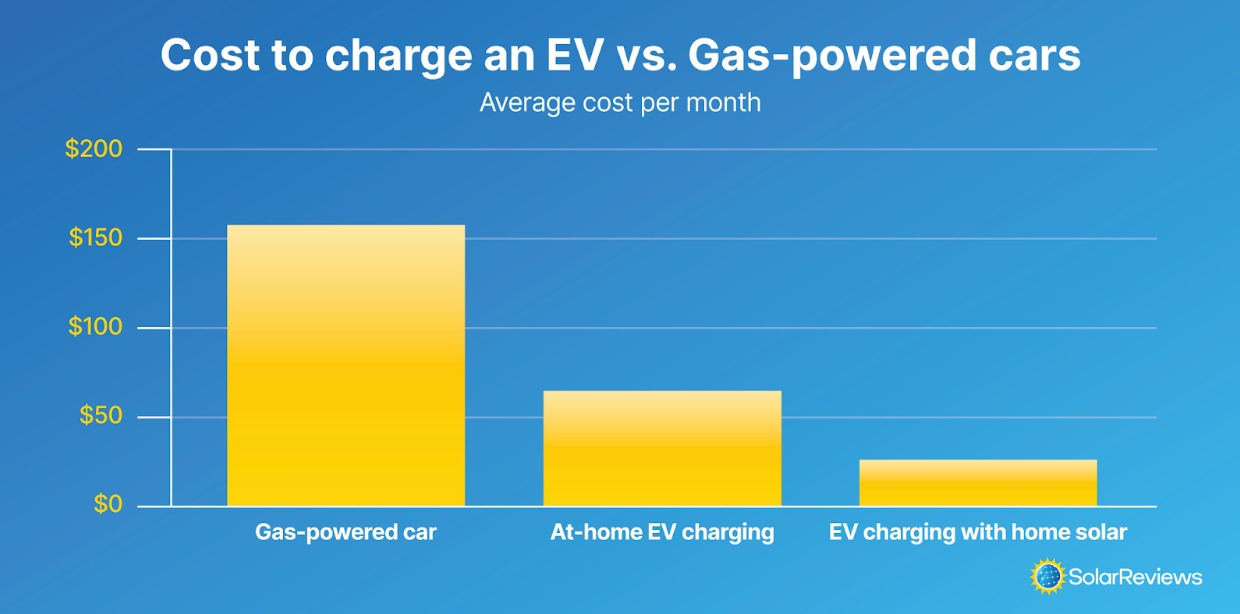
Ever wondered how much it really costs to "fill up" an electric vehicle (EV)? It's a question that's becoming increasingly relevant, and frankly, pretty fun to explore. As more of us consider ditching gas guzzlers for sleek, silent EVs, understanding the economics of charging becomes crucial. After all, nobody wants a surprising electricity bill! Plus, figuring out the costs is a great way to compare EVs to their gasoline-powered counterparts and see if making the switch is truly a good financial move.
So, what's the purpose of understanding EV charging costs? Well, it empowers you to make informed decisions. It allows you to budget effectively if you already own an EV. It helps you compare the total cost of ownership between an EV and a traditional car if you're considering a purchase. And it helps you understand how different charging options – home charging, public charging, fast charging – impact your wallet. The benefit is simple: knowledge is power (pun intended!), especially when it comes to managing your finances and understanding the environmental impact of your transportation choices.
Think about how this information can be used in everyday life. Imagine you're a teacher. You could use EV charging costs as a real-world example in a math class, demonstrating calculations involving kilowatt-hours, electricity rates, and driving distances. You could even compare the carbon footprint of driving an EV versus a gasoline car, turning it into a mini-lesson on sustainability. In your daily life, understanding charging costs helps you plan road trips. Knowing the price per kilowatt-hour at various charging stations along your route allows you to estimate your travel expenses accurately, just like you would with gasoline prices. It can also influence when you choose to charge – taking advantage of off-peak electricity rates can save you a significant amount of money.
Must Read
The cost of charging an EV boils down to a few key factors. First, there's the size of your EV's battery, measured in kilowatt-hours (kWh). A larger battery means you can drive further, but it also takes more electricity to charge. Second, there's the electricity rate you pay. This varies depending on your location, your electricity provider, and the time of day. Some providers offer cheaper rates during off-peak hours, such as overnight. Public charging stations also have varying rates, and fast-charging stations tend to be more expensive than slower ones. Finally, the efficiency of your EV also plays a role. Just like with gasoline cars, some EVs are more efficient than others, meaning they can travel further on the same amount of electricity.
Here are a few simple ways to explore EV charging costs yourself. Start by checking your electricity bill to find your current rate per kWh. Next, look up the battery size and energy consumption of the EV you're interested in (or already own). Websites like the EPA's FuelEconomy.gov provide this information. Then, you can use online calculators or simple math to estimate the cost of charging. For example, if your electricity rate is $0.20 per kWh and your EV has a 60 kWh battery, it would cost $12 to fully charge the battery from empty (60 kWh x $0.20/kWh = $12). Remember to factor in that you rarely charge from completely empty! Also, explore apps like PlugShare or Electrify America to see public charging station locations and rates in your area. Experiment with different charging scenarios to see how much you could save by charging at different times or at different locations. Happy charging!