
How Much Does It Cost To Charge A Chevy Volt
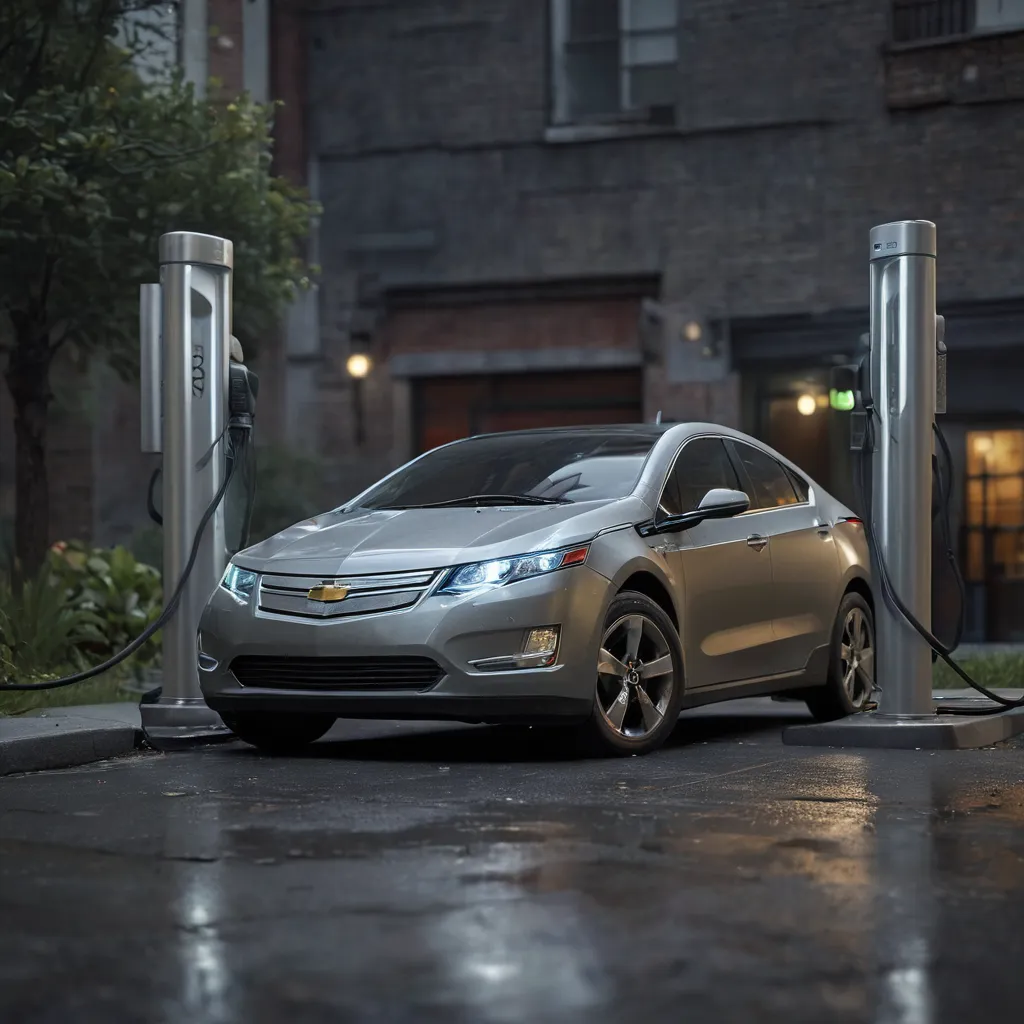
Okay, picture this: I'm driving home late, feeling smug in my (hypothetical) Chevy Volt. The radio's humming, I’m thinking about that leftover pizza, and then BAM – the dreaded low battery warning. Range anxiety kicks in. Ugh. Time to plug in. But wait... how much is this midnight snack for my electric steed actually going to cost me?
That, my friends, is the question we're tackling today. Because let’s be honest, the whole point of driving a Volt (or any plug-in hybrid, really) is to save money, right? But if charging ends up costing a fortune, what's the point?
Understanding the Basics: kWh and Your Electric Bill
First things first, we need to talk about kilowatt-hours (kWh). This is the unit your electricity bill uses to measure your energy consumption. Think of it like gallons for gasoline, but for electrons. Your electric bill will show you the price per kWh in your area. It varies wildly across the country (and even within the same state!), so this is step one. Go dig out your bill! I'll wait… (Seriously, go get it.)
Must Read
Once you have that price per kWh, you’re halfway there. See? I told you it wasn't rocket science. Now, let's consider the Chevy Volt’s battery.
The Volt's battery capacity varies slightly depending on the model year. The first generation (2011-2015) had a smaller battery than the second generation (2016-2019). Let’s say, for the sake of simplicity, we're dealing with a Volt with a 16 kWh battery. This means that theoretically, it takes 16 kWh to fully charge a completely depleted battery. Theoretically.
Factoring in Charging Efficiency
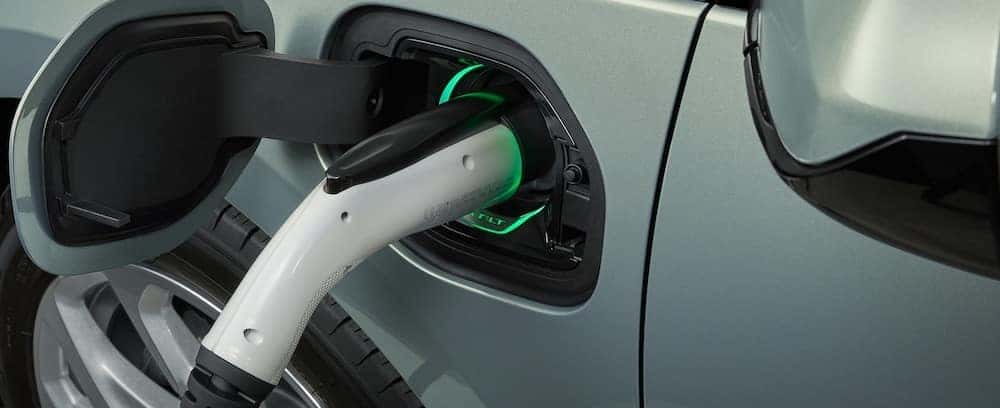
And here’s where things get a little… well, less theoretical. Charging isn't perfectly efficient. Some energy is lost as heat. Think of it like trying to pour water into a container with a tiny hole. Some spills out. Similarly, some energy is lost during the charging process.
Generally, you can expect charging efficiency to be somewhere around 85-90%. This means that you might need to draw closer to 18-19 kWh from the grid to fully charge that 16 kWh battery. (See, that's why "theoretically" was in italics earlier. I'm setting you up for success here!)
Calculating the Cost: The Formula!
Okay, drumroll please… the formula! (Don’t worry, it’s not scary.)
Cost to Charge = (Battery Capacity in kWh / Charging Efficiency) x Price per kWh
So, let's plug in some numbers. Let's say your electricity costs $0.15 per kWh, and we're using a charging efficiency of 85%.
Cost to Charge = (16 kWh / 0.85) x $0.15 = Approximately $2.82

Boom! There you have it. For about $2.82, you can fully charge your Chevy Volt (assuming a 16 kWh battery and $0.15/kWh electricity cost). Not bad, right? That's probably cheaper than a fancy coffee these days.
But Wait, There's More! (Important Considerations)
Hold on, don’t go spending all your newfound savings just yet. There are a few more factors to consider:
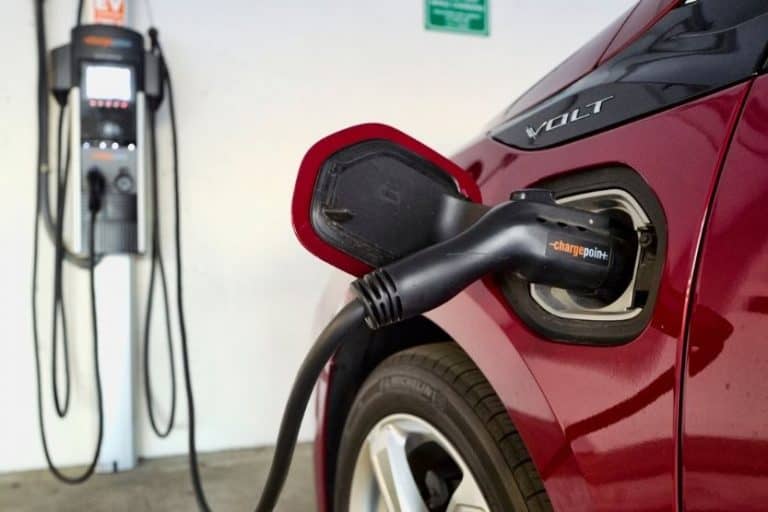
- Level 1 vs. Level 2 Charging: A standard 120V outlet (Level 1) charges much slower than a 240V outlet (Level 2). While Level 1 is convenient, it's less efficient, potentially increasing your cost per charge slightly. Also, it takes forEVER. Seriously.
- Time-of-Use Rates: Many utility companies offer lower electricity rates during off-peak hours (like overnight). If you can charge your Volt while rates are low, you'll save even more money. Check with your utility company!
- Partial Charges: You rarely need to charge from 0% to 100%. Usually, you're just topping off the battery. This means the actual cost per charge will often be less than the calculated amount.
- Public Charging Stations: While convenient, public charging stations often cost more than charging at home. Plus, you might have to pay for parking while you wait. Keep that in mind.
The Bottom Line: Still Cheaper Than Gas!
Even with all these variables, charging a Chevy Volt is almost always cheaper than filling up a gasoline car. Plus, you're reducing your carbon footprint. So, go forth and drive electric (or plug-in hybrid), knowing that you're saving money and the planet. And hey, maybe splurge on that extra pizza with your savings. You deserve it!