
How Much Carbon Is In Steel

Ever paused to think about the stuff that builds our world? From the towering skyscrapers that pierce the clouds to the humble spoon stirring your morning coffee, steel is everywhere. It’s the unsung hero, the silent workhorse, the material that literally holds our modern lives together. But have you ever wondered what makes steel so incredibly... steely? The secret, my friend, lies in a tiny, often overlooked element: carbon.
Think of steel not as a pure metal, but as a culinary masterpiece. It’s an alloy – a fantastic blend of iron, primarily, with a dash of something extra to give it that special flavor and texture. And that “dash” is usually carbon. It’s like adding just the right amount of spice to a dish; too little, and it’s bland; too much, and it’s overwhelming. For steel, carbon is the magic ingredient that dictates its strength, flexibility, and even how it shines.
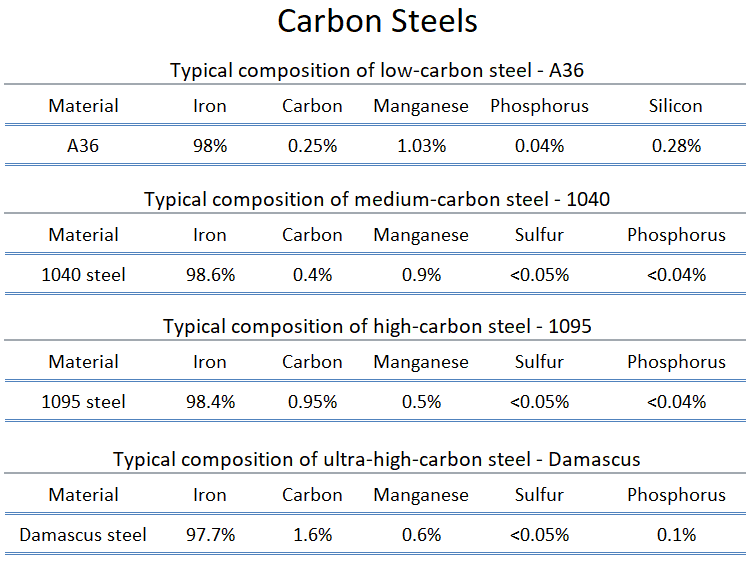
So, how much carbon are we talking about? Prepare for a fun fact: it's surprisingly little! We're not talking about chunks of charcoal here. We're talking about a delicate balance, typically ranging from a microscopic 0.02% to just over 2% by weight. That tiny percentage makes a world of difference.
Must Read
The Goldilocks Principle of Steel
Just like Goldilocks finding her perfect porridge, steel needs just the right amount of carbon for its intended purpose. Let's break it down:
1. Low Carbon Steel (a.k.a. Mild Steel): This is the most common kid on the block, boasting less than 0.25% carbon. Think of it as the friendly, flexible giant. It’s easily shaped, welded, and doesn’t break the bank. You’ll find it in car bodies, structural beams (hello, Eiffel Tower!), nuts, bolts, and even your refrigerator. It’s strong enough for everyday abuse, but still malleable.

2. Medium Carbon Steel: Stepping it up a notch, this steel contains between 0.25% and 0.60% carbon. It’s stronger and harder than its mild cousin, but a bit less ductile (meaning it won't stretch as much before breaking). This is the stuff that makes railway tracks, engine parts, and heavy machinery components so robust. It's built for demanding jobs that need a bit more grit.
3. High Carbon Steel: Now we're getting serious! With more than 0.60% carbon, this steel is the heavyweight champ when it comes to hardness and wear resistance. It can hold a sharp edge like a dream, making it perfect for your favorite kitchen knives, industrial tools, chisels, and springs. The trade-off? It’s also more brittle, meaning it can snap under extreme stress if not handled correctly. Think of a samurai sword – incredibly sharp, but needs respect.

Beyond the Basics: Fun Steel Facts!
Did you know that the legendary Damascus steel of ancient times, famous for its wavy patterns and incredible sharpness, owed its properties to carefully controlled carbon content and intricate forging techniques? It was like metallurgical magic!
And speaking of magic, the very presence of carbon atoms within the iron crystal lattice actually hinders the movement of dislocations – tiny imperfections that allow metals to deform. By "locking up" these dislocations, carbon effectively makes steel much stronger and harder than pure iron alone. It's like adding tiny, invisible reinforcements!

While we're talking about carbon in steel, it's a great time to briefly mention the carbon footprint of steel production. Modern steelmaking, especially with Electric Arc Furnaces (EAFs) using recycled scrap steel, is becoming increasingly environmentally conscious. Recycling steel is a fantastic win-win, as it significantly reduces energy consumption and CO2 emissions compared to making new steel from raw materials. So, that steel frame in your bike or the can of beans in your pantry? It's highly recyclable!
Practical Tips for the Steel-Savvy Consumer
Appreciate the Craft: Next time you pick up a quality kitchen knife, a sturdy gardening tool, or admire a sleek building, take a moment. The specific type of steel, finely tuned by its carbon content, is a testament to incredible material science and engineering. Understanding this makes you a more appreciative consumer.
Look for Longevity: High-carbon steel knives, for example, often require more care (like handwashing and drying immediately to prevent rust), but their ability to hold an edge is unparalleled. If you're buying tools, knowing the carbon content can help you choose the right one for durability and performance.
Recycle, Recycle, Recycle: Steel is one of the most recycled materials on the planet! So, when that old appliance or car reaches the end of its life, make sure it finds its way to a recycling center. You're not just doing good; you're supporting a circular economy that keeps this incredible material – and its precious carbon – in use for generations.
It's easy to take steel for granted, but a little peek under the hood reveals a fascinating world where a tiny percentage of carbon dictates strength, resilience, and function. So, the next time you interact with steel, give a silent nod to its hidden ingredient. It’s a powerful reminder that sometimes, the smallest details make the biggest difference, shaping the very fabric of our modern lives.