How Much A Year Is 55 An Hour
Ever found yourself staring at a job listing, perhaps for a tempting gig, and seeing a fantastic hourly rate like $55 an hour? The immediate thought is often, "Wow, that sounds great!" But then the practical side kicks in: "How much is that a year, really?" It's a question many of us ponder, whether we're considering a new role, evaluating our current worth, or just indulging in a bit of delightful daydreaming. Figuring out your annual income from an hourly wage is more than just a math problem; it's an empowering piece of information that helps us paint a clearer picture of our financial future.
This simple calculation serves a remarkably important purpose in our everyday lives. It’s the bedrock of personal budgeting, allowing us to move beyond week-to-week thinking and plan for bigger goals like saving for a down payment, a dream vacation, or even retirement. Knowing your annual potential helps you assess whether a job offer truly aligns with your financial aspirations and the cost of living in your area. It transforms an abstract hourly figure into a concrete, actionable number that you can use to make informed decisions about your lifestyle and future investments.
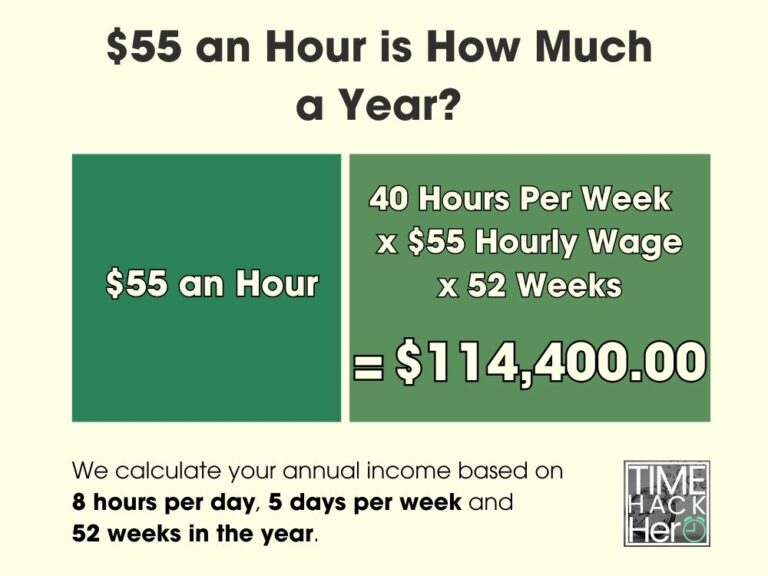
So, how do we get from that exciting $55 an hour to a solid annual figure? The most common calculation assumes a standard full-time work week. Most full-time positions are based on 40 hours per week. And there are typically 52 weeks in a year. Let's do the math together:
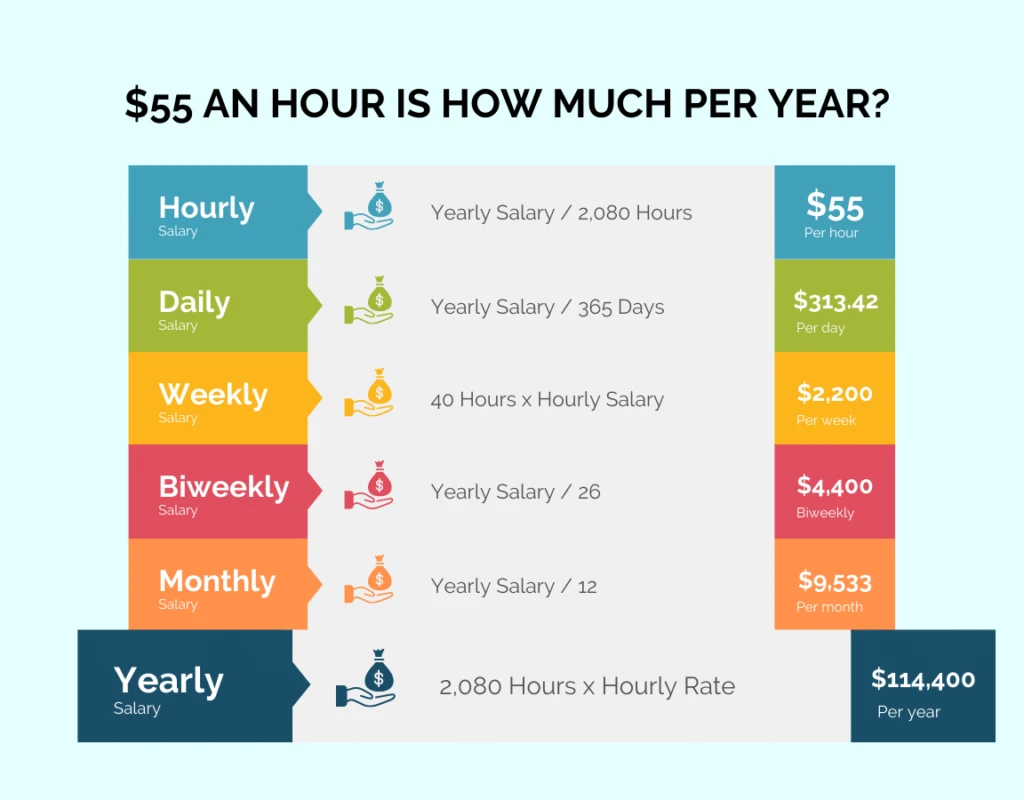
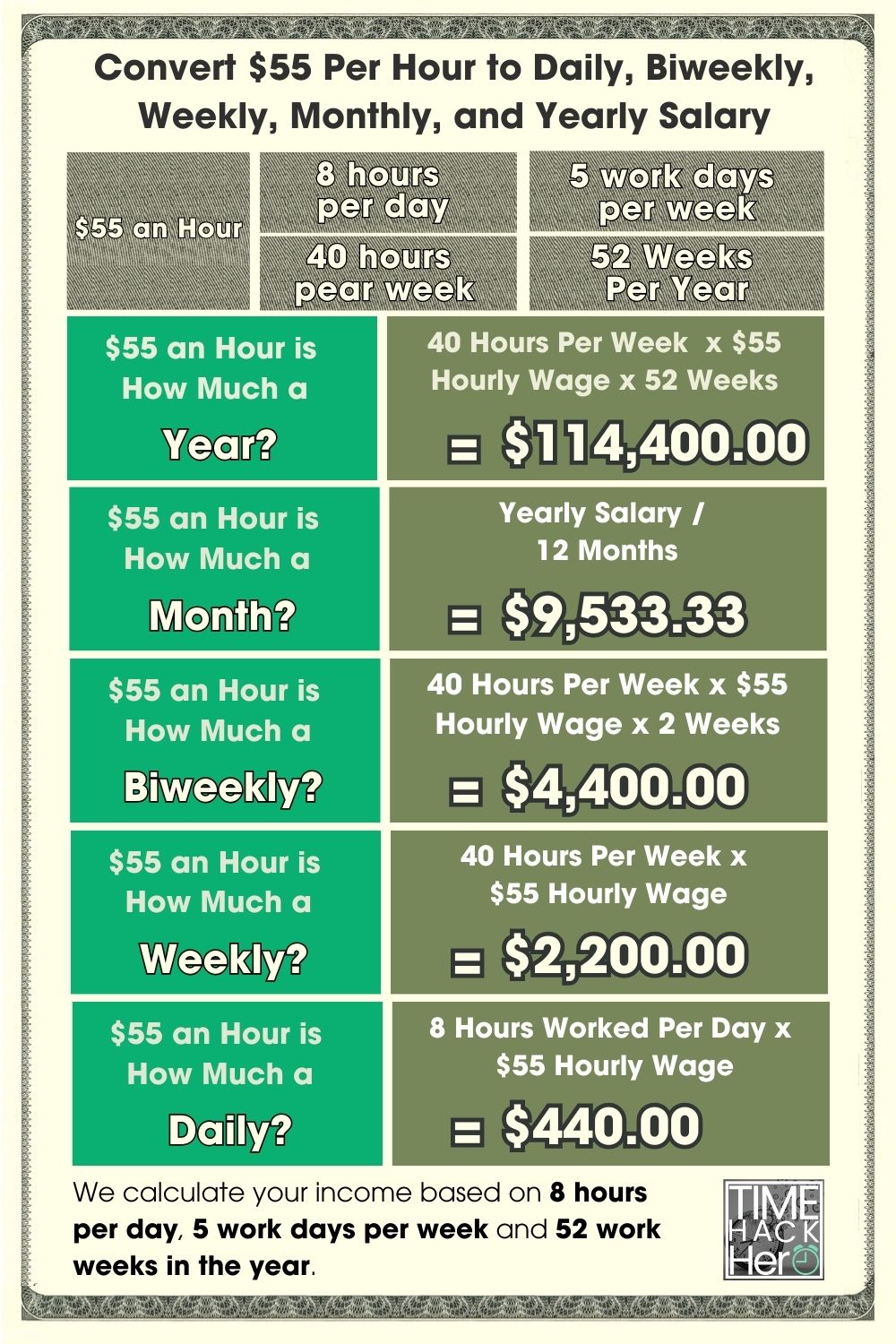
First, multiply your hourly rate by the number of hours you work per week: $55/hour x 40 hours/week = $2,200/week.
Next, multiply your weekly earnings by the number of weeks in a year: $2,200/week x 52 weeks/year = $114,400/year.
There it is! At $55 an hour, you're looking at a gross annual income of $114,400. This calculation is a common benchmark for hourly employees, freelancers projecting their income, or even salary earners wanting to know their equivalent hourly rate.
Must Read
To enjoy this understanding even more effectively and ensure you’re making the most of your earnings, here are a few practical tips:
- Don't Forget Taxes and Deductions: The $114,400 is your gross income. Uncle Sam and other deductions (like health insurance premiums or retirement contributions) will take their share. Always factor in your net pay when budgeting.
- Consider Your Benefits: A job often comes with more than just an hourly wage. Think about paid time off, health insurance, 401(k) matching, or other perks. These can add significant value to your total compensation package.
- Account for Variable Hours: Is your work consistently 40 hours a week? If you work less or frequently put in overtime, adjust your calculations accordingly. Overtime (often 1.5 times your regular rate) can significantly boost your annual earnings.
- Budget and Track: Use apps or spreadsheets to track your income and expenses. This helps you see where your money goes and where you can save, making that $114,400 work smarter for you.
- Plan for the Future: Now that you know your annual earning potential, set financial goals. Whether it’s paying off debt, building an emergency fund, or investing, having a clear annual figure helps you plan for long-term financial health.
Understanding your true earning power is a vital step toward savvy financial planning and achieving your personal goals. So, the next time you see that impressive hourly rate, you'll know exactly what it means for your year!