
How Many Watts Would It Take To Power A House
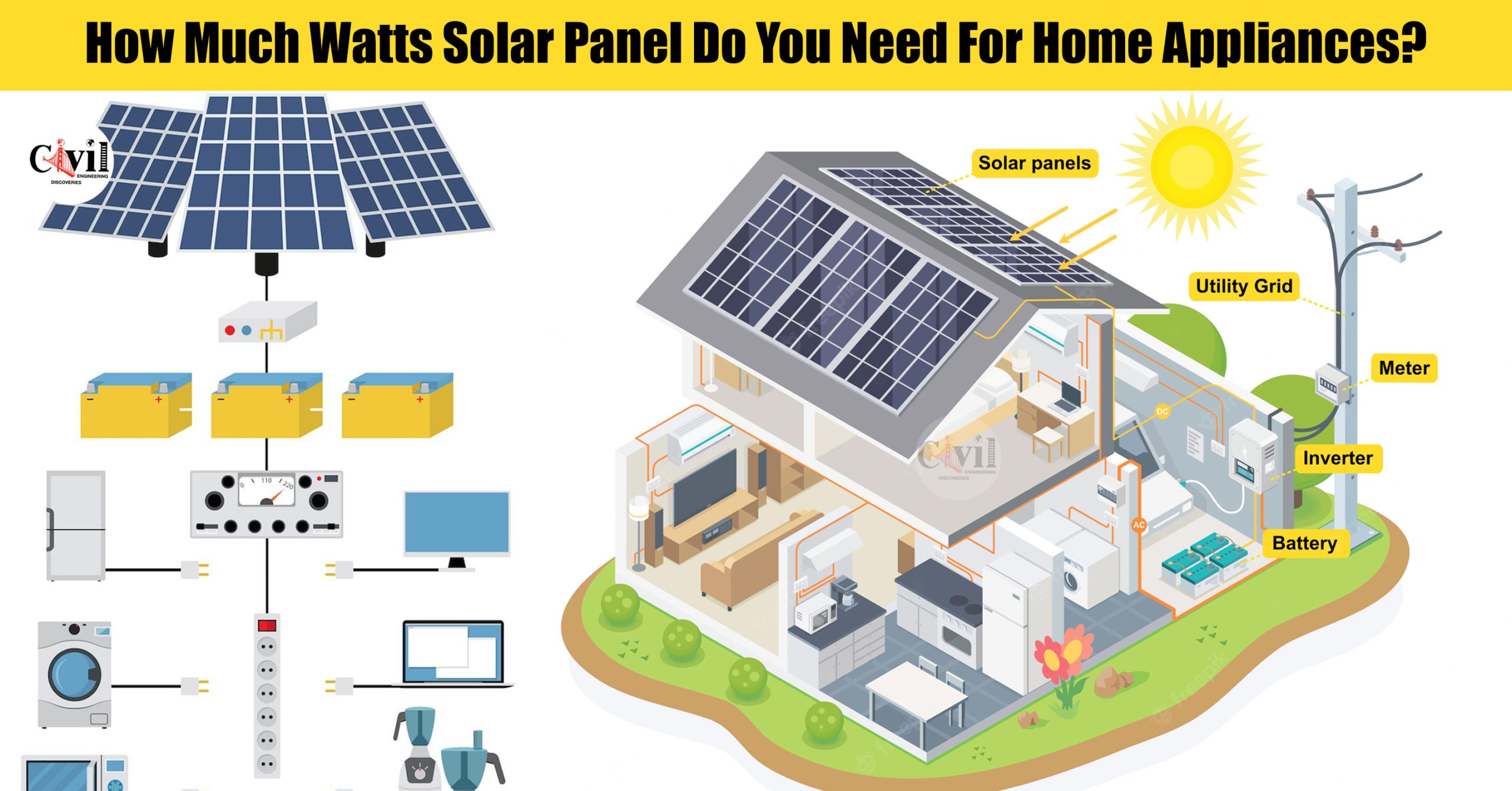
Ever wondered how much juice it really takes to keep your house humming? Like, what's the magic number of watts needed to power everything from your morning coffee to your late-night Netflix binge? It's a surprisingly fascinating question, and the answer... well, it's not as simple as you might think. Let's dive in!
So, What's the Big Deal About Watts?
First things first: watts are just a measure of power. Think of it like this: voltage is the pressure pushing electricity, and amperage is the amount of electricity flowing. Watts are what you get when you multiply them together. It's the rate at which energy is being used. A lightbulb might be 60 watts, meaning it uses 60 joules of energy every second. Got it?
Why should you care? Because understanding your power consumption can help you save money, make informed choices about appliances, and maybe even impress your friends with your newfound electrical wizardry!
Must Read
The Wattage Wild West: A House-Sized Guessing Game
Okay, so how many watts does it actually take to power a house? The honest (and slightly annoying) answer is: it depends. A lot. Think about it: are you living in a tiny, minimalist apartment, or a sprawling mansion with a heated swimming pool and a home theater? Big difference, right?
Generally speaking, a typical American home uses around 30 kilowatt-hours (kWh) per day. That's 30,000 watt-hours. To get the instantaneous wattage, which is what we're really after, we need to consider that usage spread across the 24 hours in a day. If all that power was used evenly across the entire day, that would be roughly 1250 watts constantly.
But power isn't used evenly. At certain times of day you might be drawing 3000-4000 watts, when you’re cooking dinner, running the dryer, and having the TV on. At other times, particularly overnight, the wattage draw might be lower, maybe just 200-300 watts to run the fridge and a few other things that stay on.
Let's Break It Down: Appliance by Appliance
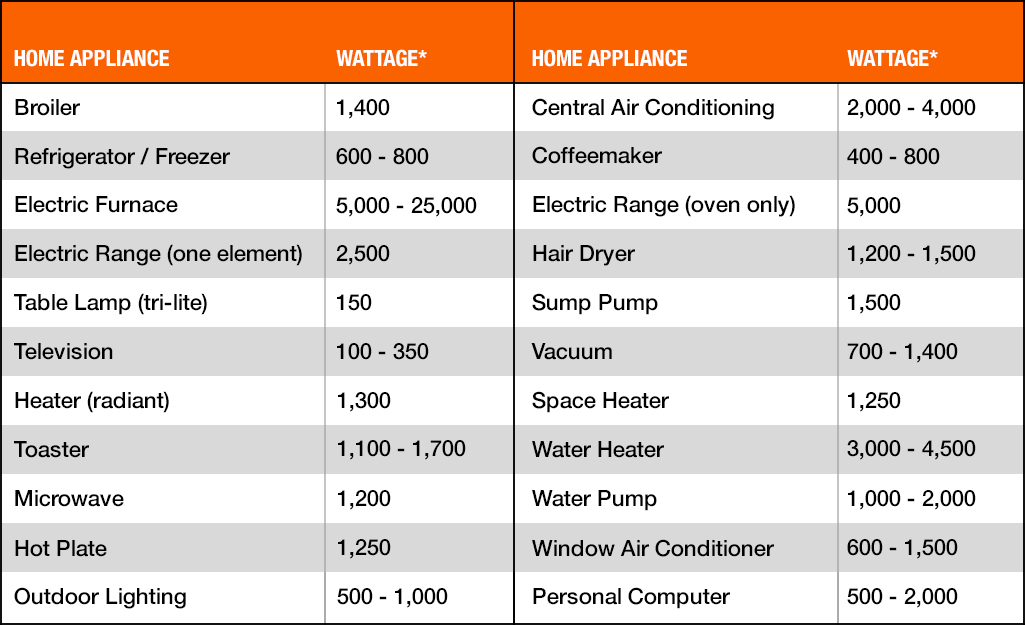
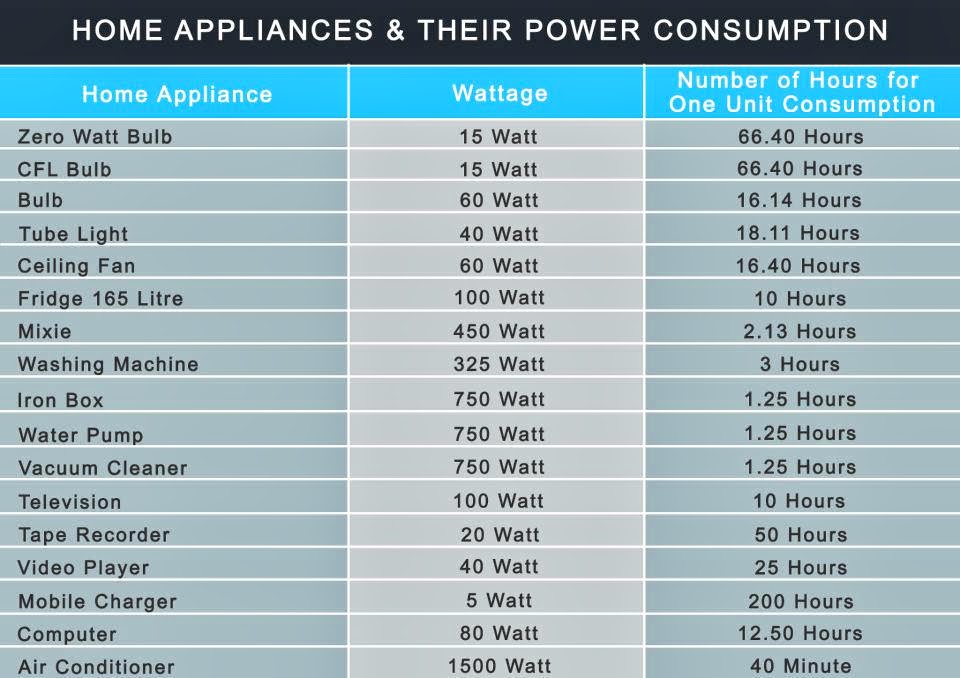
To get a better feel, let's look at some common household appliances and their typical wattage:
- Refrigerator: 100-400 watts (it fluctuates as the compressor cycles)
- Microwave: 600-1200 watts
- Television: 50-200 watts (LED TVs are much more efficient than older models)
- Laptop: 50-100 watts
- Washing Machine: 300-500 watts (during operation)
- Air Conditioner (window unit): 500-1500 watts (depending on size)
- Central Air Conditioner: 3000-5000 watts (gulp!)
- Electric Heater: 1000-1500 watts
- Hair Dryer: 1000-1800 watts
- Lightbulb (LED): 5-15 watts
See how quickly it adds up? Running a few high-wattage appliances simultaneously can easily push you over 2000 or 3000 watts. That's why understanding your power usage is so important.
Fun Comparisons: Watts in Perspective
To give you a better sense of scale, think of it this way:
- A 100-watt lightbulb is about the same power as charging ten smartphones at once.
- Running a central air conditioner is like running 30 or more LED TVs simultaneously.
- Heating water in an electric kettle (around 1500 watts) requires about the same power as running fifteen 100-watt lightbulbs!
Pretty wild, huh?
The Peak Power Problem: Why It Matters
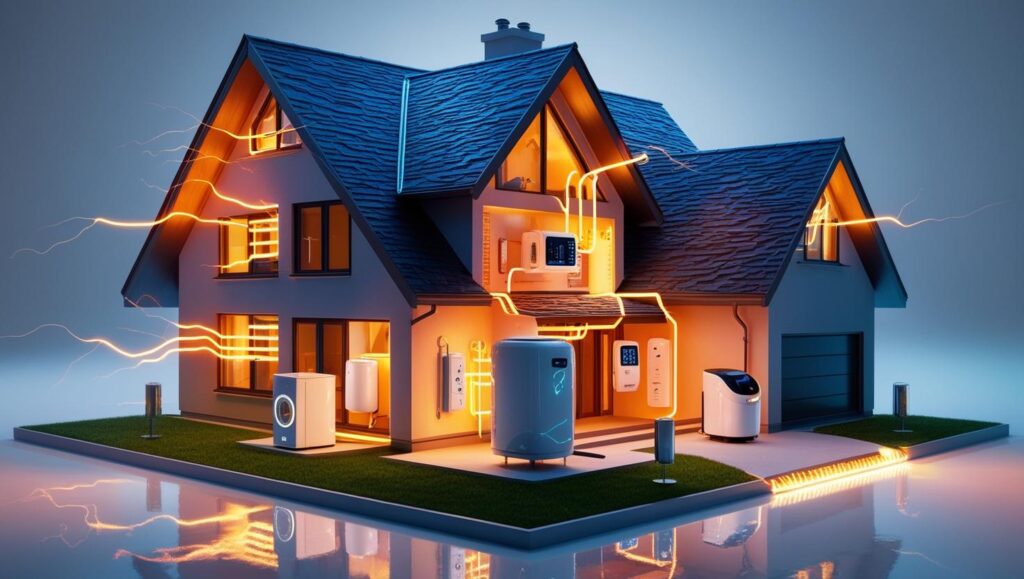
Here's where things get a bit more nuanced. You might think that if your house uses an average of 1250 watts, that's all you need to worry about. But what about those peak moments when you're running multiple high-power appliances at once? That's your peak demand, and it's crucial to consider.
Why? Because your home's electrical system is designed to handle a certain maximum load. If you consistently exceed that load, you could trip breakers, blow fuses, or even cause more serious electrical problems. Also, if you plan on adding solar power and batteries, or if you want to get a generator to cover grid outages, you need to take peak power demand into account.
Estimating Your Home's Wattage Needs: A Rough Guide
So, how do you figure out your home's wattage needs? Here's a simplified approach:
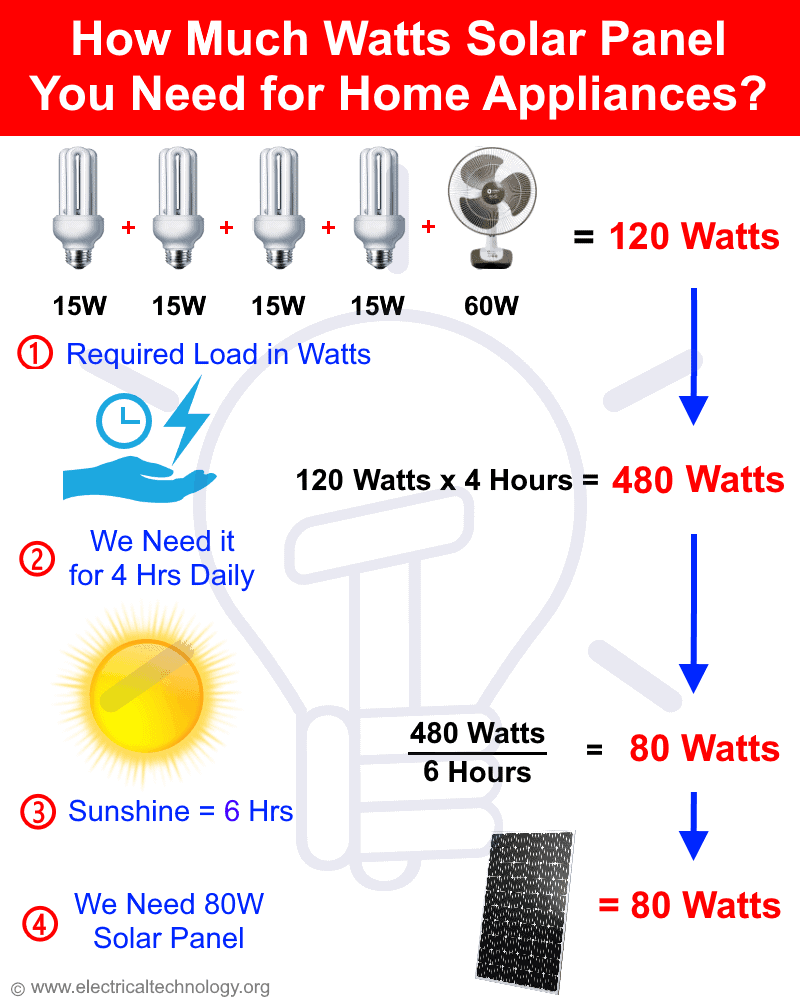
- List all your appliances. Write down the wattage of each one. You can usually find this on a sticker on the appliance itself.
- Consider usage patterns. How often do you use each appliance? For how long?
- Estimate peak demand. Think about the times of day when you're likely to be using the most power. Add up the wattage of all the appliances you're likely to be running simultaneously.
- Add a buffer. To be safe, add a 20-30% buffer to your peak demand estimate.
Alternatively, you can use a whole-house energy monitor. These devices connect to your electrical panel and provide real-time data on your power consumption. They can be a great way to get a precise understanding of your energy usage habits.
The Bottom Line: Powering Your Palace
While there's no one-size-fits-all answer, a typical home might need anywhere from 3,000 to 7,000 watts to operate comfortably, with the peak demand varying depending on the size of the house and the appliances used. A larger house with central air, electric heat and several inhabitants might regularly pull 8,000 – 10,000 watts at peak times!
The coolest part? Understanding your energy consumption empowers you to make smarter choices, save money, and contribute to a more sustainable future. So, go forth and wattage responsibly!