
How Many Watts Is A Led Bulb
The Great Watt Mystery
Ever stood in the lighting aisle, squinting at light bulb boxes? You're probably looking for one crucial piece of information. How many watts does it have?
It’s a natural reflex, isn't it? We've been doing it for decades. It's almost coded into our shopping DNA.
We remember the good old days of 40-watt, 60-watt, 100-watt bulbs. These numbers told us exactly what we needed to know.
Must Read
A 100-watt bulb was bright. A 40-watt bulb was dim. It was a simple, understandable system. Or so we thought.
Hold On To Your Hats: It's the Wrong Question!
Alright, prepare for a tiny, earth-shattering revelation. Asking "how many watts is an LED bulb?" is, well, it's kind of like asking "how many miles per hour is a cat's purr?"
It’s a charming question, full of good intentions, but it doesn't quite make sense for LEDs. It's a bit of a mismatch.
I know, I know. This sounds like utter heresy. But bear with me, folks. There's a logical, brighter method to my madness.
This isn't about shaming anyone; it's about upgrading our light bulb language. It's time for a mental software update.
A Tale of Two Bulbs: Old School vs. New Cool
Back in the day, with those trusty incandescent bulbs, watts were a pretty good stand-in for brightness. More watts definitely meant more light. Simple equation, right?
But those bulbs were also wonderfully inefficient. Most of their energy turned into heat, not actual light. They were like tiny, glowing space heaters.
Enter the LED bulb. These little marvels are super efficient. They literally sip electricity, hardly producing any wasted heat at all.
So, a low wattage for an LED doesn't mean it's dim. It just means it's incredibly good at its job. It's like a tiny, super-powered ninja of light, using minimal effort.

Introducing Our True Hero: The Lumen!
Forget watts for a moment, friends. Let's talk about the real superstar of brightness. Say hello to the lumen.
A lumen is what actually measures how much visible light a bulb produces. It’s the direct, honest-to-goodness measure of brightness.
Think of it this way: watts measure how much gas your car uses. Lumens measure how fast your car actually goes, or how much power it truly puts out.
You want to know how fast you'll get there, or how bright your room will be, right? Not just how much fuel you're burning.
"For LEDs, watts tell you about its diet plan. Lumens tell you about its dazzling performance."
It's a subtle but mighty distinction. Once you grasp it, your light bulb shopping will be forever changed. For the brighter, I promise!
It's like unlocking a secret level in the game of home improvement. You'll gain a superpower for perfect lighting.
Why We Still Cling to Watts (It's Okay, We All Do It)
Habits are incredibly hard to break. We grew up associating "watts" with "bright." It's practically etched into our very souls.
Even when we know better, our eyes still dart to that familiar "W." It's like checking for a price tag on a priceless antique, just out of instinct.
The light bulb companies know this deep-seated habit. That's precisely why they often put "60-watt equivalent" on the LED packaging.

It’s a gentle, reassuring nod to our incandescent past. They're essentially winking and saying, "Hey, this LED uses next to no power, but it's just as bright as your old 60-watt friend!"
It’s a helpful bridge, a training wheel, to help us transition. But it’s time to take those training wheels off and truly ride.
Real-World Magic: LED Wattage Explained (Sort Of)
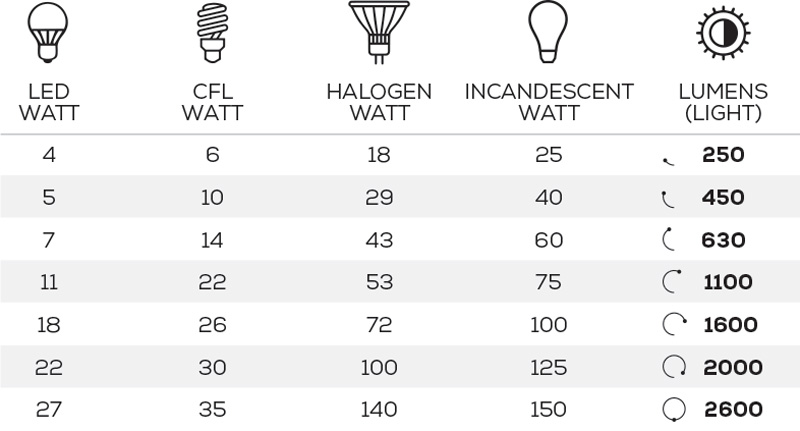
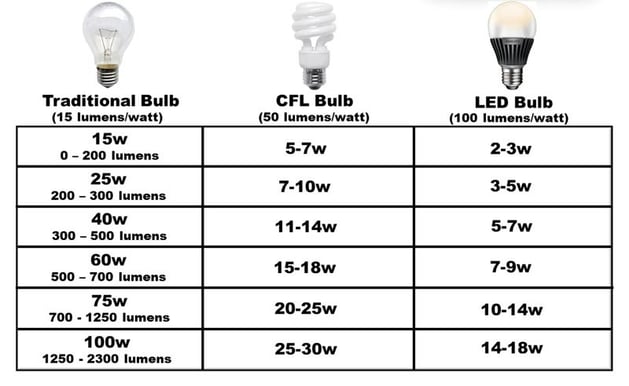
Let's get down to some truly mind-bending numbers. Your old, beloved 60-watt incandescent bulb? It probably gave you around 800 lumens of light.
A modern, sleek LED bulb that gives you that exact same 800 lumens? It might only use a mere 8, 9, or perhaps 10 watts. Incredible!
Did you catch that astounding difference? Same brightness, but a staggering ten times less power consumption. That's not just cool, that's like, superhero-level efficiency, saving the day for your energy bill.
Imagine your old 100-watt bulb. It bravely pushed out about 1600 lumens. An LED can give you that identical brilliant light for just 15 watts. Astonishing, isn't it?
This means truly significant savings on your electricity bill every single month. Your wallet will send you thank-you notes. The planet will give you a silent, appreciative high-five too!
Becoming a Lumen Literate Legend!
So, next time you're in the store, bypass the watts. Give them a quick, knowing glance, then confidently move on to the real star.
Your mission, should you choose to accept it, is to find the lumen count. It's usually prominently displayed, often in big numbers.
If you want a cozy, dim light for relaxation, look for lower lumens, maybe 450. For a brightly lit general room, aim for 800-1100 lumens. For super bright task lighting, go 1600+ with confidence.

It’s a simple, powerful shift in focus, but it makes all the difference in your lighting experience. You'll be choosing light for its actual light output, not its outdated energy guzzling habits.
The Unspoken Power of Knowing Your Lumens
Understanding lumens makes you a smarter, savvier consumer. You won't fall for marketing tricks based on old technology or outdated metrics.
You'll be choosing illumination that truly suits your aesthetic and functional needs, perfectly. No more frustrating guessing games!
And just think of all the energy you’re saving! Every single watt not consumed is a little victory for your bank account and a big win for the environment. It adds up.
"Switching your focus from watts to lumens is like upgrading from a dusty, old flip phone to a sleek, brand-new smartphone. It just makes undeniably more sense."
It's truly time to break free from the traditional shackles of watt-thinking. Embrace the bright, incredibly efficient future of lumens!
Embrace the New Paradigm (It's Not Scary, Promise!)
It might feel a little bit strange at first, I'll admit it. Old habits die incredibly hard, after all. But trust me, once you go lumen, you truly won't go back.
You'll start seeing the entire world of light bulbs with completely new eyes. Eyes that appreciate genuine brightness and remarkable efficiency.
So, next time someone innocently asks "How many watts is that LED?", you can offer them a knowing, confident smile. Then you can casually drop the L-word.
"Actually, what you really want to know is its lumen output," you'll say with a flourish. And they'll be utterly impressed by your wisdom.
You, my friend, will be a shining beacon of light knowledge, skillfully leading others out of the confusing watt-wilderness. A true illumination innovator, indeed!
Watt's Up With That? (Pun Intended, Obviously)
Let's quickly recap this illuminating journey into the radiant world of modern light bulbs. Watts for LEDs are about how much precious power they consume.
They are absolutely not about how brightly they shine. That, dear reader, is the lumen's job, our undisputed brightness hero.
So, stop chasing ghosts of incandescent past. Start joyfully hunting for those glorious, illuminating lumens!
It's a surprisingly simple change, but one that profoundly empowers you as a consumer. You'll save money, save energy, and always pick the perfect brightness for any situation.
Go forth, brave shopper, and illuminate your world wisely and wonderfully. And maybe, just maybe, share this little secret with a friend or two.
Because knowing the subtle but important difference between watts and lumens? That's truly bright thinking in action.
It's like finally understanding the secret handshake of smart, efficient lighting. You're officially in on the know.
So, next time, when you pick up that LED box, remember this golden rule: Lumens are your ultimate light guide. Watts are just the energy bill reminder.
Happy lumen hunting, everyone! May your future be bright, your choices be smart, and your energy bills be delightfully low. You've got this!