
How Many Watts Is A Good Speaker
Ever stared at speaker specs and seen a number like "100 Watts" or "200 Watts," wondering if bigger is always better? You're not alone! It's one of the most common speaker myths out there. And guess what? The answer is probably not what you think! Let's dive into the wonderfully quirky world of speaker watts, where things are rarely as straightforward as they seem.
Watts: Not What You Think They Are!
First off, let's clear the air. When you see a speaker rated for, say, "100 Watts," that's usually its power handling capacity. Think of it like a speed limit sign for sound. It tells you how much electrical power the speaker can safely receive from an amplifier without literally blowing its mind (and its cones!). It's not a measure of how loud it will be, but how much power it can handle. Wild, right?
Imagine a bucket. Its size tells you how much water it can hold, not how much water is currently in it or how fast you can fill it. Speaker watts are a bit like that bucket size! They're about capacity, not output.
Must Read
Meet the Real Powerhouse: The Amplifier
Your speaker isn't a lone wolf; it's part of a dynamic duo! Speakers need a partner in crime: the amplifier. It's the amp that actually produces the watts – the electrical energy that makes your speaker vibrate and create sound. So, when people talk about "how many watts a speaker has," they're often mixing up the speaker's ability to receive power with the amplifier's ability to send it.
It’s like saying a spoon has soup. No, the spoon holds the soup, but the pot made it! Your amplifier is the pot, cooking up those delicious watts.
The Secret Sauce: Speaker Sensitivity (dB)
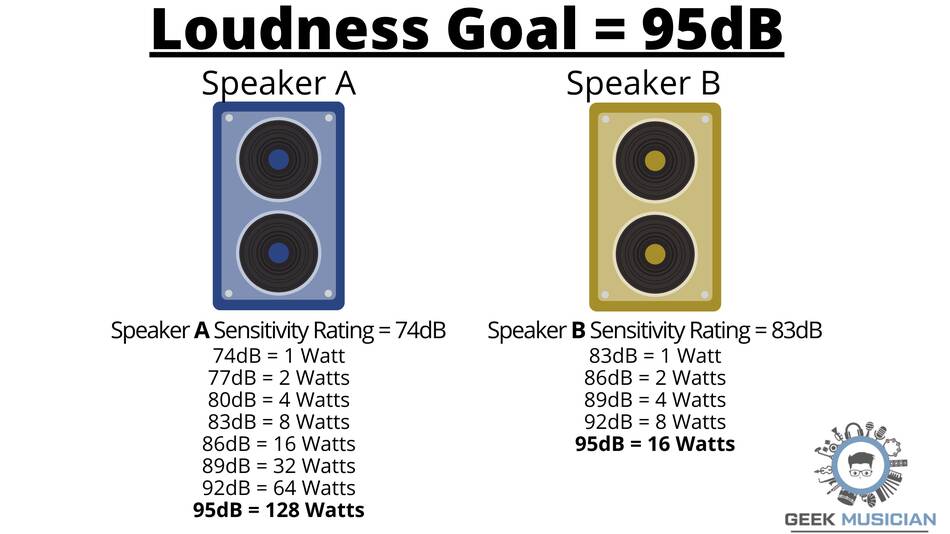
Okay, if watts aren't the whole story, what is? Drumroll, please... it's speaker sensitivity! This is the unsung hero, the ninja of loudness. Sensitivity is measured in decibels (dB) and tells you how loud a speaker gets when you feed it just a tiny, standardized amount of power (usually 1 watt at 1 meter).
Here’s where it gets mind-bending: A speaker with higher sensitivity will get much louder with the same number of watts than a speaker with lower sensitivity. A speaker rated at, say, 90 dB is a loudmouth compared to an 85 dB speaker.

For every 3 dB increase in sensitivity, a speaker sounds twice as loud to your ears, but here's the kicker: it requires half the amplifier power to achieve the same volume! Conversely, to make an 85 dB speaker as loud as a 90 dB speaker, you'd need to double the amplifier power. That's a huge difference! This is why a small, efficient speaker can absolutely belt out tunes, while a "high wattage" speaker might be surprisingly quiet if its sensitivity is low. It's like having a super fuel-efficient car versus a gas guzzler – one needs way less fuel to go the same distance.
Room Size & Your Ears: The Ultimate Judges
So, how many watts are "good"? Well, it totally depends on your batting average! Are you listening in a cozy bedroom, a spacious living room, or trying to recreate a concert hall vibe? Smaller rooms need fewer watts to fill them with sound. Bigger rooms, naturally, need more.

And what about your listening habits? Do you prefer mellow background music, or do you like to crank it up to 11 and feel the bass in your chest? For most casual listening in a typical room, even 10-20 clean watts per channel from an efficient amplifier and speaker combo can sound absolutely fantastic. You’d be surprised! Going for 100+ watts for a small space might just annoy your neighbors without actually improving sound quality much.
The "Watts Race" and Why It's Often Hype
Manufacturers love to brag about big watt numbers because they sound impressive. "1000 Watts!" yells the box. But often, that's a "peak power" number – a fleeting moment of power, not something sustainable. Always look for RMS (Root Mean Square) watts. That's the continuous, realistic power handling. The "watts race" is often more about marketing muscle than actual audio excellence.

And a quick quirky fact: It's actually more dangerous for your speakers to underpower them (using an amplifier with too few watts) than to slightly overpower them! An underpowered amplifier, when pushed too hard, creates "clipping" – distorted, squared-off sound waves that are pure venom for speaker voice coils. So, a slightly more powerful amplifier that stays clean and effortless is often safer for your speakers. Who knew?!
So, What Should You Look For?
Forget chasing an arbitrary "good speaker watt" number. Instead, focus on these nuggets of wisdom:
- Speaker Sensitivity (dB): A higher number (90 dB and above) generally means more sound with less power.
- RMS Watts: This tells you continuous power handling. Aim for an amplifier that provides watts within or slightly above your speaker's RMS rating.
- Build Quality: Good materials and craftsmanship often translate to better sound.
- Your Room: Match the speaker's capabilities to your listening space.
- Your Ears! This is the most crucial part. What sounds good to one person might not to another. Trust your own judgment! Go to an audio store, listen to different setups, and find what makes your favorite tunes sing.
Ultimately, a "good speaker" isn't defined by a single watt number. It's about a harmonious blend of components, designed to work together to create an immersive listening experience. It’s about balance, efficiency, and how the music makes you feel. So next time you're speaker hunting, don't just stare at the watts. Dig a little deeper, ask about sensitivity, and most of all, listen, listen, listen! You'll be amazed at what you discover. Happy listening!