There's a quiet hum that underlies so much of our daily lives, a silent symphony playing behind every wall socket in your home. You probably don't think much about it, but it's there, patiently waiting. It’s the trusty 120 VAC 60 Hz, the unsung hero powering everything from your morning coffee maker to your cozy evening lamp.
We plug things in without a second thought. A phone charger here, a toaster there, the television for that crucial show. Each time, we're tapping into this invisible current, expecting magic to happen. And it does! But have you ever paused to wonder about the specifics, like, "How many watts is that 120 VAC 60 Hz thing, anyway?"
The Great Watt Mystery: A Shocking Revelation!
It’s a fair question, and one that often leads to a delightful little "aha!" moment. You see, if you're asking "How many watts is 120 VAC 60 Hz?", the surprising, perhaps even amusing, answer is… zero watts. That's right, a big, fat, electrifying nothing when it comes to watts!
Imagine holding an empty water hose connected to a faucet. You know there’s water pressure, a potential for flow, right? But until you open the nozzle and spray something, how much water is actually flowing? None! The pressure is there, ready and waiting, but the flow only happens when you give it a job.
The River of Potential and the Hungry Mill
Think of 120 VAC 60 Hz as that powerful river, full of potential, rushing past your house. It's an incredible force, an alternating current (that's the "AC" part) that reverses direction 60 times a second (the "60 Hz"), constantly pushing and pulling with 120 volts of electrical "pressure" (the "120 V"). This river wants to do work.
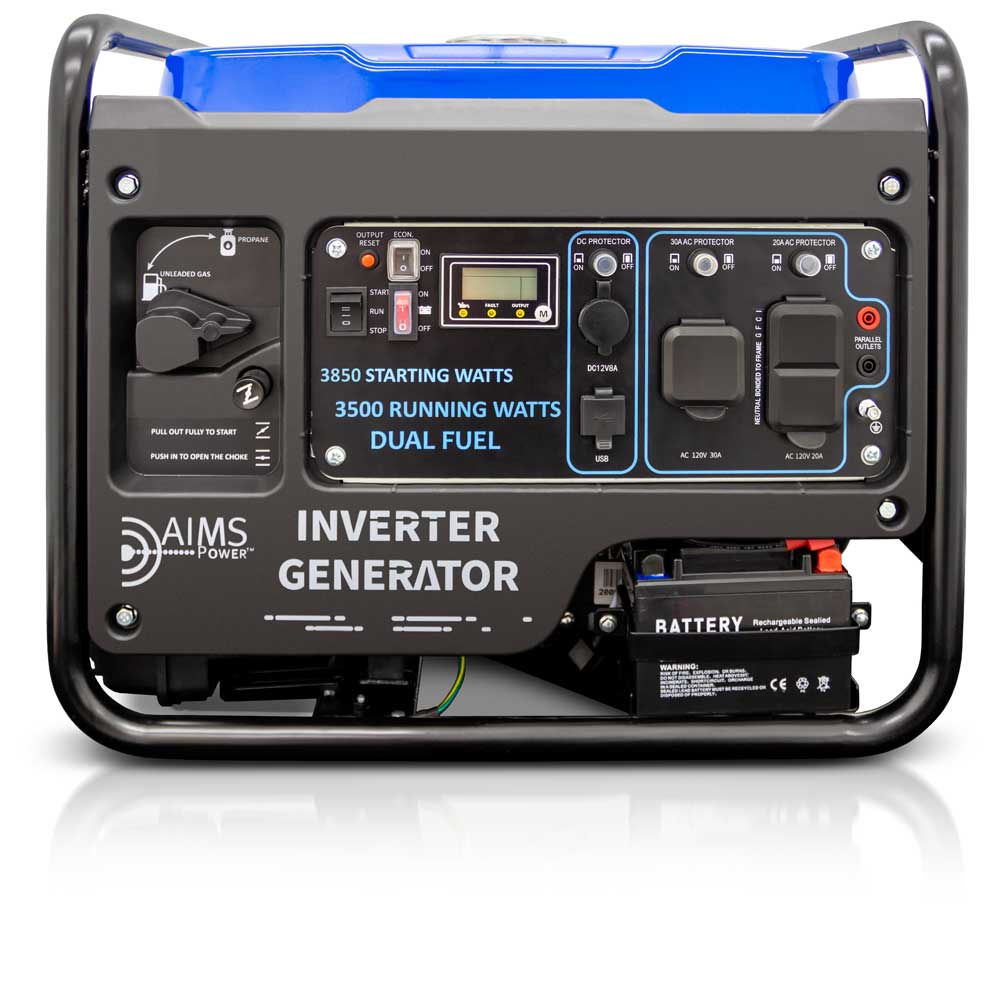
AIMS Power 120 VAC 60 HZ Inverters
Now, watts? Watts are the work being done. They measure how much power is actually being used by a device. They’re like the old watermill by the riverbank. The river provides the energy, but the mill is what uses that energy to grind flour. If there's no mill, or the mill isn't spinning, no flour is being ground, and no work is being done.
120 VAC 60 Hz is the potential, the ready supply. Watts are the measure of what your appliance actually consumes from that supply to make things happen.
Electrical Wiring Practices and Diagrams
So, when you plug in your phone charger, it's a tiny, elegant mill, taking just a little sip from the mighty 120 VAC 60 Hz river. It converts that electricity into the low-voltage direct current your phone craves, happily topping up your battery with perhaps 5 to 10 watts of power.
But then comes the toaster! That’s a hungry, hungry mill. It plunges its heating elements into the full force of the current, turning those electrons into fiery heat. A toaster might gobble up 800 to 1500 watts in a flash, quickly browning your bread. It’s a completely different draw from the same river, the same 120 VAC 60 Hz supply.
Powering Our Tiny Joys and Grand Adventures
This isn't just about technical terms; it's about the everyday magic that lights up our world. That silent 120 VAC 60 Hz is the foundation for countless little heartwarming moments. It’s the gentle glow of holiday lights, each tiny bulb pulling just a fraction of a watt, adding up to a beautiful display of communal joy.
120 Volts To Watts: How Many Watts Is 120 Volts? - LearnMetrics
It's the comforting purr of your refrigerator, keeping your food fresh and ready for family meals. It's the thrill of a video game, the vibrant images and sounds powered by hundreds of watts, all drawn from that ever-present potential. And let's not forget the crucial power behind your coffee maker, delivering that life-giving brew each morning!
Think about the surprise on a child’s face when a new toy whirs to life, or the cozy feeling of an electric blanket warming you on a chilly night. These aren't just electrical currents; they're currents of comfort, connection, and pure delight. They are the stories woven into the fabric of our homes, all made possible by that constant, ready supply.
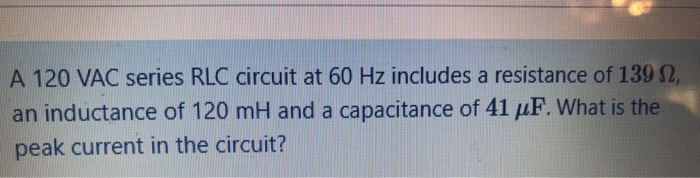
Solved A 120 VAC series RLC circuit at 60 Hz includes a | Chegg.com
The beauty of 120 VAC 60 Hz isn't in its wattage (which, remember, is zero on its own!). Its true wonder lies in its potential. It's the silent promise that when you need power, it's there, ready for any device, big or small, to draw exactly what it needs to create warmth, light, sound, or movement.
A Grateful Nod to the Unseen Hero
So, the next time you plug in your favorite gadget, take a moment. Don’t just see an outlet; see a doorway to possibility. See the invisible river of 120 VAC 60 Hz, patiently waiting for your device—your personal little "mill"—to tap into its energy.
It’s a simple, elegant system that powers our modern lives, often taken for granted. But understanding this tiny bit of electricity wisdom adds a new layer of appreciation for the unseen forces that keep our world humming. It’s a surprising truth that brings a little more fun to the magic of everyday electricity!