How Many Watts In A Kilowatt
Ever gazed at the back of an appliance, or perhaps squinted at your electricity bill, and seen those mysterious words: watts and kilowatts? It might seem like a secret language, whispered only among engineers and electricians. But guess what? Unlocking the simple truth behind them is surprisingly fun, super useful, and honestly, a little bit empowering! It’s like finding a hidden cheat code for understanding the energy all around you.
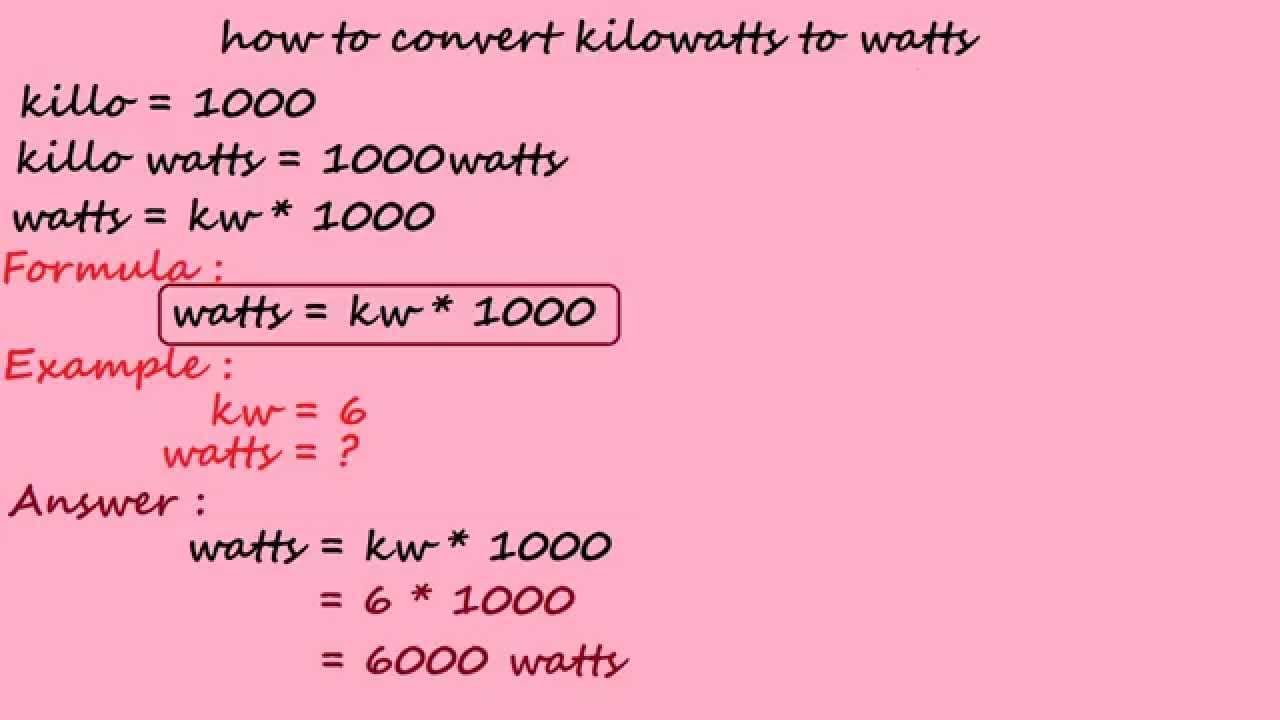
Imagine you're chatting with a friend about how much "oomph" your new toaster has. You could say it uses "a lot of watts," or you could use a slightly bigger, more convenient word. That's where our star, the kilowatt, steps onto the stage. Think of it this way: just like there are 1000 meters in a kilometer, or 1000 grams in a kilogram, there’s a beautifully simple relationship here too.
Ready for the grand reveal? It’s not a trick, and it’s not complicated math. The answer to "how many watts in a kilowatt" is just...
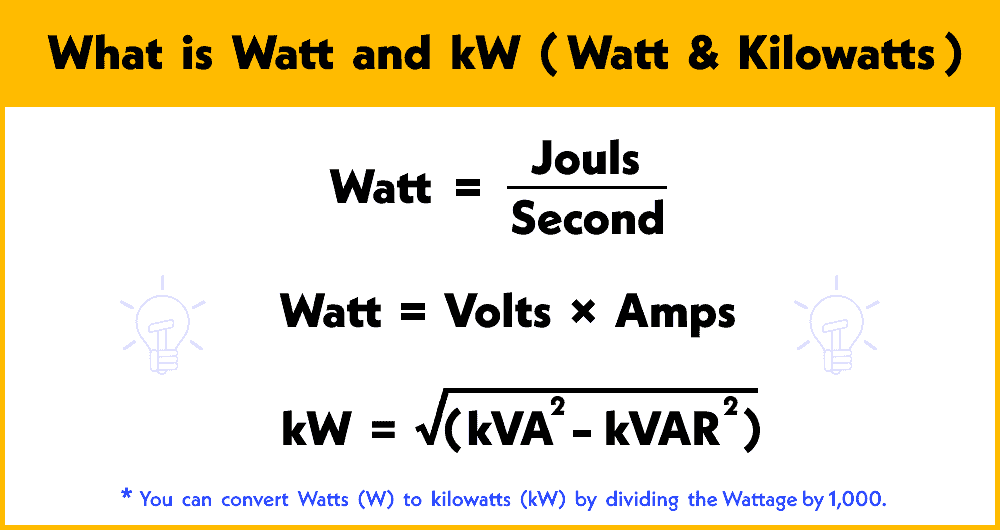
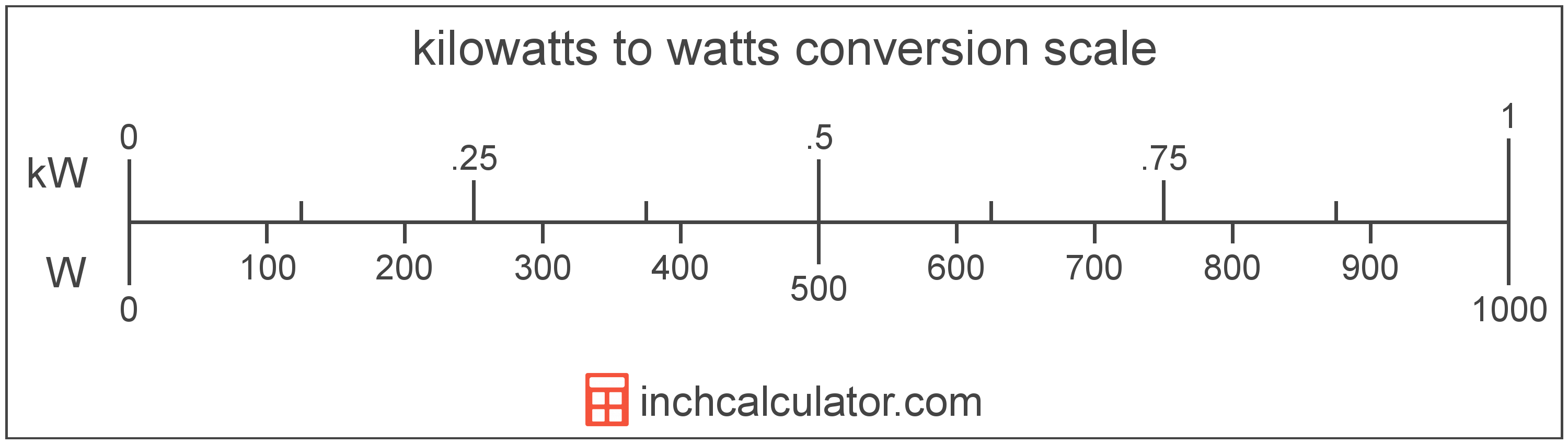
1000!That’s right! One kilowatt is exactly equal to 1000 watts. Poof! The mystery is gone. Suddenly, those numbers on your hairdryer or microwave start to make a lot more sense, don't they?
Must Read
The "kilo" part of kilowatt is really just a fancy scientific prefix that means a thousand. It’s a handy shortcut. Instead of saying "My oven uses five thousand watts," you can just say "My oven uses five kilowatts." See? So much easier to say, so much simpler to write. It’s like the universe's little gift for making big numbers more manageable in our everyday discussions about power.
So, why is this tiny piece of knowledge so entertaining and special? Well, for starters, it turns you into a bit of an energy detective. Next time you pick up an appliance, whether it's a trusty kettle or a brand-new gaming PC, you’ll see its wattage and instantly be able to translate it into kilowatts in your head. That powerful feeling of "I get it!" is genuinely satisfying. You’re no longer just looking at numbers; you’re understanding the fundamental force of electricity at play.
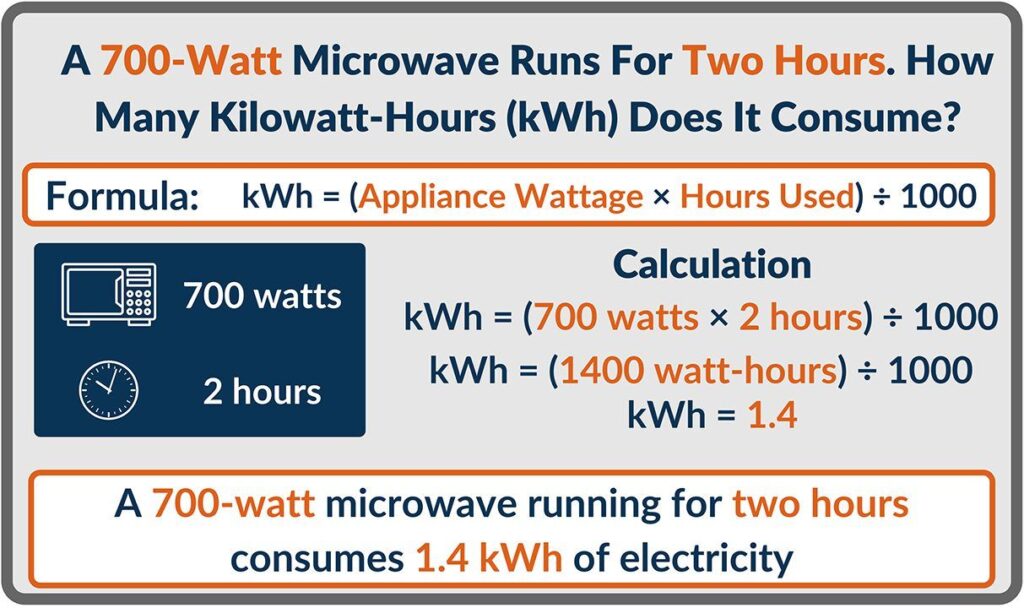
But it gets even better, especially when we talk about your energy bill. Those bills often charge you based on something called kilowatt-hours. Knowing that a kilowatt is 1000 watts helps you connect the dots between how much power your devices use and how much it actually costs you. You can start to quickly estimate: "Okay, this 1500-watt heater is 1.5 kilowatts. If I run it for an hour, that's 1.5 kilowatt-hours of usage." Suddenly, your energy bill becomes less of a mystery and more of a conversation you can actually understand and influence.
This simple conversion empowers you to make smarter choices. Want to be more energy-efficient? Knowing the difference between a 100-watt lightbulb and a 1000-watt vacuum cleaner gives you an immediate sense of scale. You can compare different models of appliances and genuinely understand which ones are going to be bigger energy hogs. It’s not just about saving money (though that's a nice bonus!); it’s about having a clearer picture of your own energy footprint.

And let's not forget the pure conversational fun! Imagine casually dropping your newfound wisdom at a dinner party: "Oh, this new gadget? It's about a half-kilowatt, pretty efficient for its punch!" You'll sound incredibly knowledgeable, and who doesn't love feeling smart about everyday things? It’s a small, digestible fact that has a surprisingly wide reach in helping you understand the modern world.
So, the next time you see "W" for watts or "kW" for kilowatts, remember the magic number: 1000. It’s a simple trick, an easy conversion, and a truly engaging piece of knowledge that brightens your understanding of power and electricity. Go ahead, impress yourself and your friends. You're now officially in the know!