How Many Watts Does It Take To Run A Fridge
Ever wondered how much electricity your fridge sucks up? It's a question that's more exciting than it sounds! After all, knowing how many watts your fridge uses isn't just about satisfying your curiosity; it's about saving money, being eco-conscious, and maybe even winning a household trivia night! So, let's dive into the surprisingly fascinating world of refrigerator wattage.
The purpose of understanding your fridge's energy consumption is twofold. First, it allows you to estimate your monthly electricity bill more accurately. Second, it helps you make informed decisions about energy efficiency when buying a new fridge. Think of it like this: knowing the wattage is like knowing the MPG of your car – it tells you how far your 'fuel' (electricity) will take you.
So, how many watts does it actually take? Well, there's no single answer, as it depends on several factors. These include the size of the fridge, its age, its energy efficiency rating, and how often you open the door (we all peek inside sometimes!).
Must Read
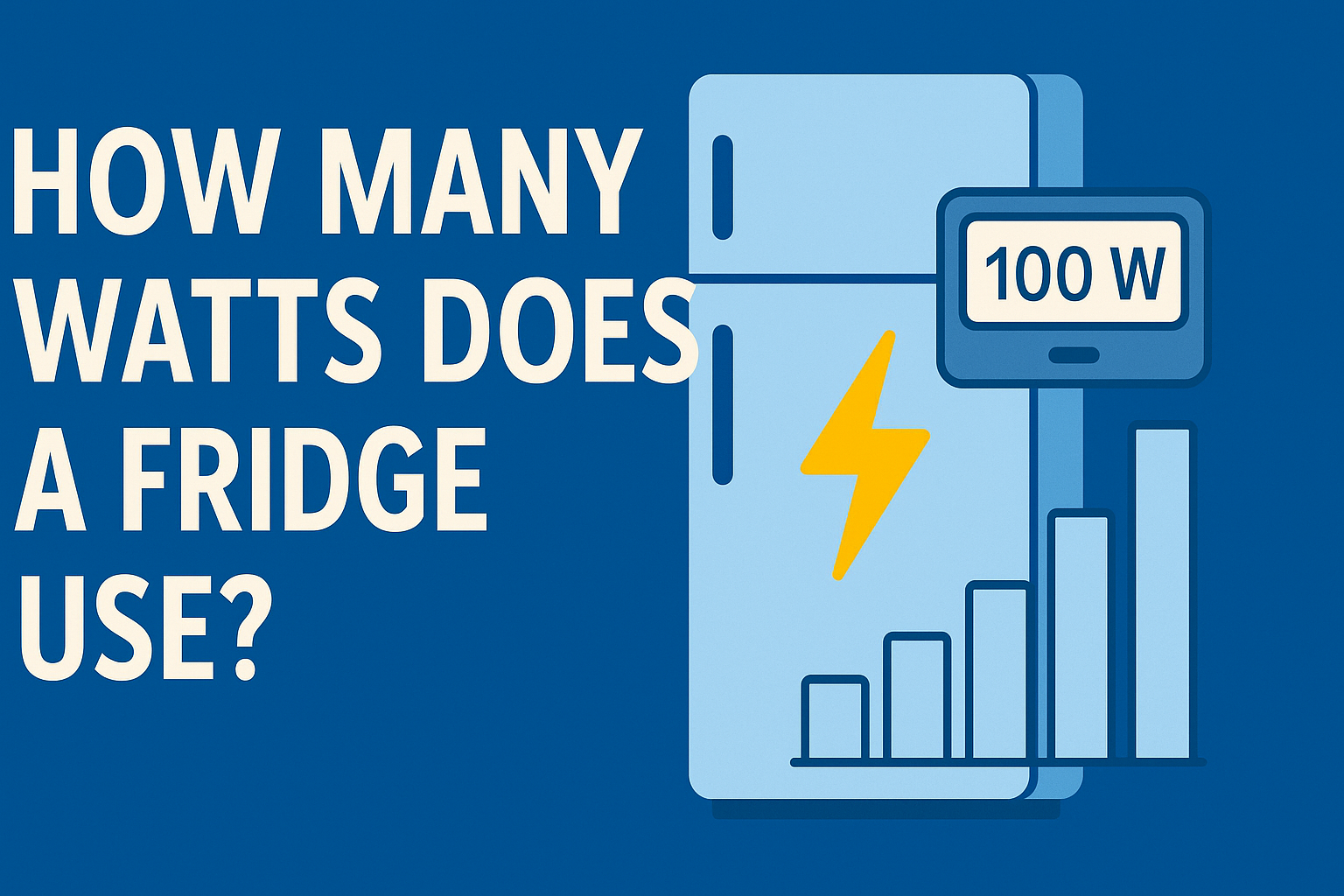
Generally speaking, a typical refrigerator uses somewhere between 100 and 400 watts. But here’s the catch: that's just when the compressor is running. Refrigerators don't run constantly. They cycle on and off to maintain the desired temperature. This means the running wattage is different from the startup wattage.
The startup wattage is a surge of power needed to kickstart the compressor. This can be significantly higher than the running wattage, sometimes reaching 600 to 800 watts or even more for older models. Don't panic! This surge is brief.

To get a more accurate picture of your fridge's energy use, look for the EnergyGuide label. This yellow tag, usually found on new appliances, provides an estimated annual energy consumption in kilowatt-hours (kWh). To convert kWh to watts, you can use the following formula:
Watts = (kWh per year * 1000) / (365 days per year * 24 hours per day)

Alternatively, you can use a wattmeter. These handy devices plug into the outlet and measure the actual energy consumption of your fridge over a period of time. This is the most accurate way to determine how many watts your specific fridge is using in your specific environment.
Finally, remember that maintenance matters! A well-maintained fridge is a more efficient fridge. Make sure the door seals are tight to prevent cold air from escaping, and clean the condenser coils regularly. These simple steps can help you keep your fridge running smoothly and efficiently, saving you money and reducing your environmental impact. So, go forth and conquer the mysteries of refrigerator wattage! Your wallet (and the planet) will thank you.