
How Many Watts Does It Take To Charge A Phone
Ever stared at your phone, willing it to charge faster? Me too. It's a modern-day torture, isn't it?
The Watt's Up with Phone Charging?
Let's talk watts. How many do we actually need to resurrect our digital lives?
The official answer? It's complicated. But I'm here to make it less so.
Must Read
The Humble 5W Charger: An Antiquated Relic?
Remember those tiny, square 5W chargers? The ones that came with your phone ages ago?
They’re like dial-up internet in a 5G world. Painfully slow.
I think they're secretly designed to make you buy a new phone faster. Just saying.
The Rise of the 10W Charger: A Slight Improvement
Okay, so 10W chargers are a step up. A baby step.
They charge a little faster. But not that much faster.
They’re the participation trophies of phone charging. Mediocre, but appreciated… sometimes.
The 15W Charger: Now We're Getting Somewhere!
Fifteen watts! Finally, some progress. We're inching closer to a respectable charging speed.
This is where you start to feel like you're not wasting your entire afternoon waiting for your battery to hit 100%.
It's like upgrading from a bicycle to a scooter. Not a motorcycle, but definitely better.
The 18W Charger: The Sweet Spot (Maybe?)
Eighteen watts. Many consider this the charging sweet spot.
It's faster than the previous contenders, but not so fast that it overheats your phone (allegedly).
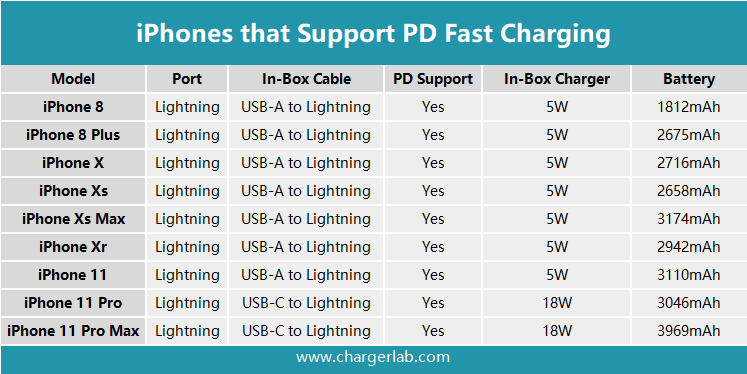
This is my go-to. A solid, dependable charger that doesn't leave you hanging for hours.
The 20W+ Charger: The Speed Demons
Now we're talking 20W, 25W, even 45W chargers! These are the speed demons of the charging world.
They promise to juice up your phone in record time. Like, "grab a coffee and your phone's ready" kind of fast.
But here's my unpopular opinion: are they really necessary? Are we that impatient?
The Great Debate: Faster Charging vs. Battery Health
Here's the real kicker: faster charging might not be the best for your battery's long-term health.
It's like constantly redlining your car engine. Fun for a little while, but eventually things will break.
So, is shaving off a few minutes of charging time worth potentially shortening your battery's lifespan?
My Unpopular Opinion: Slow Charging Is Underrated
Okay, here it is. My controversial take.
I actually prefer slow charging. There, I said it!
Hear me out. I plug my phone in overnight with a lower wattage charger (like a 5W or 10W) and let it gently sip power.
It's like giving my phone a relaxing spa day instead of a jolt of electricity.
I wake up to a fully charged phone and the peace of mind knowing I'm not stressing out the battery.
The Truth About "Fast Charging" Claims
Beware of marketing hype! "Fast charging" is a relative term.
A charger might claim to be "fast," but it depends on your phone's capabilities.
If your phone can only handle 18W, a 45W charger isn't going to magically make it charge faster.
Consider Your Phone's Needs
Before you buy a new charger, check your phone's specs.
Find out the maximum wattage it can handle. No point in overspending on a charger that your phone can't utilize.
It's like buying a super fancy, high-octane fuel for a car that runs just fine on regular gas. Wasteful!
Wireless Charging: The Convenience Factor
Let's not forget about wireless charging! It's undeniably convenient.
Just plop your phone down on a charging pad and poof, instant power (sort of).
However, wireless charging is generally slower than wired charging. Tradeoffs, tradeoffs.
The Wattage Sweet Spot for Wireless Charging
Wireless chargers typically range from 5W to 15W. Some go higher, but those can get pricey.

A 10W or 15W wireless charger is a good balance between speed and convenience.
But don't expect lightning-fast charging speeds. It's more of a slow and steady kind of thing.
Cables Matter Too!
Don't underestimate the importance of your charging cable!
A cheap, flimsy cable can bottleneck the charging process.
Invest in a good quality cable that can handle the wattage of your charger. It makes a difference, trust me.
The USB Standard Jungle
USB-A, USB-C, micro-USB… it's a confusing mess, I know.
Make sure your cable is compatible with both your charger and your phone.
USB-C is the newer, faster standard. If your phone supports it, definitely use a USB-C charger and cable.
Think About Portability
Consider where you'll be using your charger most often.
If you travel a lot, a compact, multi-port charger is a lifesaver.
They can charge your phone, tablet, and other devices all at the same time. No more fighting over outlets!
Safety First!
Always buy chargers from reputable brands.
Cheap, knock-off chargers can be dangerous. They might overheat, damage your phone, or even cause a fire.
It's not worth saving a few bucks if it means risking your safety. Seriously.
The Bottom Line: It Depends
So, how many watts does it take to charge a phone? The answer, as always, is "it depends."
It depends on your phone, your charger, your cable, and your patience level.
Experiment and find what works best for you. And maybe, just maybe, embrace the slow charge.
My Final Unpopular Opinion: We're Too Attached to Our Phones
Okay, one last thing. Maybe the real problem isn't slow charging.
Maybe the problem is that we're too glued to our phones in the first place.
Perhaps we should all try unplugging a little more often. Just a thought.
Go outside, read a book, talk to a human being! The world won't end if your phone isn't at 100%.
And who knows, you might even discover that life is more interesting when you're not constantly staring at a screen.