
How Many Watts Does An Rv Ac Use
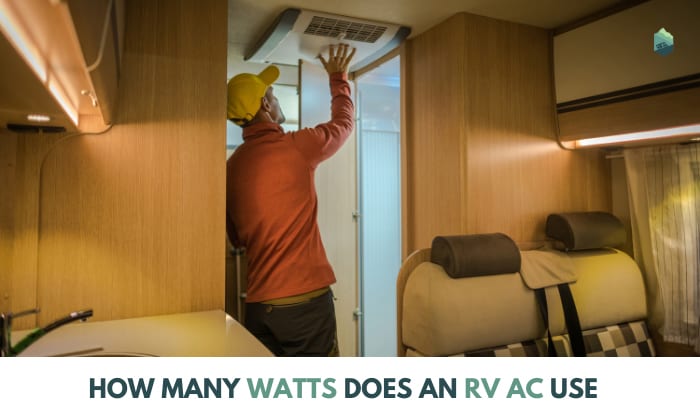
Hey there, fellow road warrior! Ever found yourself parked up, sun blazing, and thought, "Man, I need some chill... but how much chill can my RV actually handle?" Specifically, we're talking about that glorious blast of cold air from your AC unit. You're probably wondering, "How many watts does an RV AC use?"
It’s a super common question, and honestly, it’s a good one to ask! Knowing this little tidbit of information is like having a secret superpower when it comes to planning your adventures, especially if you’re thinking about boondocking, hooking up to a smaller generator, or just making sure you don't trip a breaker at the campground. So, let’s peel back the layers of this cool mystery, shall we?
The Big Question: Watts, Watts, Watts!
First off, let’s get this out of the way: there’s no single, universal answer. It’s kinda like asking "How much does a slice of pizza cost?" – it depends on the pizza, right? Same deal with your RV AC. But don't worry, we can definitely give you some excellent ballpark figures and explain why it varies. Think of it as your RV AC's dietary needs – it craves electricity!
Must Read
Most RVs typically come with one of two main sizes of air conditioner units, measured in BTUs (British Thermal Units, which just means cooling power, not how British they are). You’ll usually find either a 13,500 BTU unit or a slightly more powerful 15,000 BTU one.
The Two Kinds of Watts You Need to Know: Starting vs. Running
This is where it gets a little interesting, and it’s probably the most important distinction to understand. Your AC unit is a bit like a sprinter. It needs a huge burst of energy to get off the blocks, and then it settles into a steady pace.
1. Starting Watts (The Big Gulp!)
When your RV AC first kicks on, it demands a significant surge of power. This is called the starting watts (or "locked rotor amps" for the super techy folks). It’s when the compressor motor has to overcome inertia and get spinning. We're talking about a quick, intense electrical "coffee jolt." This surge usually lasts only a second or two, but it’s mighty!
2. Running Watts (The Steady Sip!)
Once the compressor is up and running, it settles into a much lower, more consistent power draw. This is the running watts. This is the amount of power it uses continuously to keep you cool as a cucumber. This is the long haul, marathon pace.
So, What Are the Numbers?
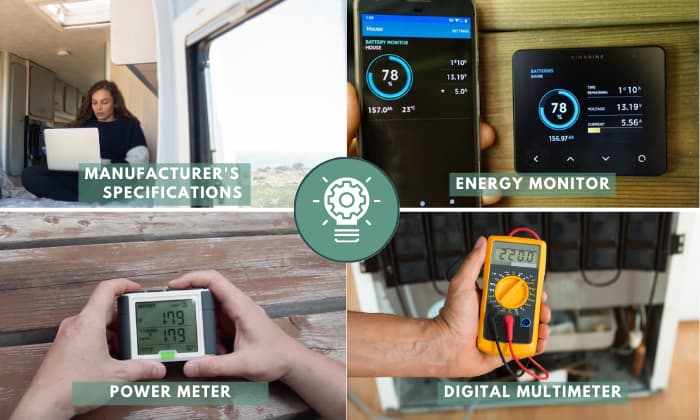
Alright, let’s talk numbers. Remember, these are averages, and your specific unit might vary a bit, so always check your owner's manual or the sticker on the AC unit itself for the precise details.
For a 13,500 BTU RV AC Unit:
- Running Watts: You're usually looking at somewhere between 1,200 to 1,700 watts.
- Starting Watts: This is the big one! Expect a surge of 2,500 to 3,500 watts, sometimes even a bit more.
For a 15,000 BTU RV AC Unit:
- Running Watts: A bit hungrier, these typically draw around 1,500 to 2,000 watts.
- Starting Watts: The even bigger gulp! Prepare for 3,000 to 4,000 watts, or more, for that initial kick.
See? Those starting watts are no joke! This is why a 2,000-watt portable generator might struggle to start a 13,500 BTU AC, even though it can happily run it once it's going. The generator just can't handle that initial "flex" of power.
What Can Affect These Numbers?
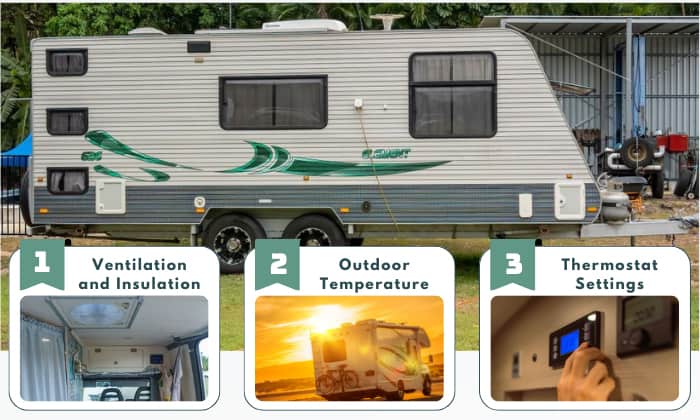
A few things can nudge these numbers up or down:

- Outside Temperature: The hotter it is, the harder your AC has to work, potentially drawing a bit more power.
- RV Insulation: A well-insulated RV means your AC doesn't have to cycle as often, saving energy.
- Age of Your Unit: Older units might be less efficient than newer, spiffy models.
- Voltage Fluctuations: If your shore power or generator isn't providing stable voltage, your AC might draw more amps (and thus watts) to compensate.
The "Soft Start" Solution
Heard of a Soft Start device? These clever gadgets are like a personal trainer for your AC unit's motor, gradually ramping up the power it needs to start. They can dramatically reduce those hefty starting watts, often by 60-70%! This means you might be able to run your AC on a smaller generator or even with a more modest inverter and battery bank. Pretty cool, right?
Wrapping It Up With a Cool Breeze
So, there you have it! Your RV AC uses a fair bit of power, especially when it first kicks on. Knowing the difference between starting and running watts is your golden ticket to happy, cool adventures. Whether you're planning on boondocking, generator camping, or just want to understand your rig better, this knowledge empowers you to keep your cool, literally!
Now you can confidently plan your power needs, enjoy those warm sunny days without breaking a sweat (or a breaker!), and make every journey as comfortable as can be. Go forth, stay chill, and enjoy the open road with a refreshing blast of air! Happy travels, my friend!