
How Many Watts Does A Standard Refrigerator Use

Alright folks, let's talk refrigerators! That trusty, cold companion in the kitchen, silently humming (or sometimes not-so-silently roaring) away, keeping our milk frosty and our leftovers...well, leftover. But have you ever stopped to wonder, "Just how much power does this magnificent food-chilling machine actually guzzle?" Well, wonder no more!
We're diving deep (but not too deep, don’t worry, we're not getting into quantum physics here) into the world of refrigerator wattage. Prepare to be enlightened, entertained, and maybe, just maybe, a little bit shocked. (But not electrocuted, promise!)
The Watt's Up, Doc? (Get it?)
So, how many watts does a standard refrigerator typically use? The answer, like most things in life, is… it depends. I know, I know, you wanted a simple, straightforward answer. But fear not! We'll break it down. Think of it like this: refrigerators are like snowflakes – no two are exactly alike (though some are definitely frostier than others!).
Must Read
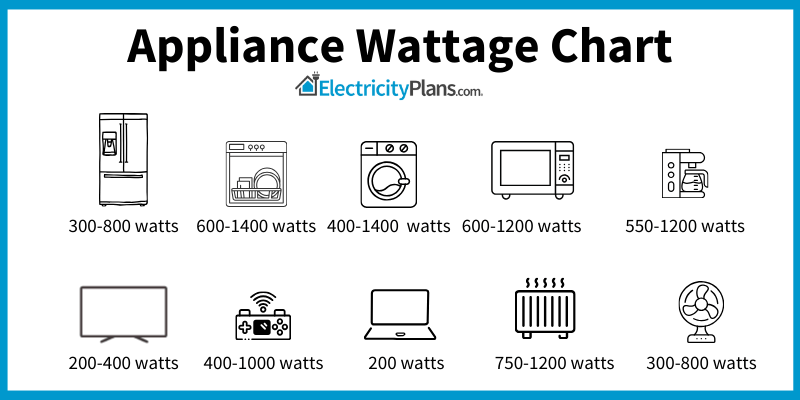
Generally speaking, a typical, average-sized refrigerator uses between 100 and 400 watts. That's when it's actually running, mind you. It's not sucking up all that juice 24/7. Imagine if it did! Your electric bill would be higher than a giraffe's eyebrows!
Think of your refrigerator like a marathon runner. It sprints (using those watts!) to get the temperature down, and then it chills (pun intended!) and coasts for a bit. That coasting period uses practically no power. It's just hanging out, keeping things cool. Smart, right?

Factors Affecting Wattage: It's Complicated (But We'll Simplify!)
Okay, so what affects those wattage numbers? Several things, actually. Buckle up!
- Size Matters: A giant, restaurant-sized refrigerator is going to slurp up way more power than a cute little mini-fridge perfect for your dorm room. It's just physics!
- Age is More Than Just a Number: Older refrigerators are notorious energy hogs. They’re like vintage cars: cool to look at, but terrible on gas (or in this case, electricity). Newer models are generally much more energy-efficient, thanks to fancy innovations.
- Features, Features, Features!: Ice makers? Water dispensers? Fancy door alarms that yell at you when you leave it open? All those bells and whistles add to the wattage draw. It's like adding a turbocharger to your fridge. Fun, but energy-intensive!
- How Often You Open the Door: Every time you open that refrigerator door to stare blankly inside, hoping for inspiration (we've all been there!), you're letting out all that precious cold air. The refrigerator then has to work harder to get the temperature back down, using more watts. So, maybe plan your snack attacks a little better? (Just kidding… mostly!)
- How Full the Fridge is: An empty fridge actually has to work harder. A full fridge has the advantage that food items keep each other cool!
The Kilowatt-Hour Connection (And Why You Should Care!)
Now, let's talk about kilowatt-hours (kWh). This is what your electric company charges you for. A kilowatt-hour is simply 1,000 watts used for one hour. To figure out how many kWh your refrigerator uses in a month, you'd need to know its average wattage, how many hours it runs per day (it's not running constantly!), and then do some math. (Don't worry, there are plenty of online calculators that can do this for you!)
Why should you care about kWh? Because they add up! A more efficient refrigerator means lower electricity bills. Think of all the money you could save! Enough for that fancy cheese you’ve been eyeing? Maybe even a new, energy-efficient refrigerator? The possibilities are endless!
For example, Let's say your refrigerator uses 200 watts and runs for 12 hours a day. That's 2.4 kWh per day (200 watts x 12 hours = 2400 watt-hours = 2.4 kWh). Over a month (30 days), that's 72 kWh. At, say, $0.15 per kWh, that's $10.80 per month. Not a fortune, but it adds up!
So there you have it! The not-so-secret world of refrigerator wattage, unveiled! Now you can impress your friends at your next dinner party (or at least have a slightly more informed conversation about appliances). And remember, a little knowledge goes a long way, especially when it comes to saving energy and keeping those electricity bills in check! Now, go forth and refrigerate responsibly!
"A watched refrigerator never cools." - Benjamin Franklin (probably)
