How Many Watts Does A Resmed Airsense 10 Use

Ever wondered how much electricity your trusty ResMed AirSense 10 is sipping overnight? It might seem like a dull question, but understanding the power consumption of your CPAP machine is actually pretty interesting, especially if you're trying to be energy conscious, planning a camping trip, or just curious about household energy usage. It's like peeking behind the curtain of your sleep therapy to see how things really work!
Why should you care about the wattage of your AirSense 10? For beginners, it's about knowing your equipment. Understanding its power needs can ease any anxieties about unexpected energy bills. Families might be interested in calculating the overall cost of running the machine nightly, factoring it into their budget. And for hobbyists – think campers or off-grid enthusiasts – knowing the exact wattage is crucial for planning battery needs and ensuring a good night's sleep in the great outdoors!
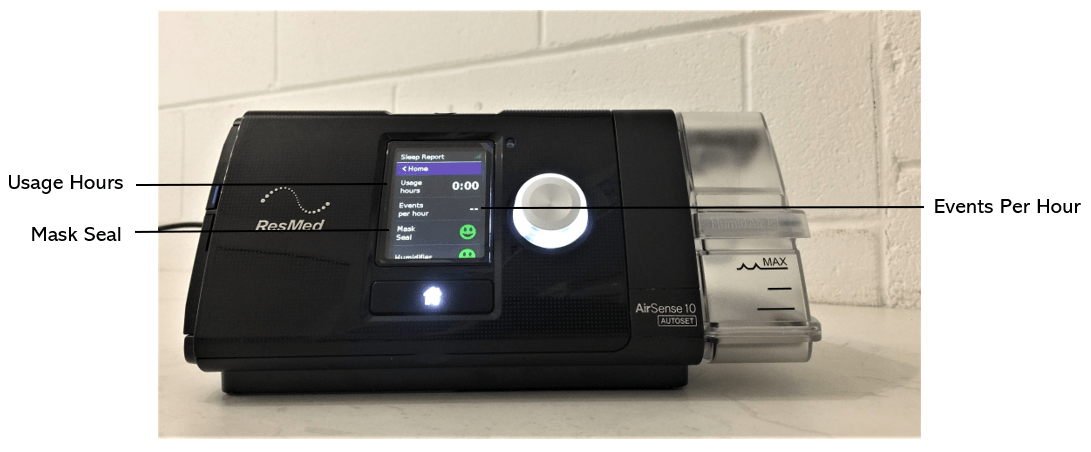
So, let's get to the heart of it: How many watts does a ResMed AirSense 10 actually use? The answer isn't a single number, because it depends on a few factors. Typically, the AirSense 10 draws around 53 watts when the humidifier is running and the pressure is set at a comfortable level. However, without the humidifier, the wattage drops significantly, often hovering around just 10-20 watts. The exact number will fluctuate based on your pressure settings, whether you're using a heated hose, and the humidity level you've chosen.
Must Read
Think of it like this: your AirSense 10 is like a car. Driving uphill (higher pressure) uses more gas (watts) than driving on a flat road (lower pressure). Turning on the air conditioning (humidifier) also increases fuel consumption.

Examples and Variations: If you're using a ClimateLineAir heated tube, that adds to the power draw. The humidifier itself can vary the wattage based on the room's humidity. Some users might experience slightly higher or lower wattage depending on the age of their machine and any potential wear and tear. Remember that the power supply itself has a certain wattage rating, but that represents the maximum it can draw, not necessarily what it always is drawing.
Simple Tips for Getting Started with Power Monitoring: The easiest way to get a precise measurement is to use a "kill-a-watt" meter. You simply plug the meter into the wall, then plug your AirSense 10 into the meter. It will display the real-time wattage being used. You can find these meters online or at most hardware stores. Experiment with different humidity settings and pressure levels to see how they impact the power consumption.

Another option is to check the power supply brick that came with your AirSense 10. It will list the input and output voltage and amperage. You can multiply voltage by amperage to get the wattage (Watts = Volts x Amps). This gives you the maximum wattage the power supply can deliver, but not necessarily what the machine is actually using.
Understanding the power consumption of your ResMed AirSense 10 doesn't need to be a chore. It’s a fun and practical way to become more aware of your energy usage. Whether you're saving money, planning an adventure, or simply satisfying your curiosity, knowing your CPAP's wattage is a valuable piece of information. So, go ahead and plug in that meter – you might be surprised by what you discover!