
How Many Watts Does A Range Use

Alright, settle in, grab your metaphorical coffee, because we're about to dive into one of those questions that probably pops into your head right after you smell something delicious cooking: how many watts does my range use?
It's not just a random thought, is it? It's usually followed by, "Is this thing eating my electricity bill alive?" or "Can I really run the microwave, the fridge, and this giant burner all at once without tripping a breaker?" Totally valid questions, my friend.
And let me tell you, it's not a simple one-size-fits-all answer. Oh no, that would be too easy! But fear not, we're going to break it down like a culinary expert breaks down a fancy recipe. Minus the actual cooking, thankfully.
Must Read
So, You Wanna Know About Watts?
First off, when we talk about a "range," we're usually thinking about that big appliance in your kitchen with the burners on top and the oven underneath. It's a real workhorse, right? From boiling pasta to roasting a turkey, it does it all. But all that power has to come from somewhere.
Watts are essentially the measure of power. Think of it like this: if electricity were water, watts would be the rate at which the water is flowing through the pipes. The more watts, the more "oomph" your appliance is drawing. And believe me, your range has plenty of oomph.
Electric vs. Gas: The Wattage Showdown
This is where things get a little nuanced. Most of us have either an electric range or a gas range.
If you have a gas range, you might be thinking, "Ha! I use gas, so I don't use much electricity!" And you'd be mostly right, but not entirely. Even gas ranges need a little juice for things like the electronic ignition (to spark that flame!), the oven light, and sometimes a clock or control panel. We're talking pretty minimal here, maybe under 100 watts for those bits. So, mostly gas, but not zero electricity.
Now, if you're rocking an electric range – ah, that's where the wattage party really starts! Electric ranges are power hogs, and for good reason: they need to generate some serious heat.
Breaking Down the Elements (Literally!)
Think about your electric stovetop. You've got different sized burners, right? Those aren't just for aesthetics!
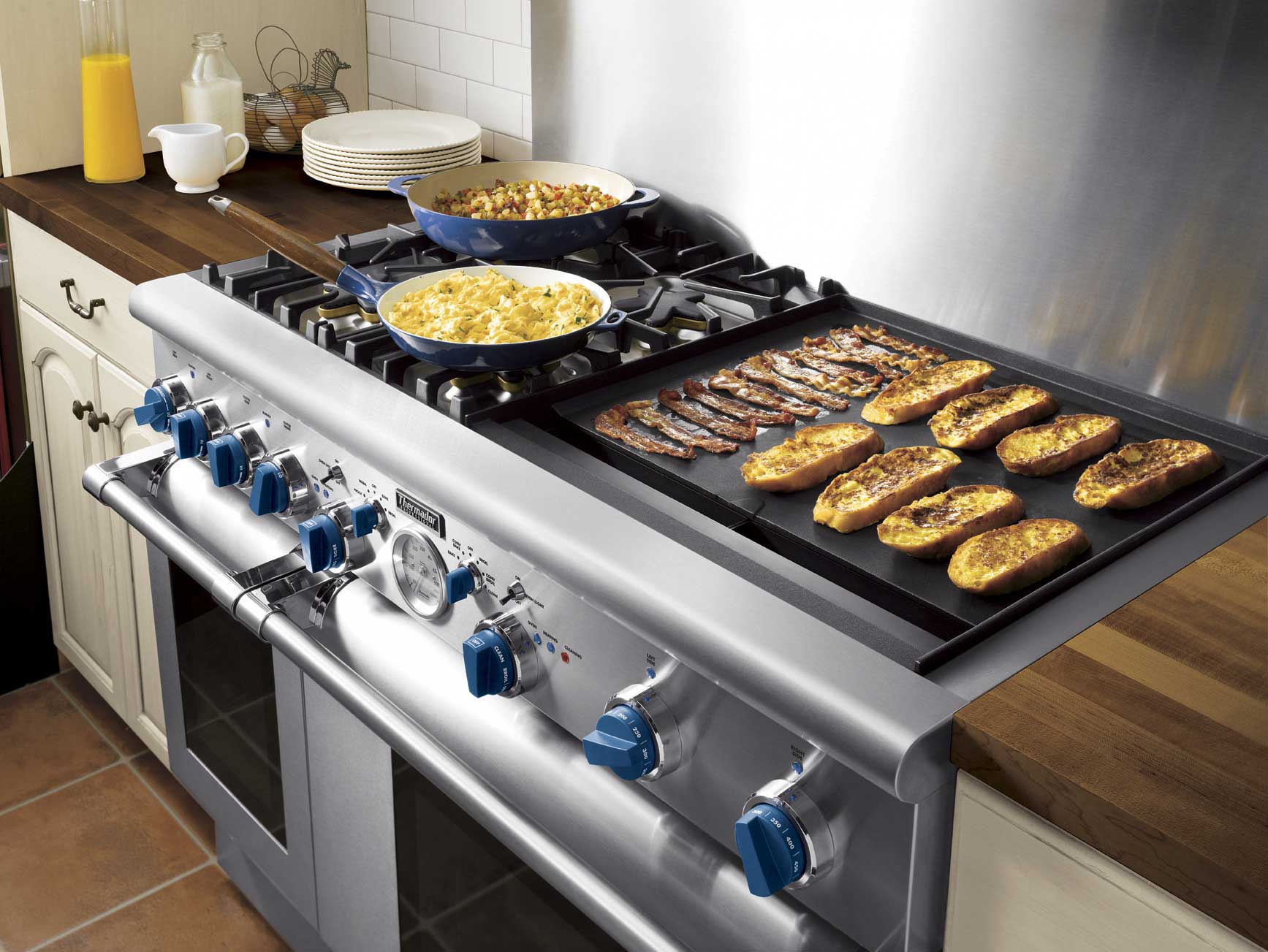
* The small burners (the ones you use for simmering or a small pot of sauce) might draw anywhere from 1,000 to 1,500 watts.
* The medium burners usually fall in the 1,500 to 2,000-watt range.
* And then there are the big guns, those super-fast boiling burners. These can easily pull 2,000 to 3,000 watts or even more! Yup, that's a lot of power just to get your water bubbling for pasta night.
So, if you're using, say, one large burner and one small burner simultaneously, you could be looking at 3,000 to 4,500 watts just from the stovetop! Who knew your dinner could be such an energy guzzler?
The Oven: A Mighty Wattage Hog
But wait, there's more! We haven't even talked about the oven yet. The oven is typically the biggest single wattage draw on your range.
When your oven is preheating, it's working overtime to get up to temperature. During this phase, it can demand a whopping 2,000 to 5,000 watts! Yes, you read that right. Five thousand watts! That's like running a small army of hair dryers.
Once it reaches temperature, it cycles on and off to maintain that heat, so the continuous draw isn't as high. But still, it's pretty substantial.
And if you've got a convection oven? Those little fans add a tiny bit more, maybe another 20-50 watts, but it's negligible compared to the heating elements themselves. What about the self-cleaning cycle? Oh boy. That's where your oven goes into super-high-heat mode, often drawing at the upper end of its wattage capacity for an extended period. Your power meter definitely notices that one!
Why Should You Even Care?
Beyond just satisfying your curiosity, knowing your range's wattage is actually pretty useful.
1. Your Electric Bill: More watts = more electricity used = higher bill. Simple math, sadly.
2. Circuit Breakers: Ranges, especially electric ones, need dedicated high-amp circuits (often 30, 40, or even 50 amps!). If you try to run too many high-wattage appliances on the same circuit, pop! goes the breaker, and suddenly you're cooking in the dark. Not ideal for that perfect soufflé.
3. Appliance Capacity: Ever wondered if that fancy new air fryer and your instant pot can share an outlet? Knowing the wattage helps you avoid overloading.
Finding Your Range's Secret Wattage Life
So, how do you find the exact wattage for your specific range?
* Check the owner's manual! This is usually the best place. It'll list the wattage for individual elements and the oven.
* Look on the appliance itself. There's often a sticker or data plate (sometimes on the back, inside the oven door, or behind a drawer) that will list the total power consumption, usually in amps and volts, but sometimes in watts too. If it's in amps, you can do a quick calculation: Watts = Volts x Amps (most ranges are 240 volts).
The Bottom Line (Spoiler: It Varies!)
In general, a typical electric range, when all elements and the oven are potentially running (which rarely happens simultaneously at full power), could technically draw anywhere from 8,000 to 12,000 watts or even more for larger, more powerful models. But remember, you're usually only using a few things at once.
So, the next time you're whipping up a storm in the kitchen, take a moment to appreciate the sheer electrical power at your fingertips. And maybe, just maybe, don't run the toaster, microwave, coffee maker, and all four burners at once. Unless you like having impromptu candlelight dinners, of course!
Happy cooking, and may your circuit breakers always stay strong!