
How Many Watts Does A Normal Refrigerator Use

Okay, let's talk refrigerators! Those magnificent, cold-food-holding marvels that keep our leftovers edible and our ice cream rock solid. But have you ever wondered how much oomph they're sucking from your wall socket?
The Watt-age Mystery!
Figuring out the exact wattage your fridge uses is like trying to herd cats. It depends on a bunch of things!
Think of it like this: a tiny, dorm-room fridge is like a sipping a cup of tea, whereas a giant, stainless-steel monster with all the bells and whistles is like chugging a gallon of coffee! Huge difference, right?
Must Read
Factors Affecting Wattage: The Fridge's Secret Life!
So, what makes one fridge a wattage-guzzler and another an energy sipper? Let's break it down!
Size Matters (Big Time!): A bigger fridge obviously needs more power to keep all that space icy cool. It’s like trying to air condition a ballroom versus a broom closet.
Age is More Than Just a Number: Older fridges are often less efficient. They're like grumpy old cars that need more gas to go the same distance.
Features, Features, Features!: Ice makers, water dispensers, digital displays… all these fancy gadgets add to the power draw. They are basically tiny energy vampires lurking inside your appliance!
How Often You Open the Door (Seriously!): Every time you open the fridge door, cold air escapes. The fridge then has to work harder to cool back down. It’s like letting all the hot air in during winter – your furnace will be working overtime!

So, How Many Watts Are We Talking About? A Range of Possibilities!
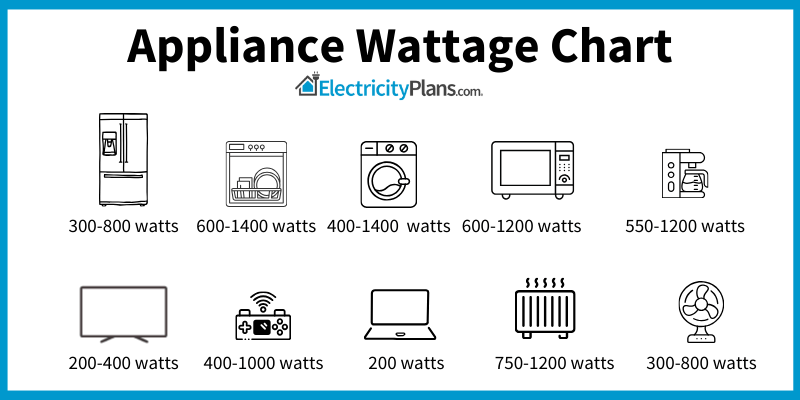
Alright, let’s get down to brass tacks. Most refrigerators use somewhere between 100 and 400 watts while they're running.
But here’s the catch: they don’t run all the time! They cycle on and off to maintain the temperature.
This cycling makes things a little tricky, so we often talk about average wattage use over a 24-hour period.
Wattage Averages: The Daily Grind!
On average, a typical refrigerator might use around 100 to 250 watts continuously over a day. This takes into account the on-and-off cycling. That's like leaving a bright light bulb on, constantly, in your kitchen.
To put it another way, some super-efficient models might sip just 50 watts on average, while older, larger, feature-packed fridges can slurp up 300 watts or more!
Think of it this way: a modern, energy-star rated fridge might cost you less than your morning latte each month to run. An old, inefficient behemoth? That's more like a fancy steak dinner... every month!
Decoding the Energy Label: Your Secret Weapon!
Want to know the real wattage of your fridge? Look for the energy label! It's usually a yellow sticker plastered somewhere on the fridge (often inside the door).
This label will tell you the estimated annual energy consumption in kilowatt-hours (kWh). Don't panic if that sounds complicated!
To get a rough idea of the wattage, you can divide the annual kWh by 365 (days in a year) and then by 24 (hours in a day). Multiply that result by 1000 to convert it to watts. That's some serious math!
An Example to Banish the Confusion!
Let's say your fridge's energy label says it uses 400 kWh per year. So, the calculation would be: (400 / 365 / 24) * 1000 = approximately 45.7 watts.
Remember, this is an average. The actual wattage will fluctuate throughout the day.

Don't worry if your math skills aren't up to scratch. There are plenty of online calculators that can do the work for you!
Simple Steps to Save Energy (and Money!): Fridge Edition!
Okay, so now you know how much power your fridge is using. Want to cut down on those energy bills? Here are a few easy tips!
Keep it Full (But Not Too Full!): A full fridge stays cooler more easily because the items inside help to retain the temperature. Think of it like a thermal mass. But don't overpack it, or you'll restrict airflow!
Check the Door Seals: Make sure the door seals are tight. A leaky seal lets cold air escape, forcing the fridge to work harder. A simple test: close the door on a piece of paper. If you can easily pull it out, the seal might need replacing.
Defrost Regularly (If Needed!): If you have an older fridge that isn't frost-free, defrost it regularly. Excessive frost makes the fridge less efficient.
Don't Put Hot Food in the Fridge: Let food cool down before refrigerating it. Putting hot food in the fridge raises the temperature inside, making the fridge work harder.
Keep it Away From Heat Sources: Don't place your fridge near an oven, dishwasher, or in direct sunlight. External heat makes the fridge work harder to stay cool. Give your fridge some personal space!
Consider Upgrading (Eventually!): If you have a really old, inefficient fridge, consider upgrading to a new, energy-star certified model. The long-term savings can be significant.
The Grand Finale: Fridge Wattage Unveiled!
So, there you have it! The mystery of fridge wattage, unraveled! It's a range, it depends, but now you have the knowledge to understand your fridge's energy habits.
Remember to check that energy label, practice those energy-saving tips, and enjoy the cold, refreshing benefits of your magnificent food-holding machine!
And, most importantly, don't stress too much about it. Unless your fridge is literally powering a small town, a few watts here and there aren't going to break the bank.
Now go forth and conquer those leftovers!