How Many Watts Does A Light Bulb Use Per Hour

Okay, let's talk light bulbs. Not the kind that pop in your head when you have a brilliant idea (though those probably use zero watts, which is a steal!). We're talking about the real deal – the things that illuminate our midnight snack raids and late-night Netflix binges. Ever wondered how much electricity they're actually slurping up?
The burning question (pun intended!): How many watts does a light bulb use per hour? Well, buckle up, buttercup, because it’s not a one-size-fits-all answer. It depends on the type of bulb. Think of it like choosing between a tiny chihuahua that sips water and a Great Dane that… well, you get the picture.
The Wattage Breakdown: A Light Bulb Lineup
Let's break down the usual suspects in the light bulb world. You’ve probably encountered these guys before:
Must Read
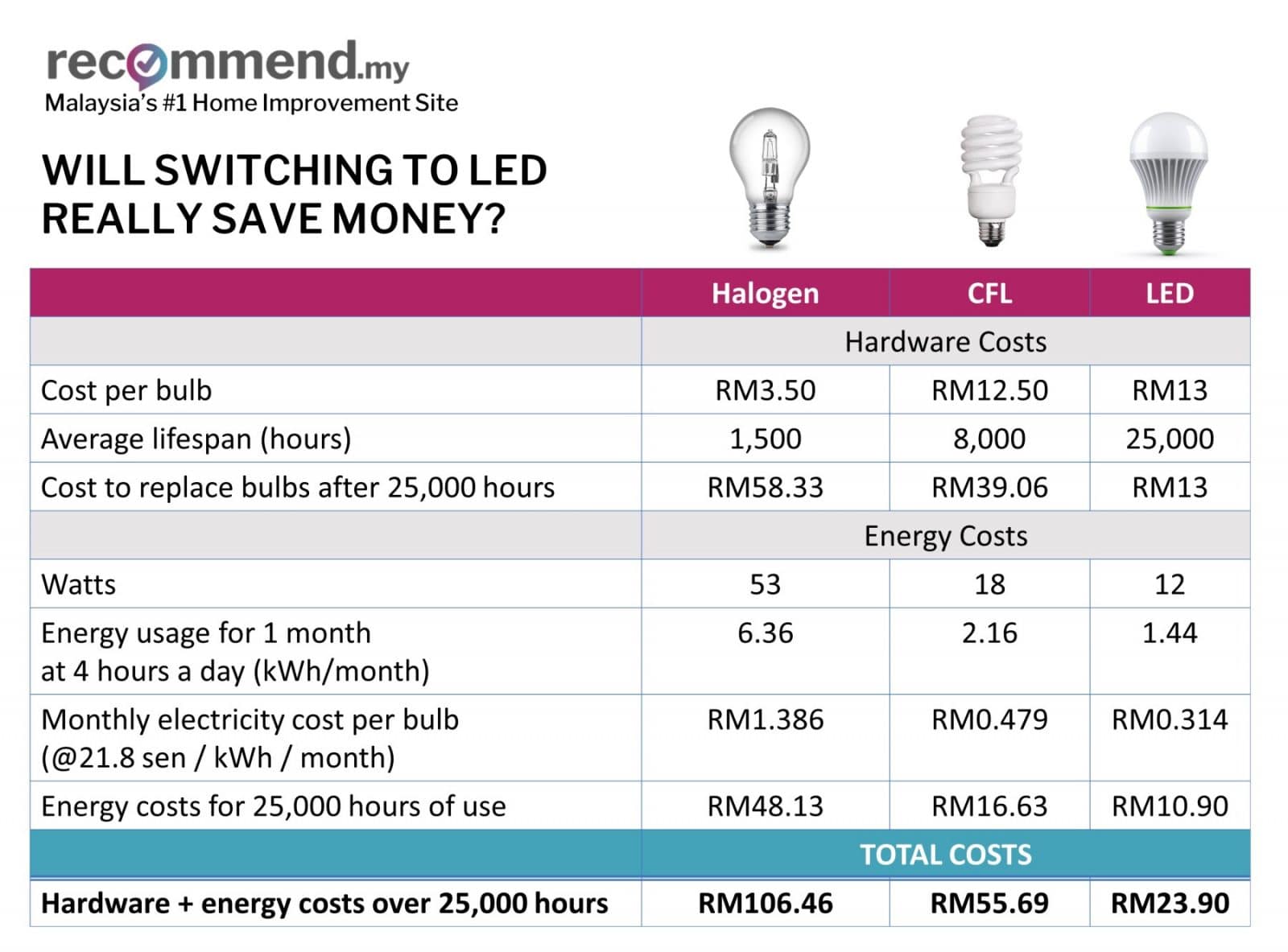
- Incandescent Bulbs: Ah, the classics. The ones your grandparents probably used. These guys are energy hogs, plain and simple. Think of them as that friend who always orders the most expensive thing on the menu. A standard incandescent bulb might use anywhere from 40 to 100 watts. So, yeah, they shine bright, but they're also draining your wallet faster than you can say "electricity bill."
- Halogen Bulbs: A slightly more efficient version of the incandescent. They're like the incandescent's slightly more responsible cousin. They still use a good chunk of energy, maybe around 25 to 75 watts depending on the brightness.
- Compact Fluorescent Lamps (CFLs): Remember those swirly, almost alien-looking bulbs? They were all the rage for a while, touted as the energy-saving saviors. And they are better than incandescents, generally using around 13 to 30 watts. The only problem? Some people didn't like the light quality, and the mercury content meant a bit of a hassle when disposing of them. Plus, they took forever to reach full brightness. It was like waiting for dial-up internet all over again.
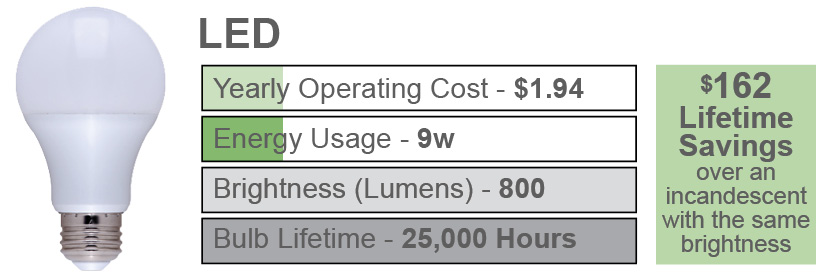
- Light Emitting Diodes (LEDs): The reigning champions! LEDs are the energy-saving superheroes of the lighting world. These guys sip electricity like a hummingbird sipping nectar. We’re talking anywhere from 6 to 15 watts to produce the same amount of light as a 60-watt incandescent bulb. Amazing, right? LEDs last longer too, so you're not constantly replacing them. It's like having a light bulb that basically pays for itself over time.
Watts Up With the Numbers?
So, what does all this wattage stuff mean in real life? Let’s say you have a 60-watt incandescent bulb burning for one hour. That's 60 watt-hours (Wh). Now, electricity is typically billed in kilowatt-hours (kWh). One kilowatt is 1000 watts, so 60 Wh is 0.06 kWh. If your electricity costs, say, $0.20 per kWh, that one hour of light cost you a whopping… 1.2 cents.
Okay, 1.2 cents might not seem like much. But those pennies add up faster than you think! Especially if you're leaving lights on all over the house. Remember that scene in "Home Alone" where Kevin McCallister rigs the house to look occupied? Yeah, that would be an expensive electricity bill if he was using incandescent bulbs!

Pro Tip: Read the Label!
The best way to know how many watts a specific bulb uses is to simply read the label! It's usually printed right on the bulb itself. Also, look for the lumens. Lumens measure brightness. This lets you compare the brightness of different bulbs even if their wattage is different. Think of it like this: wattage is how much the bulb eats, lumens is how much the bulb shines. You want a bulb that shines bright without eating too much!
The Bottom Line: Be a Watt-Wise Warrior!
Choosing the right light bulbs might seem like a small thing, but it can make a real difference in your energy consumption and your wallet. Switching to LEDs is a great way to save money and reduce your carbon footprint. So next time you're at the store, don't just grab the cheapest bulb. Think about the long-term savings and choose wisely. Your wallet (and the planet) will thank you!