
How Many Watts Does A 2 Ton Air Conditioner Use
Okay, let's talk about air conditioners. Specifically, the energy-guzzling, sweet-relief-providing heroes of summer – the 2-ton AC unit. Ever wonder just how much electricity these things are actually sucking up? It’s a question we all ask ourselves when that electric bill arrives, looking like a ransom note.
Think of it this way: your air conditioner is like that friend who always orders the most expensive thing on the menu. You love having them around, but sometimes you wince when the check comes. Only in this case, "the check" is a bill from the power company, and "ordering the most expensive thing" is cranking that AC all day and night.
So, How Many Watts Are We Talking?
Alright, let's get down to brass tacks. A 2-ton air conditioner typically uses between 1500 and 2000 watts while it’s running. Now, that’s a pretty broad range, I know. It’s like saying “a car costs between $10,000 and $100,000.” Helpful, but not exactly precise.
Must Read
Why the range? Several things can affect the wattage, like the SEER rating (more on that later), the age of the unit, and even how well-insulated your home is. A drafty house is like trying to cool a sieve – you're just throwing money out the window (literally!).
The SEER Secret: Efficiency is Key
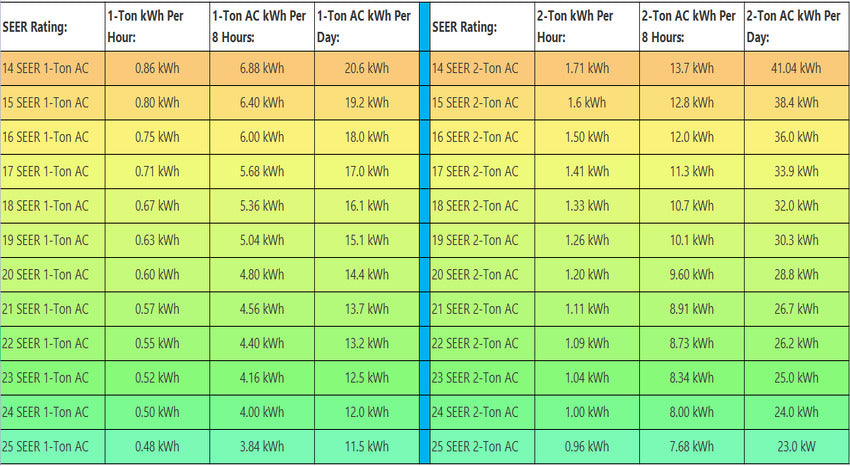
You might have heard of SEER ratings. It stands for Seasonal Energy Efficiency Ratio, and it's basically a measure of how efficiently your AC converts electricity into cool air. The higher the SEER rating, the less energy it uses to do the same job. Think of it like gas mileage for your car. A hybrid sips fuel, while a gas-guzzling monster truck... well, you get the picture.

A newer AC with a higher SEER rating might use significantly fewer watts than an older, less efficient model. So, if you’re rocking an AC unit that’s older than your kids, it might be time to consider an upgrade. Your wallet (and the planet) will thank you.
Startup Surge: The Initial Jolt
Here's a fun fact: Your AC actually uses more power when it first starts up than it does when it’s running steadily. This is called the startup surge. It’s like trying to get a grumpy teenager out of bed on a Monday morning. It takes a lot of initial effort (and maybe some yelling... from the AC unit, not you, hopefully). The compressor needs a big kick to get going.
This surge can briefly double or even triple the wattage. So, that 2000-watt unit might pull 4000-6000 watts for a few seconds. It's a quick burst, but it's worth keeping in mind, especially if you're running other appliances at the same time. You don't want to trip a breaker and suddenly find yourself in the dark, sweating profusely. Trust me, I've been there.
The Hourly Breakdown: What's it Costing You?
Let's say your 2-ton AC uses 1800 watts and you run it for 8 hours a day. That's 14,400 watt-hours, or 14.4 kilowatt-hours (kWh). Check your electricity bill to see how much you pay per kWh. Let's say it's $0.15. That means running your AC for 8 hours costs you $2.16. Over a month, that adds up!

Pro Tip: A programmable thermostat is your friend! Set it to automatically adjust the temperature when you're not home or asleep. It's like having a financial advisor for your AC unit, telling it to chill out (pun intended) when it doesn't need to work so hard.
Real-World Considerations: It's Not Just About Watts
Remember that wattage isn't the only thing that affects your energy bill. Other factors include:
- Insulation: A well-insulated home requires less AC.
- Sunlight: Blocking sunlight with curtains or blinds can significantly reduce the heat inside your home.
- Maintenance: A clean AC unit runs more efficiently. Change those filters regularly!
Ultimately, understanding how many watts your 2-ton air conditioner uses is about more than just numbers. It's about making informed decisions to save money and stay comfortable. So, the next time that electric bill arrives, you'll be a little less surprised and a little more prepared to tackle it head-on. And maybe, just maybe, you can treat yourself to something nice with the money you save.
