
How Many Watts Do Lights Use

Okay, picture this: I once moved into an old apartment, one of those charming-but-creaky places with exactly two light fixtures for the entire living room. Two! My first thought wasn't "Oh, how quaint!" it was "How am I going to read my graphic novels in this gloom?" So, I went a little wild at the hardware store. Bought floor lamps, desk lamps, even some of those clip-on spotlights. My living room transformed from a dimly lit cave into a moderately bright, slightly chaotic shrine to illumination.
Then the first electricity bill arrived. And let me tell you, it was... illuminating in a whole new, terrifying way. My eyes nearly popped out like those old Looney Tunes cartoons. That's when I started to really wonder: "How many watts do lights use, anyway?" And more importantly, "How many watts did my lights use to give me this heart attack?!" Sound familiar? Good, you're in the right place, my friend.
What's the Deal with Watts, Anyway?
Before we dive into the nitty-gritty, let's get our heads around what a "watt" even is. In simple terms, a watt is a unit of power. When we talk about how many watts a light bulb uses, we're talking about how much electrical energy it consumes to do its job – which, for a light, is making light (and often a bit of heat, if we're being honest). Think of it as the engine size for your light. A bigger engine (more watts) generally means more power, but not always more efficiency. And that, dear reader, is the crux of our tale.
Must Read
The Blast from the Past: Incandescents
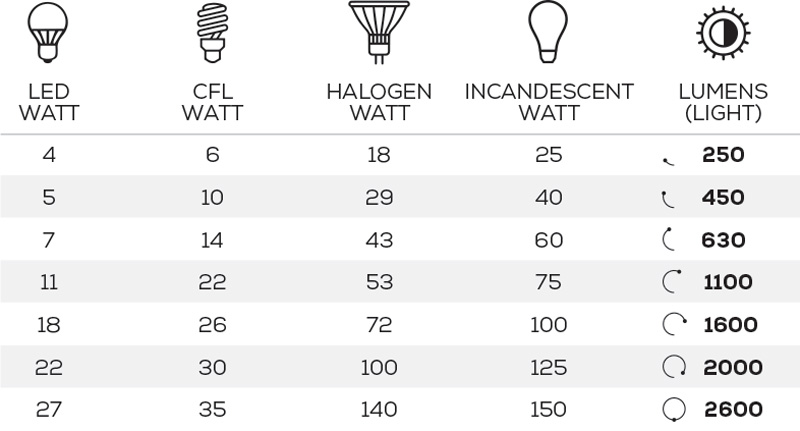
Remember those old-school light bulbs? The ones with the little squiggly filament inside that glowed super bright and got hot enough to cook a small egg? Yeah, those were incandescents. They were the OG of home lighting, and bless their hearts, they were power hogs. A typical incandescent bulb would guzzle down:
- 60 watts for your standard room light.
- 100 watts for something brighter, like a reading lamp.
- And if you were feeling fancy, 150 watts for a floodlight or a really bright area.
The ironic part? Most of that energy, like a whopping 90%, was wasted as heat, not light. So, you were basically paying to slightly warm your room while getting some light as a bonus. Wild, right?
The Awkward Teenager: CFLs
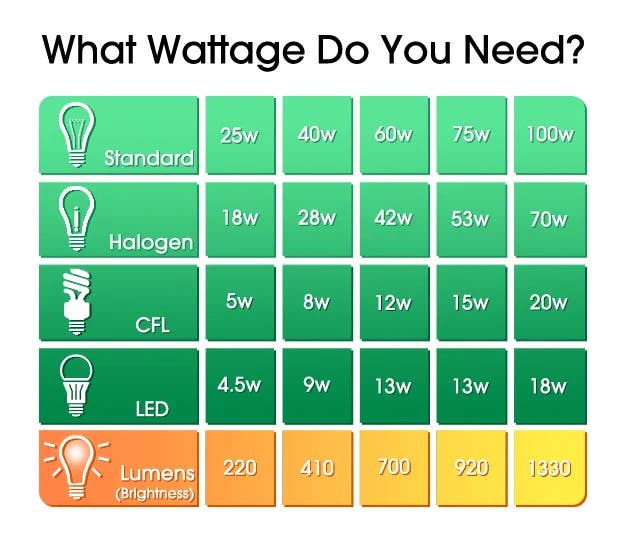
Then came the Compact Fluorescent Lamps, or CFLs. These were the "new big thing" for a while, looking like a twisted soft-serve ice cream cone. They were definitely a step up in terms of efficiency. For the same amount of light as a 60-watt incandescent, a CFL would typically only use around 13 to 15 watts. That's a huge drop! You could feel the difference on your energy bill.
But, let's be real, they had their quirks. They took a while to warm up to full brightness (remember that dim start?), some people didn't like the light quality, and they contained a tiny bit of mercury, which made disposal a bit of a headache. Still, a valiant effort on the path to energy saving!

The Shining Star: LEDs
And now, we arrive at the reigning champion, the undisputed monarch of illumination: the LED. Light Emitting Diodes are where the real magic happens, folks. These tiny, powerful wonders have revolutionized how we light our homes, and they are incredibly efficient. For the same amount of light as that old 60-watt incandescent, an LED bulb will typically use a minuscule:
- 8 to 10 watts for a standard bulb.
- For brighter options, maybe 15-20 watts will give you light equivalent to a 100-watt incandescent.
- And for accent lights or decorative strings, we're talking a few watts, or even fractions of a watt per bulb!
LEDs don't use a filament, and they don't heat up gas; they just convert electricity directly into light. This means almost no wasted energy as heat (though they do need a small heatsink to prevent burnout). Plus, they last for ages – sometimes decades! So not only are you saving on your electricity bill, you're also saving on replacement bulbs. Win-win-win!

Beyond the Bulb: Other Lit-Up Things
It's not just about the standard light bulb anymore, is it? What about those cool strip lights under your cabinets, or that fancy smart lamp? Good news: most modern lighting solutions, especially anything marketed as "energy-efficient," are using LED technology.
- LED strip lights might use anywhere from 4 to 15 watts per meter, depending on brightness and density.
- Your typical LED desk lamp could be as low as 5-10 watts.
- Even powerful LED outdoor floodlights, which used to be massive energy suckers, are now often in the 20-50 watt range for serious illumination.
The key takeaway here is that wattage for lights has dropped dramatically across the board thanks to LEDs. Always check the packaging, though, because some specialized lights (like professional grow lights, for instance) can still be pretty beefy.
So, Why Does This Wattage Stuff Even Matter to You?
Why all this talk about watts, you ask? Because it directly impacts two things you probably care about: your wallet and the planet. Lower wattage means:
- Lower electricity bills: Pretty straightforward, right? Less energy consumed = less money spent. This is especially true if you have a lot of lights, or if you tend to leave them on for extended periods (no judgment here, we've all been there!).
- Reduced environmental footprint: Less energy demand means power plants generate less electricity, which in turn means fewer emissions. It’s a small change in your home that contributes to a bigger global picture.
- Less heat in your home: Especially important in warmer climates or during summer, lower wattage lights contribute less to your home's internal temperature, potentially reducing the strain on your AC.
Quick Tips for the Watt-Conscious You
Next time you're staring at a new light fixture or bulb, here’s what to keep in mind:
- Look for the label: The wattage is always listed prominently. If it gives an "equivalent" (e.g., "60W equivalent"), that's telling you how bright it is compared to an old incandescent, but the actual wattage is the number that matters for your bill.
- Prioritize LEDs: If you're still rocking incandescents or even old CFLs, upgrading to LEDs is one of the easiest and most effective ways to save energy.
- Turn them off!: I know, I know, common sense. But seriously, the lowest wattage is always zero. Don't underestimate the power of simply flicking that switch!
So, the next time you're admiring your brightly lit room, you'll know exactly what's powering that glow. And hopefully, your next electricity bill won't send you into quite the same panic I experienced. Happy lighting!