How Many Water Bottles Are Recycled Every Year

Ever tossed a water bottle into the recycling bin and wondered what happens next? It's easy to take recycling for granted, but understanding the journey of that plastic bottle – and how many others follow the same path – is actually pretty fascinating. It helps us grasp the scale of our impact on the environment and appreciate the importance of making informed choices about what we consume. Plus, knowing the numbers can be surprisingly inspiring, highlighting both the progress we've made and the challenges that still lie ahead. Let's dive into the swirling world of recycled water bottles!
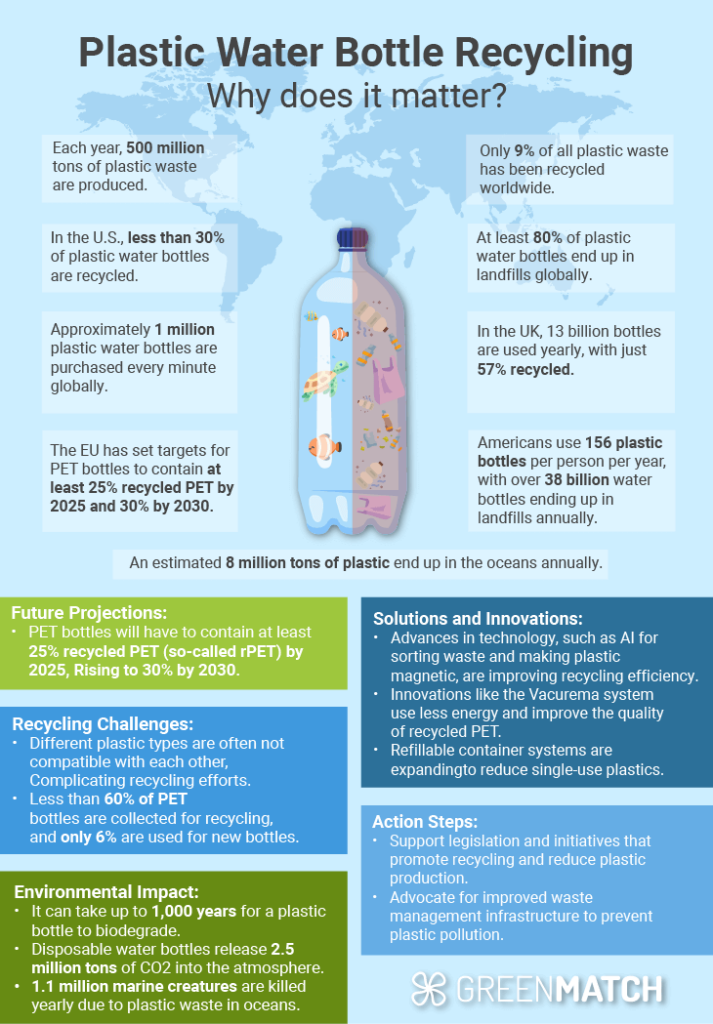
So, how many water bottles are we talking about? Pinpointing an exact number is tricky. Data varies depending on the source and the year. However, we can get a good estimate. Globally, it's estimated that hundreds of billions of plastic water bottles are used each year. A relatively small percentage of these actually get recycled. While figures fluctuate, a decent estimate is that tens of billions of water bottles are recycled annually worldwide. Think of the sheer volume of plastic that represents! And even with that impressive figure, it still means a significant majority of water bottles end up in landfills or polluting our oceans. The purpose of recycling is clear: to reduce waste, conserve resources, and minimize environmental harm. Recycling water bottles, specifically, lessens the demand for new plastic production, which in turn reduces our reliance on fossil fuels and lowers carbon emissions. The benefits extend beyond environmental concerns; it also supports jobs in the recycling industry and promotes a more sustainable economy.
Understanding recycling rates can be a powerful tool in education. Teachers can use these statistics to illustrate the concept of sustainability and the importance of responsible consumption. For instance, a math class could calculate the volume of plastic saved if the recycling rate increased by just 5%. Science classes could explore the chemical composition of plastic and the breakdown process. In daily life, knowing the sheer number of water bottles recycled can motivate us to make more conscious choices. It might encourage us to switch to reusable water bottles, support companies that use recycled materials, or simply be more diligent about sorting our recycling properly.
Must Read
Want to explore this topic further? There are lots of simple things you can do. Start by checking the recycling rates in your own community – many local governments publish this data online. Look for documentaries about the plastic pollution crisis. Conduct a mini-audit of your own waste: How many single-use plastic items do you use each week? Try replacing them with reusable alternatives. Practical tips include investing in a reusable water bottle, bringing your own bags to the grocery store, and supporting brands committed to sustainable practices. You could even participate in local clean-up events. Every little bit helps!
The journey of a water bottle doesn't end when it's tossed into the recycling bin. By understanding the scale of water bottle recycling – the challenges and the opportunities – we can all play a part in creating a more sustainable future. So, the next time you reach for a water bottle, remember the bigger picture and consider the impact of your choices. It's a small act, but collectively, it can make a world of difference.