How Many Volts Is A Double A Battery

Ever picked up a remote control, a kid's toy, or a trusty flashlight and wondered what magic potion fuels it? We pop in those familiar cylindrical batteries, like the ever-present AA, without a second thought. But have you ever paused to consider: how many volts is a Double A battery? It's one of those bits of everyday science that, once you know it, suddenly makes a lot of other things click into place. It’s a fun piece of knowledge that demystifies a little corner of our tech-filled lives and can even empower you to understand the gadgets you use every day.
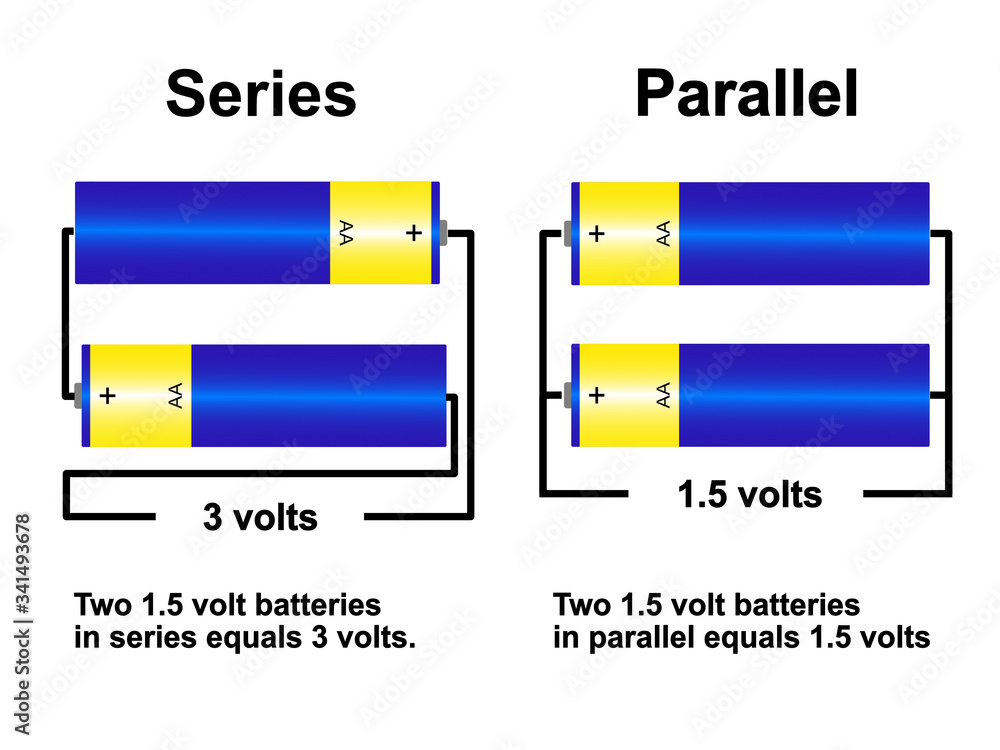
Understanding the voltage of a AA battery, and batteries in general, isn't just trivia; it's genuinely useful. The primary purpose of any battery is to provide an electrical potential difference – a "push" for electrons – that powers our devices. For a standard, single AA battery, that push is typically 1.5 volts. This seemingly small number is the fundamental building block for countless portable electronics. Knowing this helps you grasp why some devices need just one AA, while others might demand two, four, or even six of them, often arranged in what’s called a series configuration to add their voltages together (e.g., two 1.5V batteries in series give 3V). The benefit? You prevent damage to your beloved gadgets by understanding their power requirements, ensuring you always use the correct battery type and quantity.
This little factoid finds its use both in educational settings and in our daily routines. In education, it's often one of the first concepts introduced when learning about basic electronics and circuits. Kids in science class might connect a AA battery to a tiny light bulb or a small motor, directly observing how 1.5 volts can bring things to life. It's a foundational step to understanding concepts like current, resistance, and Ohm's Law. In daily life, this knowledge is invaluable. If your device specifies "3V" and you only have single AA batteries, you immediately know you need two of them. It helps you troubleshoot when a device isn't working – perhaps the battery isn't just dead, but the wrong type entirely. It’s also crucial when distinguishing between different battery sizes (AAA, C, D, all typically 1.5V) and other battery types like the common 9V square battery, which, as its name suggests, provides a different voltage entirely.
Must Read
Ready to explore this further yourself? It’s surprisingly easy and safe! The simplest way to check the voltage of a battery is with a basic tool called a multimeter. You can often find an inexpensive one online or at a hardware store. Just set it to the DC voltage range, touch the red probe to the positive (+) end of the AA battery and the black probe to the negative (-) end, and voilà! You'll see a reading close to 1.5 volts for a fresh battery, or perhaps a bit less if it's been used. Another practical tip: always read the labels on your devices. They usually specify the required voltage (e.g., "3V DC" or "Uses two AA batteries"). For a simple experiment, try connecting a 1.5V LED (with a small resistor for protection!) directly to a single AA battery – you'll see a tiny flicker of light, a tangible demonstration of that 1.5-volt power at work. Remember to always handle batteries responsibly and avoid short-circuiting them. So, the next time you pick up a AA battery, remember its humble yet powerful secret: 1.5 volts of everyday magic!