How Many Types Of Coal Is There
Think about a lump of coal. What comes to mind? Maybe a stocking stuffer for naughty kids, or something old-timey? Well, hold onto your hard hats, because that humble lump has a secret! It's not just one thing. Oh no, my friends, coal is like a fantastic rock band with different members, each with their own unique style and energy. From the leafy, swampy beginnings to the super-shiny rockstar, coal has a whole spectrum of personalities. It's not just "coal"; it's a whole family reunion of carbon-packed goodness!
The Journey from Swamp Goo to Powerhouse Rock
So, how many types of coal are there, really? If we're talking about the main, official, grown-up types of coal that geologists happily chat about, there are typically four. But to truly appreciate them, we have to start at the very beginning, with their squishy, leafy ancestor. Think of it as a grand, geological glow-up!
The Baby Steps: Peat (The Pre-Coal Stage)
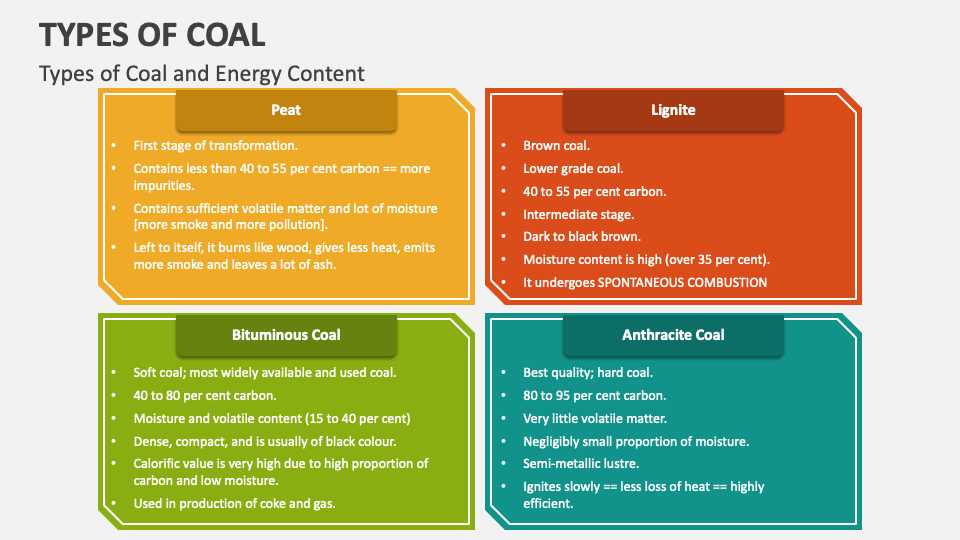
First up, let's meet the grandparent or perhaps the baby of the coal family, though technically, it's not quite coal yet. This is Peat. Imagine a super squishy, soggy pile of half-decayed plants, moss, and other swampy goodness. It's basically a gigantic, ancient compost heap! Found in bogs and wetlands, peat is like coal's awkward teenage phase – it hasn't quite solidified its identity. It's often harvested, dried, and used for fuel, especially in places like Ireland, but it burns a bit smoky and isn't super-efficient. Think of it as the raw, unpolished demo tape before the band hits it big. It's got potential, but it's not quite ready for stadium tours.
Must Read
The Teenager: Lignite
Next, we have Lignite. This is where things start getting interesting! Lignite is often called "brown coal", and it’s like peat decided to grow up a little, got a haircut, and went to high school. It's still relatively soft, crumbly, and you might even see some of the original plant matter if you look closely. It's the youngest, freshest face in the actual coal lineup.
"Lignite is like the enthusiastic but slightly clumsy teenager of the coal world – full of energy but not quite refined."
It doesn't burn as hot or as clean as its older siblings, but it's plentiful and relatively easy to extract. Power plants often use it to generate electricity, especially in areas where it's abundant. So, while it might not be the superstar, it's definitely putting in the work!

The Young Adult: Subbituminous
Moving right along, we arrive at Subbituminous coal. This is the solid, dependable young adult of the coal crew. It's darker than lignite, usually a dull black, and feels a bit more substantial. It's had more time under pressure and heat deep within the Earth, so it's lost more moisture and gained more carbon. This means it burns hotter and more efficiently than lignite, making it a very popular choice for electricity generation worldwide. If lignite was still living at home, subbituminous has its own apartment, a decent job, and a solid plan for the future. It’s a workhorse, showing up reliably day after day to power our homes and industries.
The Grown-Up Pro: Bituminous
Now, let's talk about the big kahuna, the most common and widely used type of coal: Bituminous. This is the grown-up, professional coal. It’s typically dark black, harder, and has distinct bands or layers. It’s been cooked and squeezed for millions more years than its younger counterparts, making it significantly denser and packed with energy.

"If coal were a coffee, bituminous would be a strong, dark roast – rich, robust, and gets the job done!"
It burns with a high heat output and is used for everything from generating electricity to making coke for steel production. Bituminous coal is truly the MVP of the coal world, powering a significant chunk of our planet. It’s got a reliable track record and consistently delivers high performance.
The Superstar: Anthracite
And finally, the undisputed champion, the gleaming rockstar of the coal family: Anthracite! This is the crème de la crème, the rarest, hardest, and purest form of coal. It’s a glossy, jet-black beauty that shines almost like a polished gem. Anthracite has undergone the most extreme geological pressure and heat, transforming it into a dense, almost metallic substance. It boasts the highest carbon content, burns with the least amount of smoke, and produces the most heat.

"Anthracite is the diamond among coals – rare, beautiful, and incredibly powerful!"
It's often used for home heating because of its clean burn and efficiency, and it's a bit of a luxury item in the coal world. Finding anthracite is like finding a hidden treasure; it's less common, but oh-so-worth it for its stellar performance.
The Grand Finale!
So, there you have it! From the soggy, aspiring Peat to the dazzling, high-achieving Anthracite, there aren't just one, but a fascinating spectrum of coal types, usually categorized into four main "true" types. Each one tells a story of incredible geological transformation, taking millions of years to evolve from ancient plant matter into the energy source we use today. Next time you hear the word "coal," remember it's not just a single, plain lump, but a whole cast of characters, each with their own unique talents, contributing to the incredible story of Earth's energy! Isn't that just mind-bogglingly cool?