How Many Tons Should My Ac Be
Alright, friend, let's talk about something super important that often gets folks scratching their heads more than a cat with a new flea collar: your AC's "tons." No, we're not talking about how many actual tons of metal your air conditioner weighs (thank goodness, imagine trying to lift that!). We're talking about its cooling power, and getting it right is the secret sauce to a perfectly chill home.
Ever felt like your AC is running non-stop but your house still feels like a sauna? Or maybe it kicks on for five minutes, blasts you with Arctic air, then shuts off, leaving you sweaty again ten minutes later? Yep, chances are your AC tonnage might be a little… off. But don't you worry, we're going to break it down so simply, you'll feel like an HVAC guru in no time!
So, What Even Is a Ton of AC?
Picture this: a ton of AC actually refers to the amount of heat your unit can remove in an hour. Historically, it related to the amount of heat needed to melt one ton of ice in 24 hours. Wild, right? In modern terms, one ton of cooling capacity equals 12,000 BTUs per hour (BTU stands for British Thermal Unit, for those keeping score). So, a 3-ton AC unit can remove 36,000 BTUs of heat per hour. Got it? Good! Now, let's dive into why this number is so darn important.
Must Read
Why Getting the Tonnage Right is Crucial
Think of it like Goldilocks and the Three Bears. You don't want an AC that's too small, and you definitely don't want one that's too big. You want it just right.
If Your AC is Too Small (The "Sweaty & Grumpy" Scenario)
Oh boy, this is no fun. An undersized unit will:
- Run constantly: It'll struggle endlessly to cool your space, never quite getting there.
- Spike your energy bills: All that non-stop running costs a pretty penny.
- Leave you hot and bothered: Because it can't keep up, your home stays warmer than you'd like, and probably super humid. Cue the frizz!
- Wear out faster: Constant operation means more wear and tear, leading to a shorter lifespan for your unit.
If Your AC is Too Big (The "Too Cold & Clammy" Scenario)
Believe it or not, this can be even worse! A unit that's too powerful will:
- Short-cycle: It'll blast your home with cold air super fast, reach the thermostat setting, and then shut off almost immediately. This is like trying to boil water by just turning the stove on for 10 seconds.
- Fail to dehumidify: This is a big one! ACs remove humidity as they cool. If it cycles too quickly, it doesn't run long enough to pull that sticky moisture out of the air, leaving your house feeling cold but clammy. Ew.
- Waste energy: It uses a lot of energy to start up, so frequent on/off cycles are inefficient.
- Cause temperature swings: You'll go from freezing to warm and back again, never quite comfortable.
- Shorten its own life: Constant starting and stopping is harder on the motor and components.
Factors That Play a Role (It's More Than Just Square Footage!)
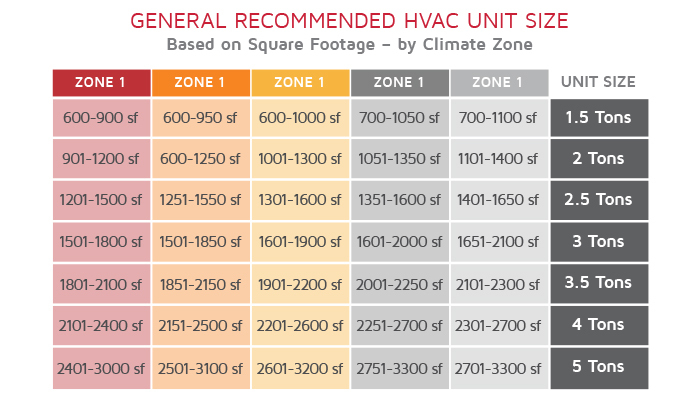
You might think, "Okay, I'll just measure my house and look up a chart!" While square footage is a big piece of the puzzle, it's not the whole picture. A professional considers loads of things, like:

- Climate: Duh! A house in sunny Florida needs more cooling oomph than one in chilly Alaska (unless it's a very unique Alaska house!).
- Insulation: How well insulated are your walls, attic, and floors? Good insulation means less heat seeping in.
- Windows: How many? What type? Do they face the sun directly? All these let heat in.
- Ceiling height: Taller ceilings mean more air volume to cool.
- Number of occupants: People generate heat! (Especially after that chili cook-off).
- Heat-generating appliances: Ovens, computers, lights – they all add warmth.
- Ductwork: Leaky ducts can lose a lot of that cool air before it even gets to your rooms.
- Shade: Trees or awnings that shade your home can reduce your cooling needs.
The Golden Rule: Call a Pro!
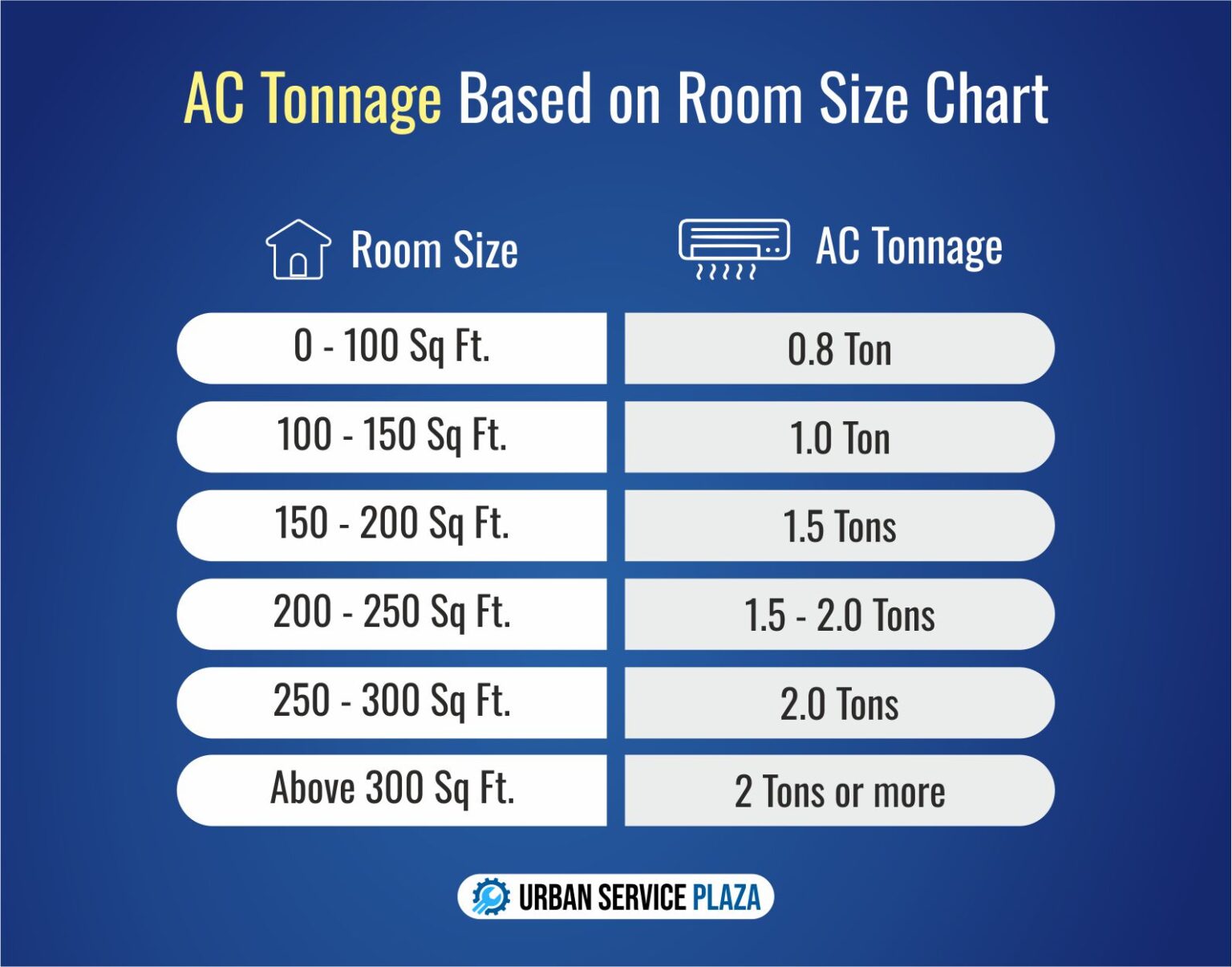
While a super rough guideline might be 1 ton for every 400-600 square feet, please, please, please don't use that as your final decision-maker. It's like trying to navigate without a map and just a hunch – you're probably going to get lost!
The best thing you can do is have a qualified HVAC technician perform a Manual J load calculation. Yes, it sounds fancy, but it's basically a super-detailed scientific calculation that takes all those factors we just talked about into account. They'll figure out exactly how many BTUs your specific home needs to stay perfectly cool and dry.

Investing in the right size AC unit means you'll enjoy a home that's consistently comfortable, has optimal humidity levels, lower energy bills, and a longer-lasting system. It’s a win-win-win-win!
Your Future is Cool!
So, there you have it! Understanding AC tonnage isn't about lifting heavy things, but about smart cooling. By choosing the right size, you're not just buying an appliance; you're investing in years of blissful, perfectly chilled comfort. No more sweating through your summer nights or shivering through your days. Just pure, unadulterated coolness, exactly how you like it. Now go forth and enjoy your perfectly conditioned air, you savvy homeowner, you!