
How Many Tonnes Of Air For 13000 Sq Ft House
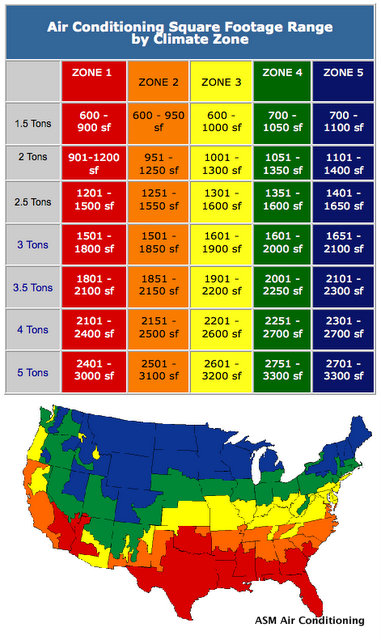
Ever wondered how much air it takes to fill your home? I mean, really fill it? Specifically, a house that's, say, 13,000 square feet? Maybe not. But trust me, it's a fun little thought experiment that touches on some pretty cool science. So, buckle up, because we're about to dive into the airy abyss!
First things first, we need to talk volume. Square footage tells us the area of the floor, but we need the height too. Let's assume an average ceiling height of 10 feet. (You might have vaulted ceilings making this a bit more, or maybe you're rocking a cozy bungalow with slightly lower ceilings. Adjust as needed!) This is your air volume we’re calculating here!
Okay, so 13,000 square feet times 10 feet gives us a volume of 130,000 cubic feet. That’s a lot of space! Imagine stacking boxes… a whole lot of boxes. Now, to get to tonnes, we need to convert cubic feet to a weight measurement. And that's where things get a little…dense. (Pun intended!)
Must Read
Air Density: Not as Light as You Think
Air isn't weightless. We just don't usually notice it. Air density varies depending on temperature, pressure, and humidity. But for a reasonable estimate, let's use a density of about 1.225 kilograms per cubic meter at sea level and around 15 degrees Celsius (59 degrees Fahrenheit). Pretty specific, right? We're getting there!
Before we charge on, a quick conversion: 1 cubic meter equals roughly 35.315 cubic feet. So, to get our 130,000 cubic feet into cubic meters, we divide by 35.315, which gives us approximately 3,681 cubic meters. Phew! Math is fun, isn’t it? (Okay, maybe for some of us.)
/air-conditioning-chart-1152654_final-01-5c522db7c9e77c0001d7671e.jpg)
Kilograms to Tonnes: The Final Stretch
Now we’re cooking! We have the volume in cubic meters (3,681) and the density in kilograms per cubic meter (1.225). Multiply those together and we get approximately 4,509 kilograms. Remember, this is just an estimate. Your actual number might be a little higher or lower depending on the specific conditions inside (and outside) your home.
Almost there! One tonne is equal to 1000 kilograms. So, we divide 4,509 kilograms by 1000 and get... 4.509 tonnes of air! That's about 4.5 tonnes of air filling your hypothetical 13,000 square foot house! Wow! Who knew?
Think about that for a second. That's like having several small cars floating around inside your house! (Figuratively, of course. Please don't try this at home.)

Now, is this information going to revolutionize your life? Probably not. But isn't it cool to have a slightly better understanding of the world around you? It's one of those things you can casually drop at a dinner party to impress (or mildly confuse) your friends. "Did you know I calculated the approximate mass of air in a 13,000 square foot house today?" Instant conversation starter!
Why Bother? Because Curiosity Rocks!
You might be thinking, "Okay, I know how to calculate the weight of air in a house. So what?" And that's a perfectly valid question! The real point isn't the number itself. It's the process. It's about asking "what if?" and then figuring out how to find the answer. It’s about satisfying your curiosity.
This seemingly random calculation involved a little bit of geometry, a little bit of physics, and a whole lot of conversion factors. It's a tiny example of how different fields of knowledge can come together to solve a problem – even if that problem is as delightfully pointless as figuring out how much air weighs inside a very large house.
So, next time you’re feeling bored, try tackling a similar question. How much water is in your swimming pool? How many grains of sand are on your local beach? The possibilities are endless! The world is full of fascinating questions just waiting to be explored. And who knows? You might just learn something amazing along the way.
Learning is a lifelong adventure. Don't be afraid to dive in, get your hands dirty (metaphorically speaking, unless you really are counting sand grains!), and discover the wonders that await. There’s so much more to explore, from the air we breathe to the stars above. Keep asking questions, keep learning, and keep being curious! You might surprise yourself with what you discover!
