
How Many Ton Ac For 1300 Sq Ft

Ever found yourself staring at an air conditioner, maybe a window unit or a big outdoor box, and just… wondering? Like, how does this magical contraption even work? And more specifically, when you think about cooling your own pad, how do you figure out the right size?
It’s a question that pops up a lot, especially if you’re moving, renovating, or just trying to beat the summer heat. Today, let’s tackle a super common scenario: “How many ton AC for 1300 sq ft?” Sounds simple, right? Like, surely there’s a quick math formula. Well, grab a cool drink, because it’s a little more interesting than just punching numbers into a calculator!
What Even Is an "AC Ton," Anyway?
Before we dive into square footage, let’s quickly demystify that "ton" word. When we talk about an AC unit’s capacity in "tons," we’re not talking about how much it weighs. Nope! It’s actually a historical measure of its cooling power. One "ton" of cooling capacity literally refers to the amount of heat absorbed by melting one ton of ice in a 24-hour period. Wild, right?
Must Read
In modern terms, one ton of AC power equals about 12,000 BTUs (British Thermal Units) per hour. BTUs are simply a measure of heat. So, a 2-ton AC can remove 24,000 BTUs of heat from your home in an hour. Think of it as its muscle strength when it comes to battling the heat!
Why 1300 Sq Ft Isn't a Simple "X Tons" Answer
Okay, so you’ve got a space that’s roughly 1300 square feet. My first thought, and probably yours too, is: "Just tell me the number!" But here’s where it gets cool and a little bit like solving a fun puzzle. Sizing an AC isn't just about the square footage, like picking a shoe size. It’s more like picking the perfect outfit for a specific day, considering all the variables.
If someone tells you a single, definitive "X tons" for 1300 sq ft without asking any follow-up questions, they might be leading you astray. Why? Because your home isn't just a number on a blueprint; it's a dynamic, living space with its own unique characteristics.
The Secret Ingredients: What Really Matters for AC Sizing
Think of your home as a giant bowl of ingredients. The AC unit needs to be powerful enough to handle all the heat-generating ingredients within that bowl. Here are some of the fascinating factors that play a huge role:
- Where Do You Live? (Climate Zone): Are you chilling in sunny Florida, battling the Arizona desert, or enjoying milder weather in Oregon? A house in Miami will need a much beefier AC than an identical house in Seattle, simply because of the external temperatures. It’s like needing a much stronger sunscreen in Bali than in Boston!
- How’s Your Home Dressed? (Insulation): Is your attic packed with fluffy insulation? Are your walls well-sealed? Or is your home a bit leaky, letting that precious cool air escape like a sieve? Good insulation is your AC’s best friend, helping it work less to keep you comfortable.
- Window Wonderland (Size, Type, Direction): Big, beautiful windows are fantastic for natural light, but they can be serious heat magnets, especially if they face south or west and aren't energy-efficient. A house with many large, old windows will require more cooling power than one with fewer, newer, well-shaded windows.
- Lofty Ambitions (Ceiling Height): Is your 1300 sq ft a cozy ranch with standard 8-foot ceilings, or does it boast dramatic vaulted ceilings? Higher ceilings mean more air volume to cool, essentially making your 1300 sq ft feel like a much larger space to your AC unit.
- Party Animals (Occupancy): How many people usually live in your home? Each person generates body heat. A busy household of five will generate significantly more heat than a quiet one-person abode, demanding more from the AC.
- Appliance Overload (Heat-Generating Devices): Your oven, stove, computer, television, even light bulbs – they all contribute to the internal heat load. While individual contributions might seem small, they add up!
- Nature's Umbrella (Shade): Does your home have big, beautiful shade trees protecting it from the harsh afternoon sun? Or is it exposed on all sides? Shaded homes naturally stay cooler and require less AC power.
So, What's the Ballpark for 1300 Sq Ft?
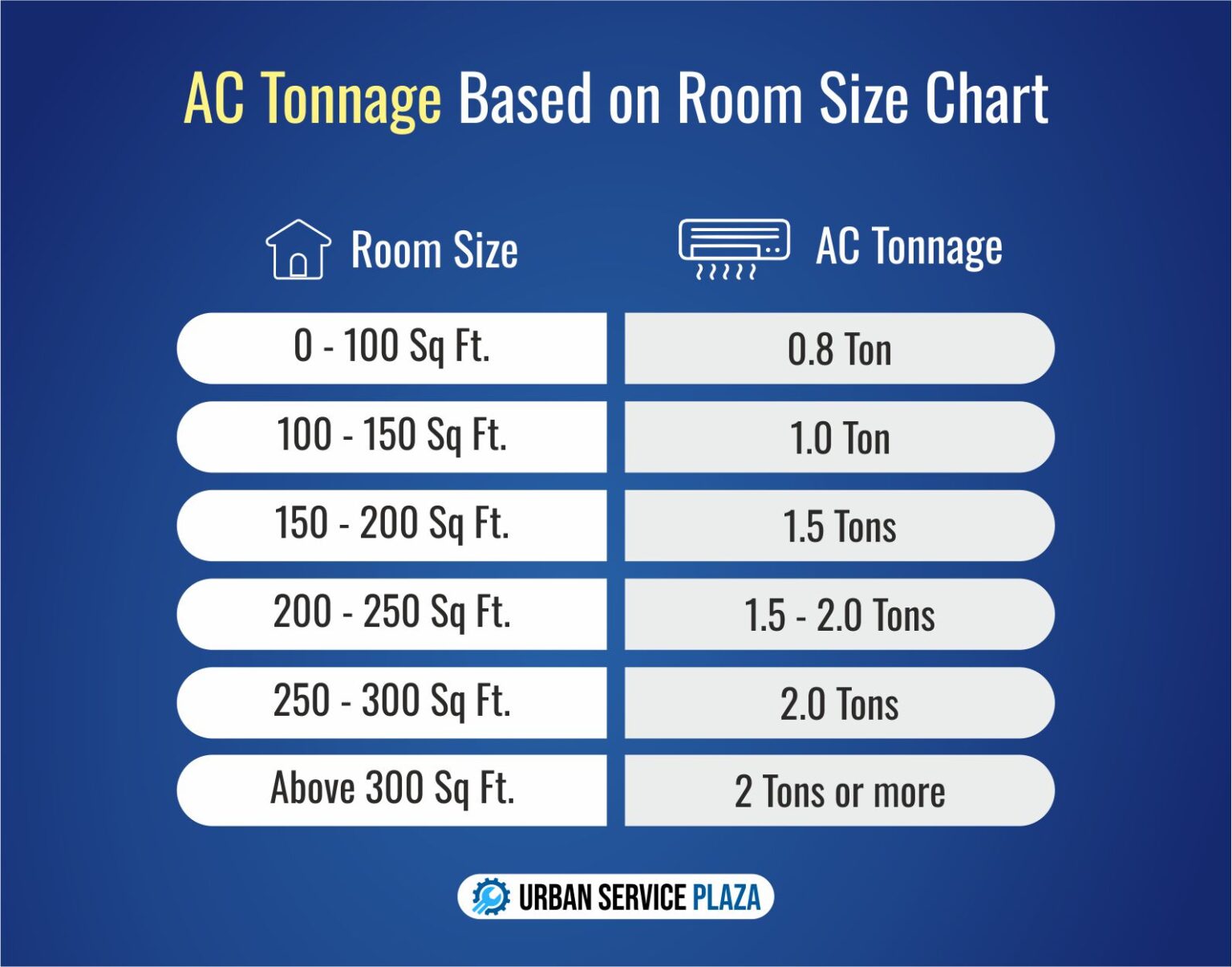
Alright, after all that talk about variables, you're probably still craving a starting point, right? A general, very rough rule of thumb is that you need about one ton of AC for every 400-600 square feet of living space. But remember, this is like guessing how much ice cream you need for a party without knowing how many people are coming or how hot it will be!

For a 1300 sq ft space, if you just did the simplest math (1300 / 500), you might land somewhere around 2.6 tons. This would typically mean a 2.5-ton or 3-ton unit. But again, this is a starting point for discussion, not a definitive answer you should run with!
The Pitfalls of Getting It Wrong (Too Big or Too Small)
You might think, "Why not just go for a bigger AC unit to be safe?" It's tempting, like buying an oversized coat just in case it gets really cold. But when it comes to AC, bigger isn’t always better – in fact, it can be worse!

- AC is Too Small: If your unit is undersized, it will struggle. It will run almost constantly, trying to reach the thermostat setting. This means higher energy bills, a home that never quite feels cool enough on the hottest days, and premature wear and tear on your unit. It’s like asking a bicycle to win a car race – it just won't cut it.
- AC is Too Big: This might sound counter-intuitive, but an oversized AC unit is also a problem. It will cool your home down too quickly, reaching the thermostat setting before it has a chance to properly dehumidify the air. This leads to "short cycling" (turning on and off frequently), which wastes energy and leaves your home feeling clammy and uncomfortable, even if the temperature is right. It’s like using a fire hose to water a delicate houseplant – too much, too fast.
The Golden Rule: Call a Pro!
So, for your 1300 sq ft home, or any home for that matter, the absolute best advice is to call a qualified HVAC professional. They don't just guess or use a simple square footage formula. They perform something called a Manual J load calculation. This is a detailed assessment that takes into account all those fascinating factors we talked about – your home's unique climate, insulation, windows, ceiling height, and more.
Think of them as the detectives of home comfort. They'll meticulously investigate your space to recommend the perfect AC unit size, ensuring you get the most efficient, comfortable, and long-lasting cooling solution. It’s an investment in your comfort and your wallet!
Next time you ponder the mystery of AC sizing, remember it's a cool blend of science, architecture, and even a bit of local weather lore. It’s not just about a number; it’s about creating your perfect cool oasis!
