
How Many Nuclear Reactors Are In The World

Ever wondered about things that seem simple but totally aren't? Like, how many pigeons are in Central Park? Or, how many socks have gone missing in the laundry abyss since, well, forever? Today, we're diving into a similarly perplexing, yet surprisingly giggle-inducing, question.
We’re talking about nuclear reactors, folks. Yes, those big, often mysterious, power-producing giants. You might picture them humming away in some distant, highly-secured facility, generating electricity. But how many of them are actually out there, silently doing their thing, powering our modern lives?
It feels like a straightforward question, right? Just count them! One, two, three… you get the idea. Except, oh dear reader, it’s rarely that simple in the grand scheme of things. Prepare to have your perception of simple arithmetic playfully challenged by the world of atomic energy.
Must Read
Imagine asking a squirrel how many nuts it has buried. You'd probably get a blank stare, maybe a twitch of the nose. Counting nuclear reactors sometimes feels a bit like that – a quest for a number that's always just out of reach. It's a number that dances around, winks at you, and then changes its outfit just for fun, making a precise tally elusive.
The Elusive Tally: More Than Just a Number
So, let's get down to brass tacks, or at least try to. The most commonly cited figure for operational nuclear power reactors. These are the big boys, making electricity for our homes, businesses, and all our beloved gadgets. Roughly speaking, we're looking at somewhere around 400 to 450 of these workhorses humming globally.
"Roughly speaking," you ask, perhaps with a raised eyebrow? Yes, because pinning down an exact, immutable number is trickier than herding cats on roller skates. The count is always in flux, like a high-stakes game of musical chairs played on a global scale. One day it's one number, the next it’s subtly different, just to keep us on our toes.
Think about it: new ones are always being built. That’s right, even as we speak, concrete is being poured and miles of wires are being laid. We're talking about dozens more currently under construction across the globe, buzzing with activity. These future powerhouses are waiting their turn to join the big league, adding to the constantly shifting total.
But wait, there's more to this numerical tango. Some reactors, after a long and distinguished career, are retired. They get decommissioned, which is a fancy word for "powering down for good" and safely dismantling their operations. So, the number of "active" reactors is constantly shifting, subtracting from one end and adding to another, making a fixed count a fleeting dream.
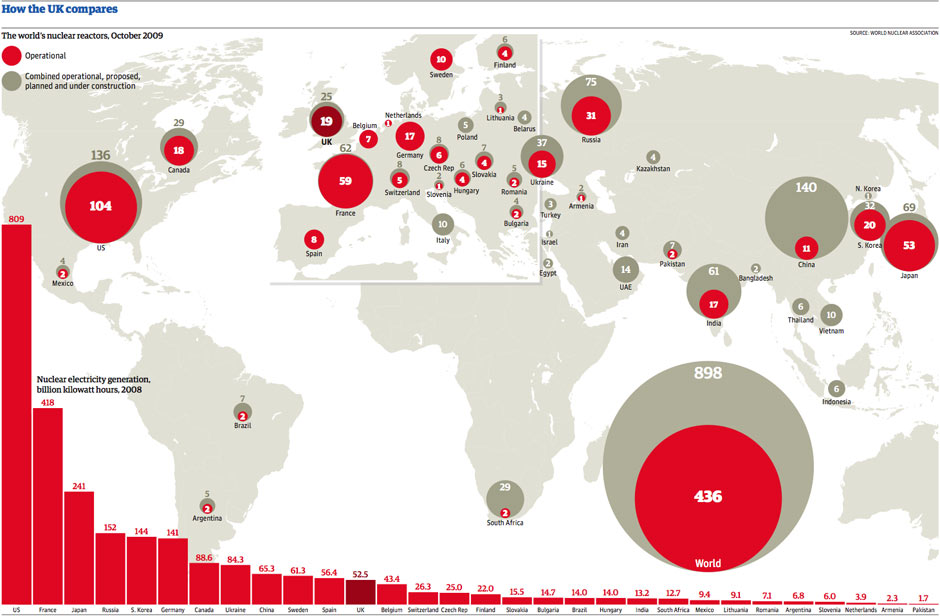
Even official lists can vary slightly. One organization might count a reactor as "operational" once it connects to the grid. Another might wait until it's officially declared "commercial." These little differences add to the delightful ambiguity of the exact count.
It's Not Just Powering Your Toaster
And here's where it gets truly interesting – and perhaps a little bit hilarious. That 400-450 number? That's typically just for reactors that generate electricity for public consumption. But nuclear reactors aren't just about making your toaster pop, as important as that is.
Oh no, there are tons of smaller, often lesser-known, reactors out there too. These are called research reactors, and they're like the unsung heroes of the scientific world, quietly doing vital work. They help us understand materials, produce life-saving medical isotopes, and even train future nuclear engineers.
There are literally hundreds of these research reactors scattered across universities and laboratories. Maybe even thousands, if you count every tiny setup ever. They don't often make headlines, but they are absolutely crucial for innovation and discovery in countless fields. Suddenly, our initial "simple" count is looking a lot less simple, isn't it?
Then, don't forget the ones on ships! Naval reactors power military submarines and massive aircraft carriers. These powerful engines allow vessels to operate for years without refueling, making them incredibly strategic. Counting these adds another layer of complexity, often shrouded in a little bit of mystery for national security reasons.
So, if you ask someone "How many nuclear reactors are there?" and they give you a quick, confident number, well, they're probably only telling you part of the story. They might be just talking about the power-generating ones, which is a big chunk, but far from the whole picture. Which is fine, but it’s like asking how many cars there are and only counting red ones – you're missing a lot of interesting vehicles.
"The number of nuclear reactors is like the number of stars in the sky – always more than you think, and harder to count than you'd imagine!"
My Unpopular Opinion (That You'll Totally Agree With)
Here's my big, bold, perhaps mildly controversial (but totally relatable) opinion. Are you ready for it? Lean in close, because this is important and might just change your perspective. The exact, precise, down-to-the-last-bolt number of nuclear reactors in the world…
…doesn't actually matter as much as we might think it does for our everyday lives. Gasp! Shock! Horror! But hear me out before you grab your pitchforks and demand a re-count. Are you really checking the exact global reactor count before brewing your morning coffee or charging your phone? Probably not, and that's okay.
We trust that smart folks in various agencies, like the International Atomic Energy Agency (IAEA), are diligently keeping tabs. They have detailed lists, intricate charts, and probably very serious spreadsheets that would make our heads spin. But for us, the general public, the difference between 438 and 442 isn't going to rock our world or impact our daily routines.
What truly matters is that these reactors, whatever their exact number, are operating safely and securely. What matters is that they responsibly contribute to our energy needs, providing consistent power without interruption. The big picture, you see, often triumphs over the hyper-specific, constantly moving detail.
It's like asking how many individual leaves are on all the trees in the Amazon rainforest. A truly mind-boggling, impossible-to-get-exact number. But we know there are billions, and that's enough to understand its immense scale, vital role, and environmental importance. The exact digit doesn't change our appreciation or concern for the forest's health.

Similarly, we know there are hundreds of these powerful energy sources around the globe. They're a significant and integral part of the global energy mix, providing a stable base load of power. And for most of us, that's a perfectly sufficient level of detail to go about our day, enjoying the benefits.
Who's Got the Most (and Who Cares, Playfully)?
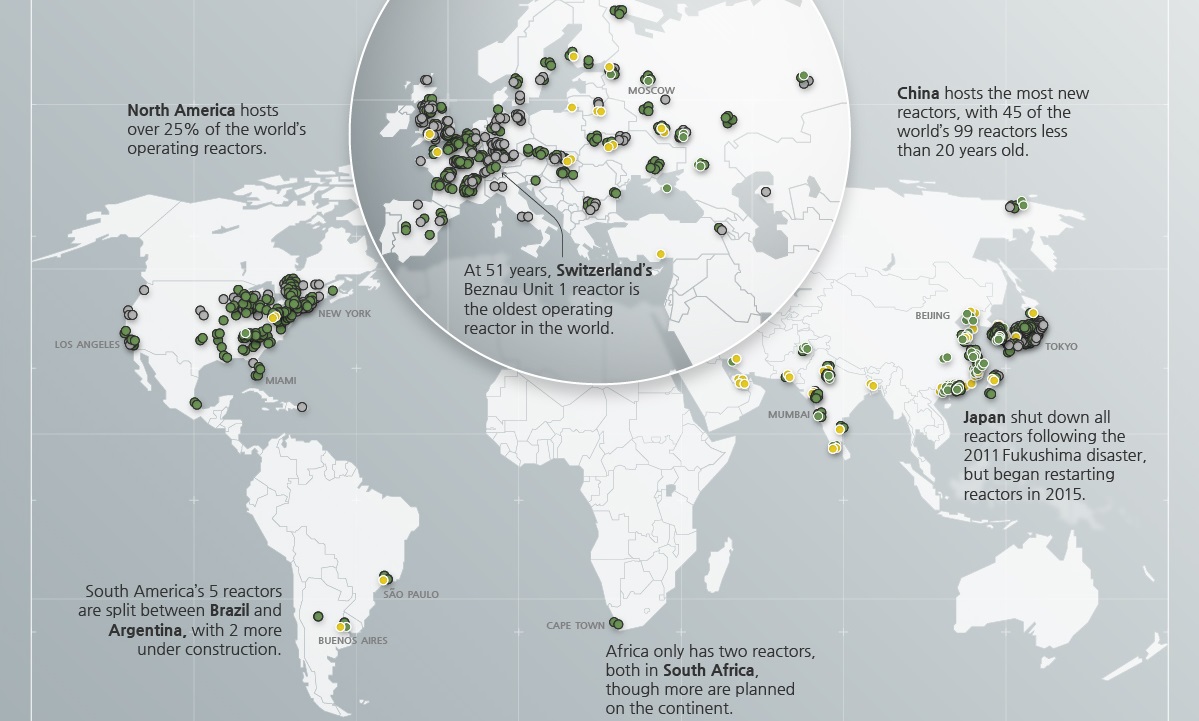
Just for fun, let's peek at some of the major players in the nuclear power game, the big hitters, if you will. The United States usually leads the pack in terms of operational reactors, boasting a large fleet. They've got a lot of big ones humming along, producing a substantial amount of their electricity.
Then you have countries like France, which gets a huge chunk of its electricity from nuclear power. They are incredibly reliant on this energy source, more than many other nations, seeing it as a key to energy independence. Their strong and consistent commitment to nuclear is a major part of their national energy strategy, year after year.
China is also a massive player, with an ambitious focus on building new reactors at an impressive pace. They are rapidly expanding their nuclear fleet, with many more currently under construction to meet soaring demand. It's a huge undertaking to fuel their ever-growing economy and population.
Other countries like Russia, South Korea, and India also have significant and developing nuclear programs. It's a truly global endeavor, with countries around the world exploring or expanding their nuclear options for various reasons. So, it's not just a handful of nations; it's a worldwide club with many active members.
But again, whether France has 56 or 58 active reactors today, while interesting trivia, probably isn't shaping your dinner plans. The important point is, these nations have made a strategic choice to invest in this technology. And they're actively using this powerful resource to power their countries and drive their economies forward.
The Takeaway: Embrace the Ambiguity!
So, what’s the big takeaway from our delightful little journey into nuclear reactor counting? It’s that some questions, despite seeming simple, are delightfully complex and wonderfully fluid. And sometimes, the precise answer is less important than the general understanding and the bigger picture.
We live in a world powered by incredible technologies, many of which operate silently and efficiently in the background. Nuclear reactors are a prime example of this unseen, yet absolutely vital, infrastructure. They keep our lights on, our phones charged, our internet flowing, and our economies humming.
So, the next time someone asks you, "How many nuclear reactors are there in the world?" You can confidently (and perhaps with a knowing wink) say, "A lot! And the exact number changes while we speak!" Then you can impress them with the difference between power, research, and naval reactors, showing off your newfound wisdom.
Or, you can just smile and say, "Enough to power our world, and probably more than you think." Because, let's be honest, trying to get a perfectly static, moment-by-moment count is a bit like trying to count the grains of sand on a sprawling beach. It's a noble effort, but ultimately, a little bit futile and perhaps unnecessary in the grand scheme of things.
Let's embrace the beautiful ambiguity of it all, the ever-shifting numbers and classifications. And maybe, just maybe, let's take a moment to appreciate the clean, consistent power they provide, powering our modern lives. Without getting too hung up on the precise, ever-shifting digits, which are constantly in motion anyway.
After all, who wants to live in a world where everything is perfectly cataloged and precisely quantified down to the last molecule? A little mystery and fluidity keeps things interesting and adds a touch of playful wonder, don't you think? So, go forth and enjoy your electricity, unburdened by an exact reactor tally that likely changed five minutes ago!