
How Many Nuclear Reactors Are In The United States

Hey there, curious minds! Ever found yourself watching a sci-fi movie with all those glowing cores and futuristic energy sources, and then thought, "Wait a minute, how much of that is real, and how much is just Hollywood magic?" Or maybe you've just seen a power plant cooling tower in the distance and wondered, "What exactly is going on in there?"
Today, we're going on a little adventure to peek behind the curtain of one of the most fascinating and often misunderstood energy sources out there: nuclear power. Specifically, we're going to tackle a super common question with a chill vibe: "How many nuclear reactors are actually buzzing away in the United States?"
So, What's the Big Number?
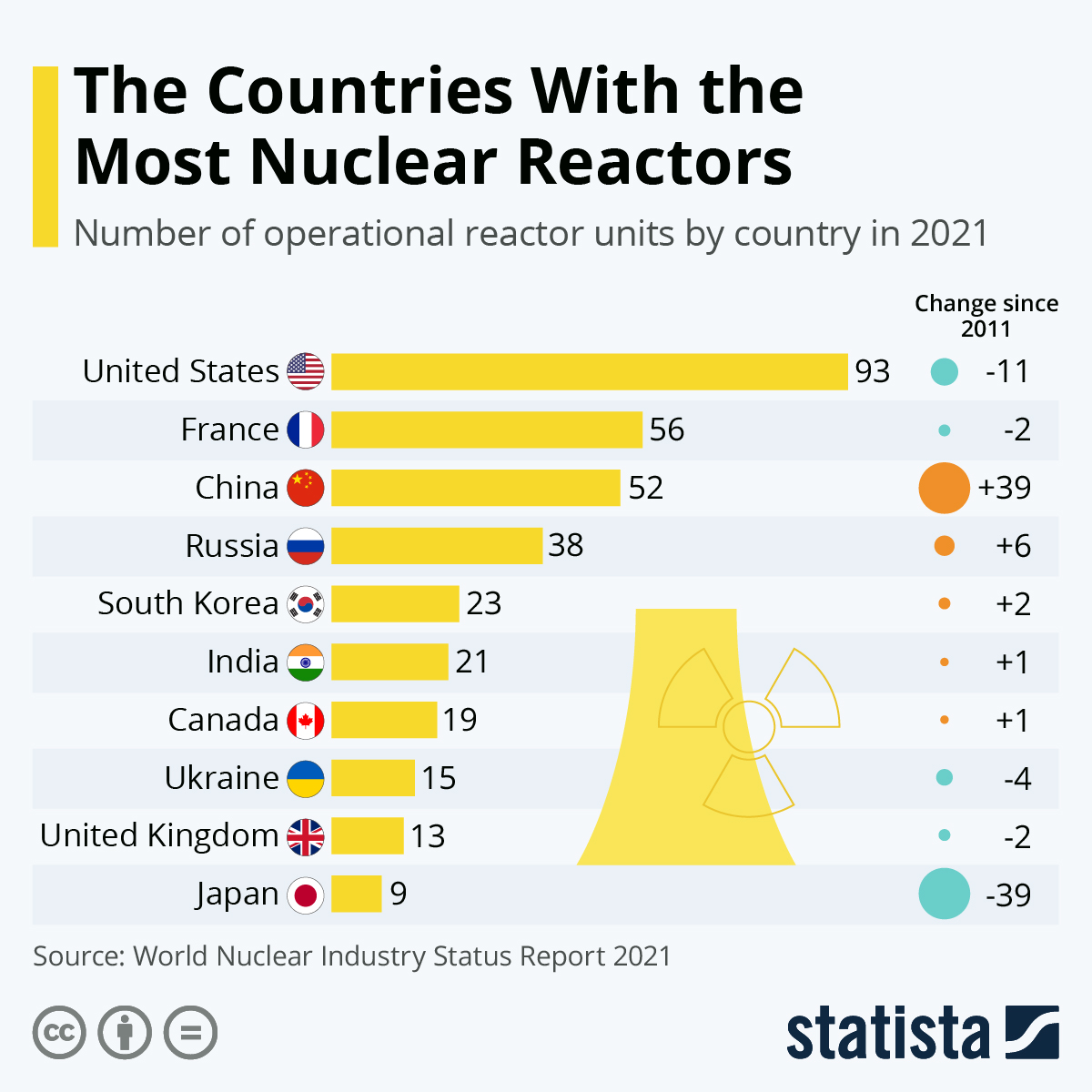
Alright, drumroll please... As of late 2023/early 2024, the United States is home to 93 operational nuclear reactors. These aren't just random reactors; they're housed within 54 nuclear power plants spread across 28 states. Pretty neat, right?
Must Read
Think about that for a second. That's 93 powerful, incredibly complex machines working tirelessly, day in and day out, to keep our lights on, our phones charged, and our homes comfy. It's not a single giant reactor in a secret underground lair, but a distributed network, like a bunch of superhero energy factories working together.
Wait, Reactors vs. Plants? What's the Diff?
Good question! It's like asking "how many engines are in my car?" versus "how many cars do I own?" A single nuclear power plant (the big facility you might see) can actually have multiple reactors (the individual energy-generating units). For example, a plant might have two, three, or even four reactors, all nestled safely on one site, sharing infrastructure.
It's pretty smart engineering, optimizing space and resources. So, while we have 54 distinct locations, the sheer number of individual power-producing hearts beating within them adds up to those impressive 93!

Why Are These Things So Cool?
Beyond just the numbers, there are some truly fascinating reasons why nuclear reactors are a big deal:
They're the Marathon Runners of Energy
Unlike some other energy sources that can be a bit 'on-again, off-again' (hello, sunny days and windy gusts!), nuclear plants are incredible at providing what's called baseload power. This means they run continuously, reliably, for months at a time, generating electricity 24/7, rain or shine. They're like that friend who's always there, always dependable.
In fact, nuclear power generates nearly 20% of the nation's electricity. That's a huge chunk of our daily energy needs, all thanks to these quiet giants humming away.
Clean Energy Superstars
Here's a fact that often surprises people: nuclear power plants don't release greenhouse gases or air pollutants during operation. Yup, that's right! While the process of building them and mining the fuel has an impact, the actual electricity generation itself is carbon-free. In a world increasingly focused on climate change, that's a pretty big win, wouldn't you say?
Think of it: nearly a fifth of our electricity comes from a source that isn't contributing to smog or CO2 emissions. That's a powerful argument for keeping these reactors in the mix.
Safety First (and Second, and Third...)
Now, we can't talk about nuclear energy without addressing the elephant in the room: safety. It's true that the word "nuclear" can conjure up images from history books or disaster movies. But here's the thing: modern nuclear power plants are built with multiple layers of safety systems, rigorous regulations, and highly trained personnel.
.png?revision=1&size=bestfit&width=562&height=393)
They are among the most regulated and closely monitored industrial facilities on the planet. The focus is always on preventing issues and containing anything that might go wrong. So, while no energy source is without risk, the industry has learned a lot and continually pushes for safer, more resilient designs.
The Future: Tiny but Mighty?
So, are we just sticking with these 93, or are there more coming? Well, the landscape is always changing. The US recently brought two new reactors online at the Vogtle plant in Georgia (Vogtle 3 and 4), the first new reactors in decades! That's a big deal!
But beyond that, there's a lot of buzz around something called Small Modular Reactors (SMRs). Imagine miniature, factory-built reactors that are easier and cheaper to deploy, fitting into smaller footprints. They could be a game-changer, offering flexible, clean power to smaller grids or even specific industrial sites.

It’s like moving from giant, custom-built supercomputers to sleek, mass-produced laptops – same incredible technology, just scaled differently for broader access.
Wrapping It Up: A World of Power
So, there you have it! The United States is powered by 93 nuclear reactors at 54 plants, silently and reliably generating a huge chunk of our clean electricity. It's a testament to incredible human ingenuity, engineering prowess, and a continuous drive for innovative energy solutions.
Next time you flip a light switch, take a moment to ponder the incredible, complex dance of atoms happening far away, keeping our modern world humming. It's truly something to be curious about, isn't it?