
How Many Miles Are In 20 Acres

Ever wondered how far you could walk across 20 acres? It sounds like a lot, doesn't it? "Twenty acres!" We imagine rolling hills, a sprawling farm, or maybe even the setting for a grand, sweeping romance novel. But how much actual distance are we talking about?
Acres to Miles: A Surprisingly Tricky Journey
Here's the thing: acres are a measure of area, not length. It's like asking how many feet are in a square. It depends on the shape! Twenty acres could be a long, skinny strip, or a relatively compact square. This makes the 'miles in 20 acres' question a bit of a brain-teaser.
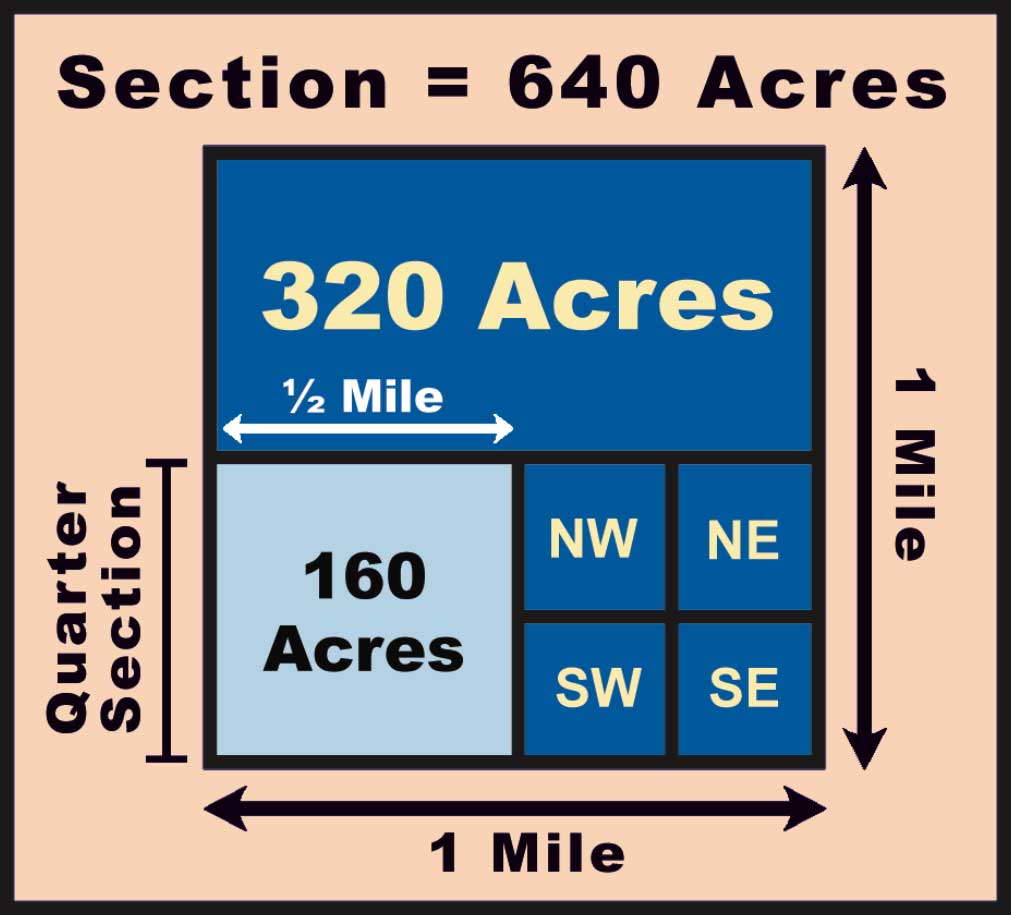
Let's imagine a perfectly square 20-acre plot. To figure out the distance across, we need to do a little math. (Don’t worry, it won’t be painful, I promise!). An acre contains 43,560 square feet. So, 20 acres contain 871,200 square feet. To find the length of one side of our square, we need to find the square root of 871,200. That comes out to be approximately 933 feet.
Must Read
Okay, we're getting somewhere! Now, there are 5,280 feet in a mile. So, our 933 feet represents only a small fraction of a mile. Specifically, it's about 0.176 miles, or roughly a sixth of a mile.
So, if your 20 acres are shaped like a perfect square, you'd only walk about a sixth of a mile to cross it in one direction. Not quite the epic journey you might have imagined, is it?

The Funky Shapes of Reality
But here’s where it gets interesting. What if your 20 acres aren't square? What if they're long and narrow, like a thin slice of pie? In that case, the distance to traverse them could be significantly longer. Imagine a winding river flowing through your land. Now the "miles" drastically increase, depending on how much it meanders.
Think about it like this: You could have 20 acres of a perfectly rectangular park. Walking along the long side of that rectangle is going to be a much longer trek than walking across its width.
It's all about the shape! Just like a skilled artist can create vastly different images with the same amount of paint, a land surveyor can carve out incredibly diverse shapes from the same amount of acreage.
Why Does This Even Matter?
Beyond the mathematical curiosity, understanding the relationship between area and distance can actually be quite practical. If you're planning a fence for your 20 acres, the shape will dramatically impact how much fencing you need. A square will require far less material than a long, skinny rectangle.
Or, consider planting a row of trees. The length of that row will depend entirely on the shape of your land. What if you want to set up a sprinkler system? The dimensions of your property are crucial for optimal water coverage.
But most of all, thinking about this helps us appreciate the beauty and variety of the land around us. Every piece of property is unique, shaped by natural forces and human choices. Thinking about the area and the distances involved helps us to see the land in a new way.
A New Way to Look at Acres
Next time you hear about someone owning 20 acres, don't just picture a big, undefined space. Instead, imagine the possibilities: a square farm, a winding trail through a forest, or a long, narrow strip of beachfront property. Think about the different journeys you could take across it. Visualize the fences, the trees, and the buildings that could fill that space.
Twenty acres isn't just a number; it's a canvas waiting to be painted. And the length of the paths you take across that canvas? Well, that's entirely up to the shape it takes. It's all relative. And that, my friends, is a beautiful thing.
