
How Many Kwh Does A Solar Panel Produce Per Month
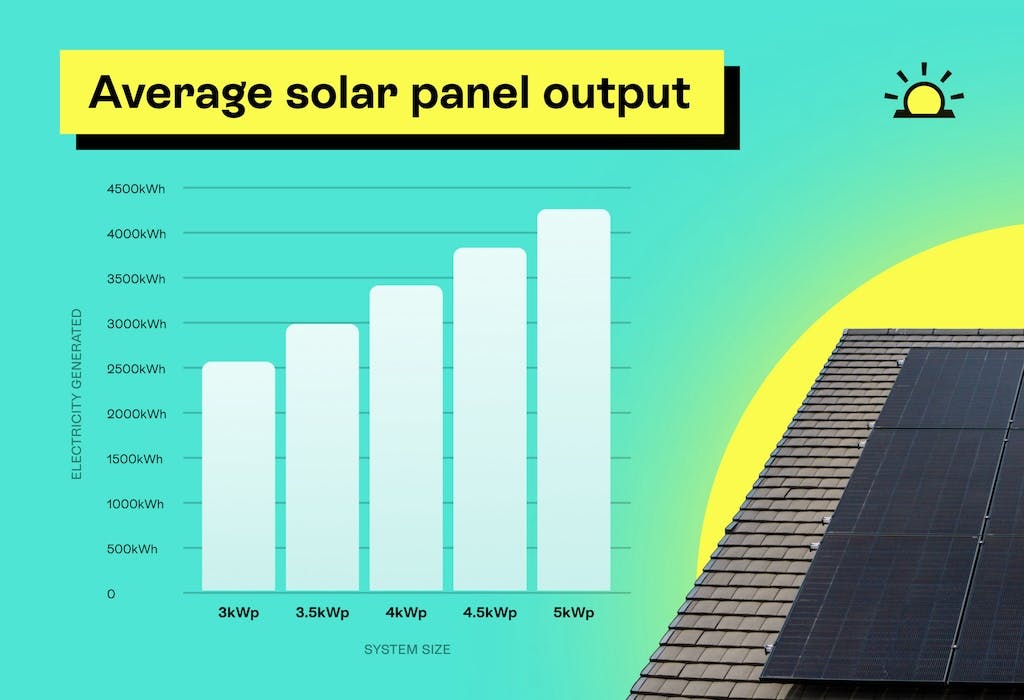
Ever wondered how much juice you can squeeze out of the sun with a solar panel? It's like trying to figure out how many slices of sunshine you can bake into a pie each month! Let's dive into the fascinating world of solar energy production, without getting bogged down in complicated jargon. Prepare to be amazed (and maybe a little bit sun-struck)!
So, How Many kWh Are We Talking?
Okay, let's get down to brass tacks. How many kilowatt-hours (kWh) does a single solar panel usually generate each month? The answer, like the weather, is... it depends! Imagine trying to predict the exact number of scoops of ice cream you’ll eat in July. It depends on how hot it is, right? And how much you like ice cream!
A typical solar panel, let's say one that’s around 300-400 watts, might produce somewhere between 25 and 50 kWh per month. Think of it as a range, not a fixed number. This range is influenced by several super cool factors, which we will explore below.
Must Read
The Sunshine Shenanigans!
First off, the amount of sunlight your location gets is huge. If you're basking in the Arizona sun, your panels will likely be humming with energy production compared to, say, a perpetually cloudy spot in Seattle. It's simple: more sun, more power! Think of it like growing sunflowers. They thrive where the sun shines brightest.
Next, the orientation and tilt of your panels make a difference. Angling your panels to perfectly capture the sun's rays is like positioning your umbrella to maximize shade on a scorching day. It's all about optimizing for the greatest effect!
The angle of the sun relative to your location also changes throughout the year! In the summer, the sun is higher in the sky, and the days are longer. In the winter, the sun is lower, and the days are shorter. Therefore, you can expect more kilowatt hours in the summer than you would in the winter.
Other Factors Playing Their Part
But wait, there’s more! The temperature also matters. Believe it or not, solar panels work best when they're cool. Excess heat can actually reduce their efficiency! It's like a superhero who performs best in moderate temperatures. Not too hot, not too cold.

And then there's shading. Even a little bit of shade from a tree or a nearby building can significantly reduce your panel's output. It’s like trying to watch your favorite movie with someone standing in front of the screen!
Finally, the age and condition of your panels play a role. Over time, solar panels can degrade slightly, meaning they won't produce as much power as they did when they were brand new. Think of it like your favorite old t-shirt. It’s still great, but not quite as vibrant as the day you bought it.
A Real-World Glimpse
Let's look at an example. Suppose you live in sunny California and have a 350-watt solar panel. On average, you might expect it to produce around 40 kWh per month during the sunnier months. But in a less sunny state, or during the winter, that number could drop to 25 kWh or less. That’s why it’s super important to use solar calculators and seek quotes from local solar installers.

Want to get an even better picture? Many solar monitoring systems allow you to track your panel's actual production in real-time. It's like having a personal energy dashboard, showing you exactly how much power you're generating! This can be extremely helpful in understanding the impact of weather and other factors on your solar panel's performance.
Why This Is So Captivating
Figuring out how much energy your solar panel will produce is like unlocking a secret code of sunshine! It's about understanding the natural world and harnessing its power in a sustainable way. And let's face it, who doesn't love the idea of getting free energy from the sun?

Plus, there's something incredibly satisfying about monitoring your solar panel's output and seeing the positive impact you're having on the environment. It’s like being a superhero for the planet, one kilowatt-hour at a time! Solar power is a truly exciting field.
Think about it: You're not just reducing your carbon footprint; you're also potentially saving money on your electricity bill. It's a win-win situation! What could be more satisfying than saving money while also helping the planet? It's a truly virtuous circle.
Go Solar!
So, are you ready to start baking some sunshine pies? Explore the power of solar energy and see how much you can generate. It’s a fun, rewarding, and incredibly empowering journey. Happy solar-ing!