
How Many Kilowatts Does One Solar Panel Produce
.png)
Okay, let's talk solar panels. Specifically, how much power they actually make. Because let's be honest, wading through technical specs is about as fun as doing your taxes. And let's face it, nobody really wants to do that.
We've all seen them. Gleaming rectangles on rooftops, silently promising a future powered by sunshine. But how much juice are we really talking about? The answer, as always, is delightfully…it depends.
The "Standard" Panel: A Mythical Beast?
You'll often hear about a "standard" solar panel producing somewhere around 300-400 watts. Sounds good, right? Like, enough to power… something! But hold on a second. This is where my unpopular opinion comes in.
Must Read
I think the "standard" panel is a bit of a marketing myth. Like the Loch Ness Monster or consistently reliable Wi-Fi on a road trip. It exists, sure, but finding one that exactly matches that description in your situation? Good luck.
Think about it. What's "standard" for a tiny house in Arizona blasting in the sun all day is vastly different than "standard" for a condo balcony in Seattle fighting for every sunbeam it can get.

So, that 300-400 watts? That's under ideal conditions. Think lab conditions. Think sunny day, perfectly angled panel, no clouds, no dust, no pesky birds leaving unwanted "deposits." The real world, as we know, is rarely ideal. My car is never clean.
Kilowatts: Let's Scale Things Up (Slightly)
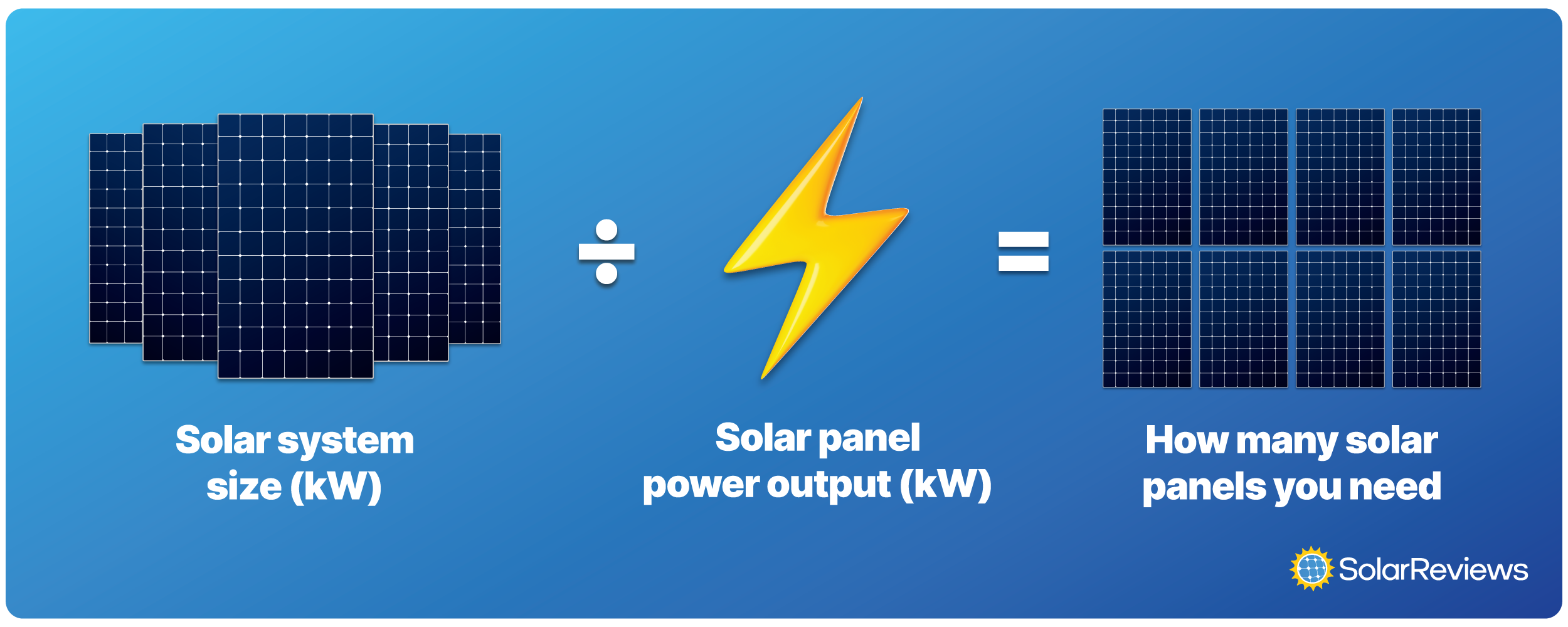
We're talking about power, so let's graduate to kilowatts. A kilowatt (kW) is simply 1,000 watts. So, theoretically, three "standard" 333-watt panels (a conveniently round number, I know) would give you roughly 1 kW. But as we discussed, life is messy. So let's call it a 'best-case scenario'.
So, one solar panel? Think about the average output over a day, a week, a month. It's probably less than what the spec sheet boasts. Factors like panel size, panel type (polycrystalline, monocrystalline, etc.), and even the color of your roof (seriously!) affect performance. Don't forget that pesky shade from trees or buildings.
Here's another unpopular opinion: focusing on the power output of a single panel is almost pointless. Solar is a team sport. It's about the system. How many panels you have, how they're connected, the efficiency of your inverter (the thing that converts DC power to AC power for your home), and your location. The whole shebang!
Think of it like a band. One amazing guitarist (a super-efficient solar panel) doesn't make a good band. You need a solid drummer, a decent bassist, and maybe someone who can actually sing (a well-designed system). Otherwise, you just have a loud guitarist.
So, How Much Does One Panel Produce?
Alright, alright, I know. You want a number. Fine. On a decent day, one "standard" panel might realistically give you the equivalent of 0.2 to 0.3 kW of power over several hours of sunlight. But remember: this is a very rough estimate.
The key takeaway is to stop obsessing over the theoretical output of a single panel and start thinking about your energy needs and how a properly designed solar system can meet them. Talk to a reputable solar installer. Get multiple quotes. Ask about real-world performance data, not just marketing hype. And most importantly, don't be afraid to ask questions.
And one last unpopular opinion: Embrace the imperfections! A slightly less-than-perfect solar setup is still better than no solar setup at all. Every little bit helps. Even if it just offsets the energy used by that constantly-on-charge phone.
In conclusion, trying to nail down the precise output of a single solar panel is like trying to catch a sunbeam with a butterfly net. Good luck with that! Instead, focus on the bigger picture, understand your energy consumption, and work with professionals to design a solar system that works for you. And maybe, just maybe, you can finally ditch those pesky electricity bills.