
How Many Kilowatts Do Wind Turbines Produce

Ever looked at a wind turbine and wondered, "Just how much power does that giant thing actually make?" It's a question that bounces around in my head too! Let's dive into the fascinating world of wind power and figure out the kilowatt situation. Prepare to be amazed – it’s way more interesting than it sounds.
Wind Turbines: Not Just Pretty Scenery
Wind turbines aren't just there to look cool (though they do add a certain je ne sais quoi to the landscape, don't they?). They're powerhouses. Seriously! They're converting the invisible force of the wind into electricity we use every day.
Now, the big question: How many kilowatts are we talking about? Well, it’s not a simple answer. It's like asking how much a car costs. It depends!
Must Read
Think of it like this: you have tiny compact cars, family sedans, and monster trucks. Wind turbines are the same! There are smaller ones, medium-sized ones, and gigantic, awe-inspiring ones. The bigger they are, the more kilowatts they can produce.
Size Matters (In Kilowatts, At Least)
A small, residential wind turbine – the kind you might see powering a farm or a single home – might generate around 10 kilowatts. That’s enough to power several appliances and lights. Pretty neat, huh?

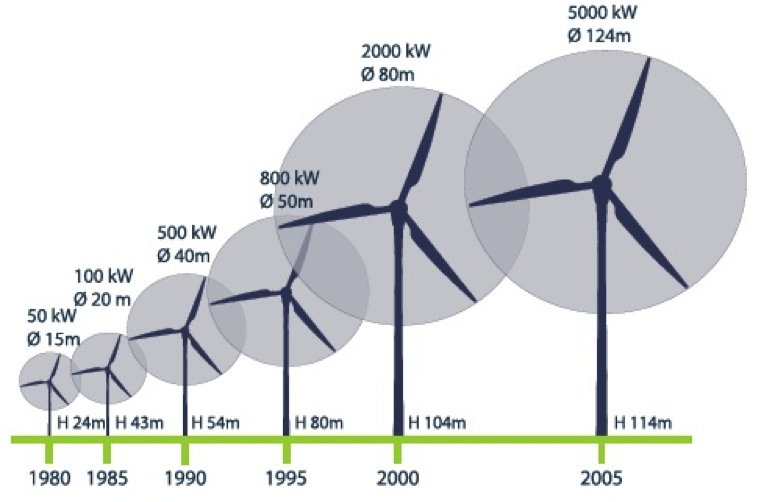
But then you have the big boys. The ones in wind farms, those sprawling fields dotted with massive turbines. These are the real kilowatt champions. These giants can churn out anywhere from 2 to 8 megawatts (MW). Remember, 1 megawatt is 1000 kilowatts. So we're talking serious power!
A single large turbine, producing 3 MW, could power hundreds of homes. Now multiply that by the number of turbines in a wind farm, and you're looking at a substantial contribution to the power grid. See? Told you it was interesting!

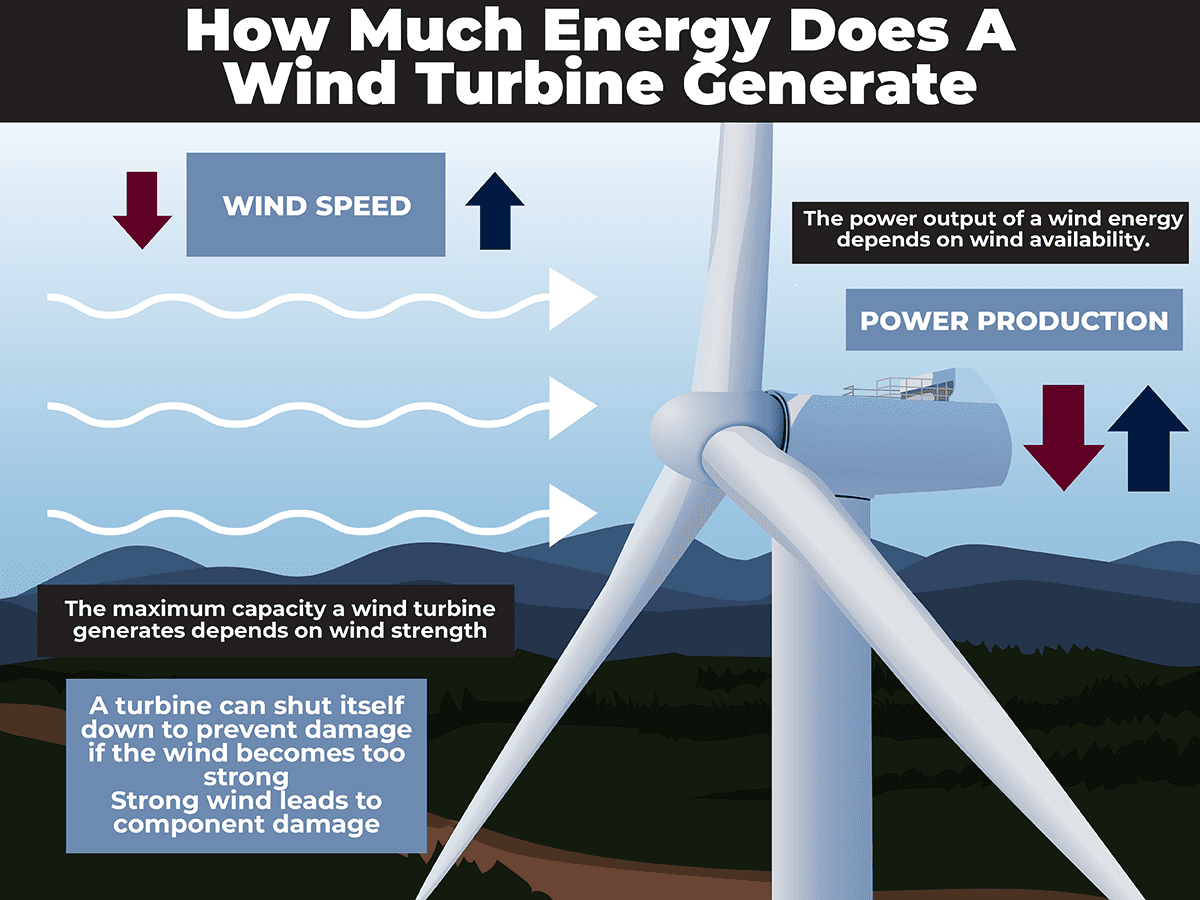
The capacity of a wind turbine is directly related to its size and location. The bigger the turbine and the windier the location, the more electricity it can generate.
Location, Location, Location (and Wind, Wind, Wind!)
It's not just about size, though. Where a turbine is located plays a huge role. A turbine in a consistently windy area, like a mountain pass or a coastal region, will produce far more power than one stuck in a sheltered valley.
Think of it like this: a solar panel in the desert will produce more energy than one in a cloudy city. Same principle applies to wind!
And then there's the weather. No wind, no power. Strong, steady winds? Jackpot! Wind speed is a critical factor in how much electricity a turbine generates.
The Future is Windy (and Full of Kilowatts!)
Wind power is a booming industry, and the turbines are only getting bigger and more efficient. Engineers are constantly innovating, designing new blades and towers that can capture more wind and generate even more kilowatts.
Imagine the possibilities! Clean, renewable energy powering our homes, businesses, and cities, all thanks to the simple power of the wind. It’s pretty exciting stuff.
So, next time you see a wind turbine, take a moment to appreciate the engineering marvel. It’s not just spinning around. It’s busy converting wind into usable energy, one kilowatt at a time.
Want to learn more? Do a quick search for "how wind turbines work" and prepare to have your mind blown. The future of energy is literally blowing in the wind!
And hey, who knows? Maybe one day you'll be powering your own home with a sleek, efficient wind turbine. The possibilities are endless!