
How Many Kilowatt Hours Does A Solar Panel Produce
So, you're thinking about going solar? Awesome! Good for you, saving the planet (and your wallet, hopefully!). But then comes the question that makes your head spin faster than a poorly balanced wind turbine: How many kilowatt-hours does a solar panel actually produce?
Let's be honest, figuring this out can feel like trying to understand quantum physics while simultaneously baking a soufflé. It's complex! But fear not, dear reader. We're going to break it down, with a dash of humor and a sprinkle of what some might call, an "unpopular opinion."
The Great Solar Panel Output Mystery
First, the standard answer. Most solar panels are rated somewhere between 250 and 400 watts. Yay! Numbers! Now what?
Must Read
Well, that's their peak power output. Think of it like your car's top speed. You can go 120 mph... theoretically. But are you really driving that fast every day? Probably not (and you really shouldn’t!).
Solar panels are the same. They only hit their maximum output under perfect conditions. That means direct sunlight, optimal temperature, and absolutely no bird droppings. Good luck with that last one.
Sunshine, Sunshine… Sort Of
The big factor here is sunlight. How much sun do you get where you live? Seattle? Probably not as much as Phoenix. Sorry, Seattle.
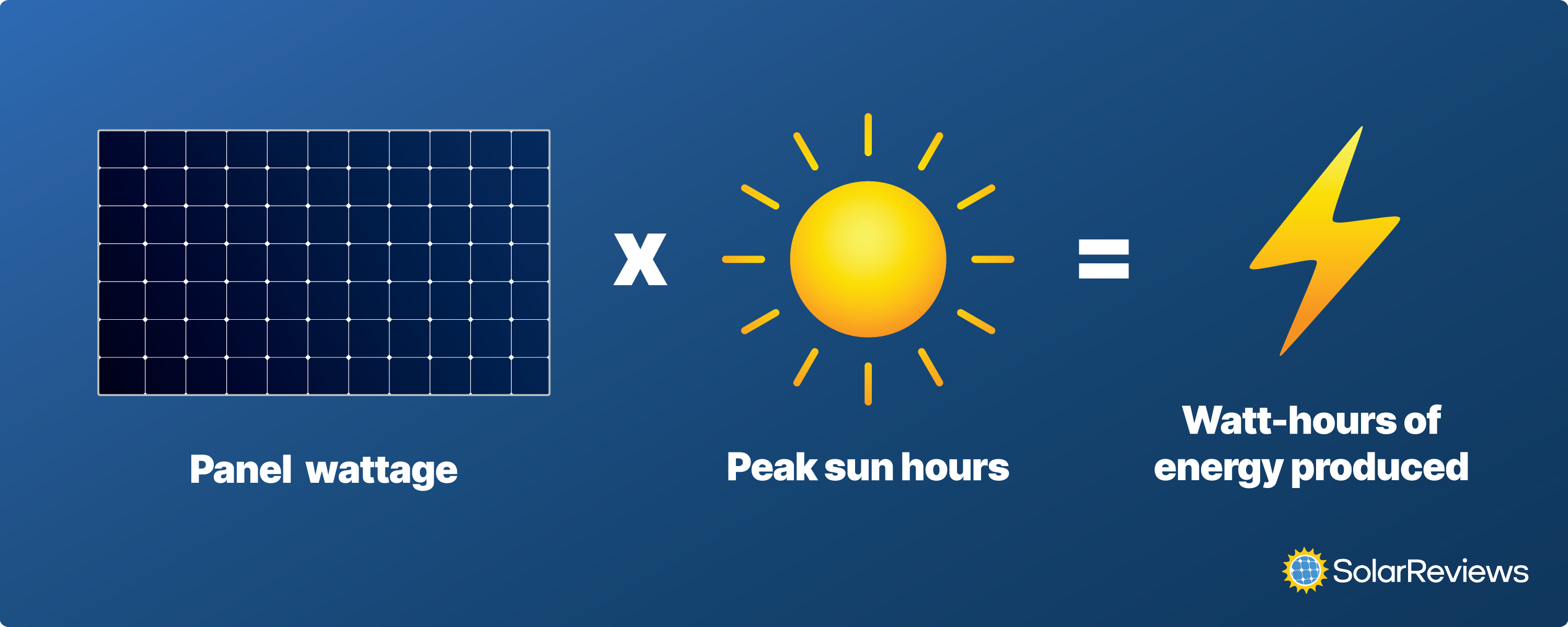
This is usually measured in something called "peak sun hours." This tells you the equivalent number of hours per day where the sunlight is at its maximum intensity (1000 watts per square meter). It's like averaging out all the sunny moments in a day into pure, concentrated sun-juice.
So, a place with 5 peak sun hours is going to get more juice from the same solar panel than a place with only 3. Makes sense, right? Math! (Don't worry, we'll keep it simple).
The Calculation (Hold on Tight!)
Okay, let's say you have a 300-watt solar panel. And your location gets 5 peak sun hours per day. Now the calculation:
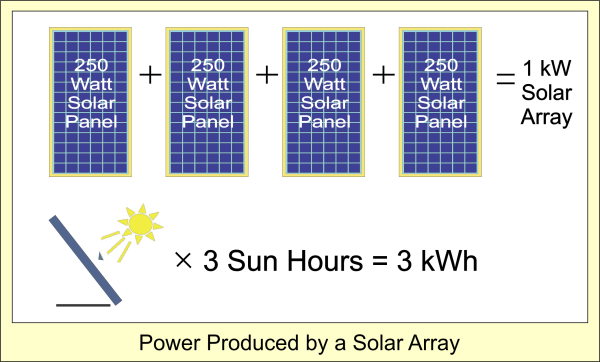
(300 watts / 1000) * 5 hours = 1.5 kWh per day. Congrats! You just did solar math!
That means one 300-watt panel will generate about 1.5 kilowatt-hours of electricity each day. Multiply that by 30 days, and you get around 45 kWh per month. See, not so scary.
The Unpopular Opinion: It's All Just an Estimate!
Here's where things get spicy. Everyone throws around these "perfect" numbers. But real life isn't perfect. And that's my unpopular opinion. No one wants to admit that solar production is a guesstimate at best!
Think about it. Clouds happen. Dust collects. Birds... well, you know. Temperature affects performance. Solar panels, sadly, degrade over time. All these factors mean your actual output will almost certainly be lower than the theoretical maximum.
Don’t get me wrong; solar is great! But let’s be realistic. You will never get the perfect output promised on paper.
Factors Messing with your perfect Solar Day
Let's dive into the gremlins that steal your precious kilowatt-hours. Because knowing your enemy is half the battle, right?

Temperature: Solar panels actually work less efficiently when they get too hot. Counterintuitive, isn't it? They like being Goldilocks-level warm, not desert-oven hot.
Shade: Even a little bit of shade can drastically reduce output. A tree branch, a chimney, even a well-placed flag pole can be your solar panel's nemesis.
Panel Angle and Orientation: Solar panels need to face the sun at the correct angle. In the Northern Hemisphere, this generally means facing south. And the tilt angle should be adjusted based on your latitude.
The Degradation Dilemma
Here's a fun fact: Solar panels slowly lose their ability to produce electricity over time. It's called degradation.
Most manufacturers guarantee that their panels will still produce at least 80% of their original output after 25 years. But that still means you're losing 20% of your power. 20%! That's like willingly throwing money away!
So, keep that in mind when you're calculating your long-term savings. Your panel, over time, just will not give as much as you expect.
So, How Many Panels Do I Need?
Ah, the million-dollar question (or, you know, the few-thousand-dollar question). To figure this out, you need to know your energy consumption.
Look at your electricity bills for the past year. How many kilowatt-hours did you use each month? Add it all up, and divide by 12 to get your average monthly consumption.
Then, factor in all the gremlins we talked about earlier. Add a buffer for realistic expectations. Be pessimistic. Remember, it's all just an estimate!
Example Time (Because Numbers are Fun!)
Let’s say your house uses 1000 kWh per month. And you've calculated that each 300-watt panel will produce about 45 kWh per month in your location (after accounting for all the gremlins). And you want to cover 80% of the consumption.
Then, you need to generate 800 kWh. 800 kWh / 45 kWh per panel = about 18 panels. Simple!
Of course, you'll also need an inverter to convert the DC electricity from the panels to AC electricity that your house can use. And racking to hold the panels. And permits... It's a whole system.

The Takeaway: Manage Your Expectations (and get Multiple Quotes!)
So, how many kilowatt-hours does a solar panel produce? The answer, frustratingly, is "it depends." It depends on panel wattage, location, sunlight, temperature, shade, panel angle, and the age of your panels.
My advice? Don't get caught up in the perfect numbers. Instead, focus on getting a realistic estimate and planning for the worst (sunny side up, of course!).
And, most importantly, get multiple quotes from different solar installers. They should be able to give you a more accurate estimate based on your specific circumstances. Remember to ask about shading, panel degradation, and any other potential issues. Knowledge is power!
Final Thoughts: Solar is Great… but Not Magic
Solar power is a fantastic technology. It's clean, renewable, and can save you money in the long run. The future of solar is bright!
But it's not magic. It's important to go into it with realistic expectations. Don't believe the hype. Do your research. And prepare for a few cloudy days (both literally and figuratively).
Now, go forth and harness the power of the sun! Just remember my unpopular opinion. And always check for bird droppings. It's good for your sanity, and your kilowatt-hours.