
How Many Kilowatt Hours Does A Light Bulb Use
Let's talk about light bulbs, shall we? Those unsung heroes of our homes, silently illuminating our late-night reading sessions, movie nights, and midnight snack raids. But how much are these little beams of brilliance actually costing us? We're diving into the surprisingly fascinating world of kilowatt hours (kWh) and light bulbs.
Understanding the Wattage Game
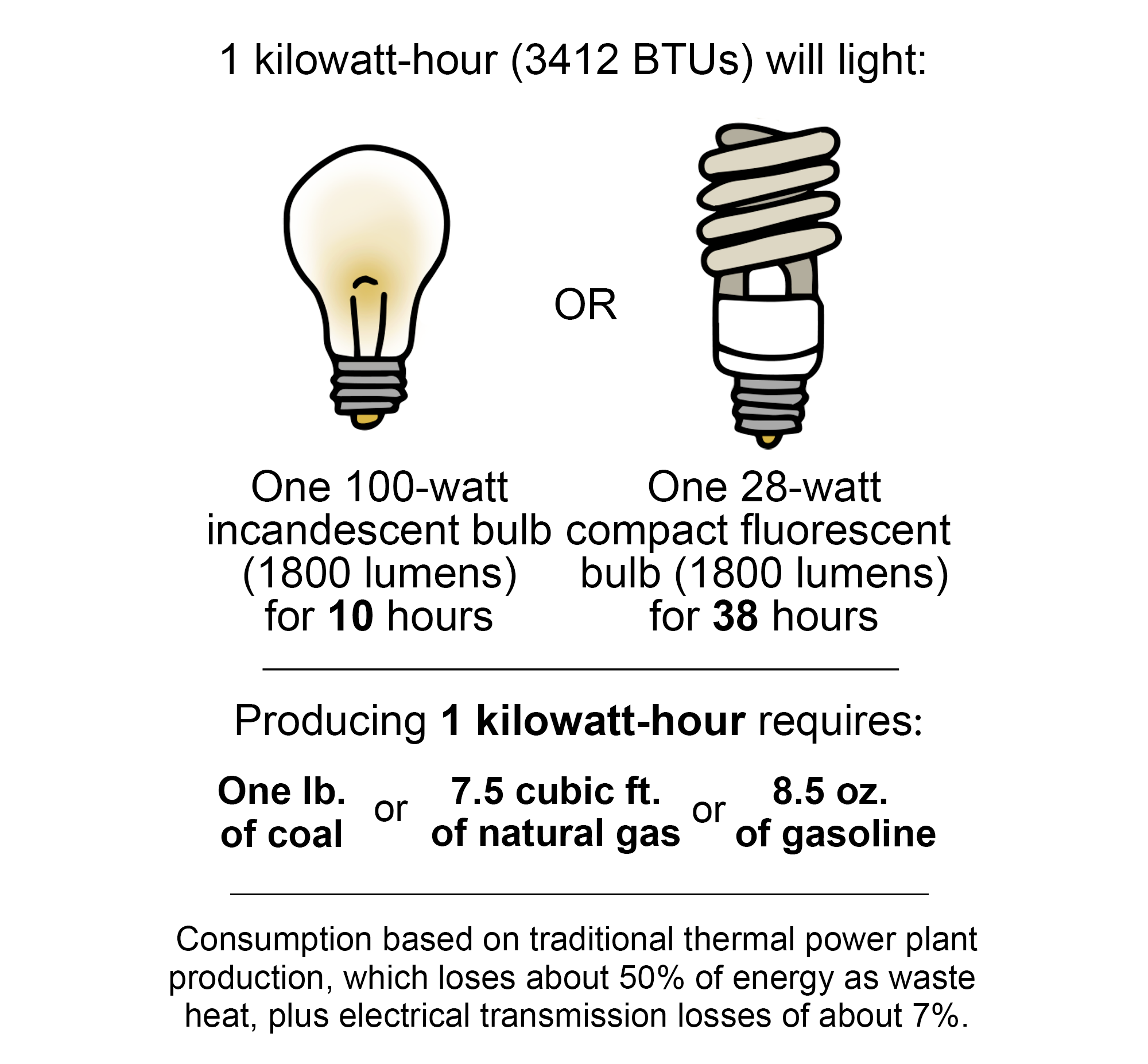
First things first, let's decode wattage. Think of wattage as the light bulb's appetite for electricity. A higher wattage means it's hungrier and will consume more power. You'll usually find the wattage printed right on the bulb itself. Old-school incandescent bulbs were notorious energy guzzlers, often clocking in at 60W or even 100W. Remember those? They were practically miniature space heaters disguised as light sources!
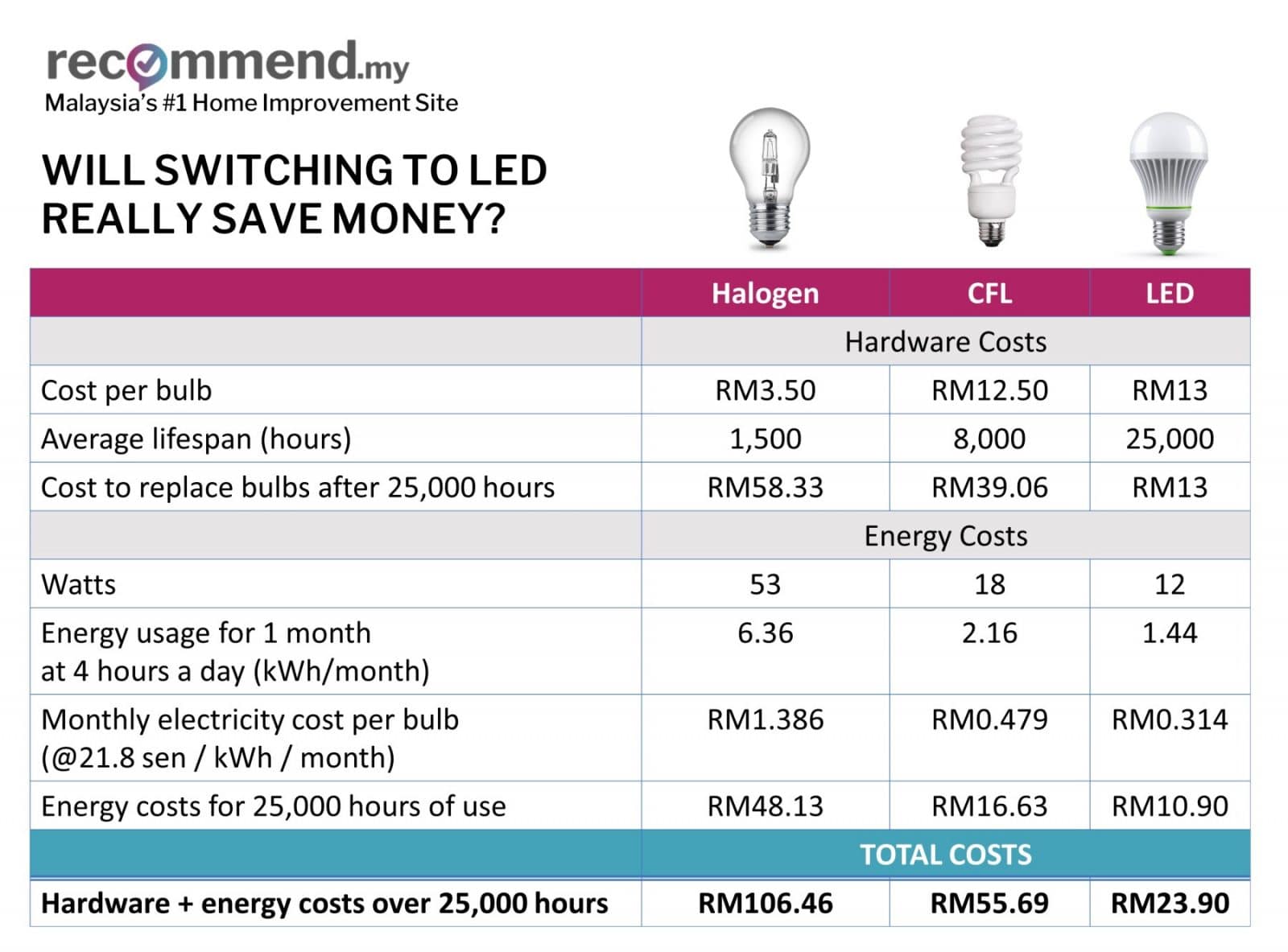
Enter the modern era of LEDs (Light Emitting Diodes). These guys are the energy-efficient MVPs. A comparable LED bulb, producing the same amount of light as a 60W incandescent, might only use 8-12W. That's a significant difference!
Must Read
Calculating the kWh Consumption
Now for the math, but don't worry, it's easier than remembering all the lyrics to your favorite 90s pop song. To calculate the kWh a light bulb uses, we use this formula:
(Wattage / 1000) x Hours of Use = kWh

Let’s say you have an LED bulb rated at 10W and you leave it on for 5 hours a day. The calculation would be:
(10 / 1000) x 5 = 0.05 kWh per day.
To figure out the monthly consumption, multiply that daily number by the number of days in the month. For a 30-day month, it would be: 0.05 kWh/day x 30 days = 1.5 kWh per month.
The Cost Factor
Okay, so you know how many kWh your light bulb is using. But what does that actually mean in terms of your electricity bill? That depends on your electricity rate, which is usually expressed as cents per kWh. You can find this on your electricity bill. Let's say your rate is $0.15 per kWh.

To calculate the monthly cost, multiply your monthly kWh consumption by your electricity rate: 1.5 kWh x $0.15/kWh = $0.225, or about 23 cents per month for that single light bulb. Not bad, right?
But hold on! Multiply that across all the light bulbs in your house, and those pennies start to add up. It's like the "death by a thousand cuts" principle, except with your wallet. Switching to LEDs can dramatically reduce this cumulative cost.

Practical Tips and Tricks
* Embrace the LED Revolution: If you're still clinging to incandescent bulbs, it's time for an upgrade. LEDs use significantly less energy and last much longer, saving you money in the long run. * Use Natural Light: Whenever possible, open your curtains and blinds and let the sunshine in. It's free, it's good for your mood, and it reduces your reliance on artificial lighting. * Smart Lighting: Consider investing in smart bulbs and smart home systems that allow you to control your lighting remotely and schedule them to turn on and off automatically. Think of it as having a personal lighting assistant! * Motion Sensors: Install motion sensor lights in areas like hallways, closets, and garages. This ensures that lights are only on when needed, preventing energy waste. * Unplug: Even when turned off, some older light fixtures may still draw a tiny amount of power (known as "phantom load"). Consider unplugging lamps or using power strips that can be switched off entirely.Cultural Lightbulb Moments
The light bulb has become a powerful symbol in our culture. The image of a light bulb turning on above someone's head represents a sudden burst of inspiration or a clever idea. It's shorthand for "Eureka!" and it's instantly recognizable across cultures.
From Thomas Edison's famous invention to modern smart lighting systems, the light bulb's evolution mirrors our own technological advancements. It's a constant reminder of our ability to innovate and improve.
A Little Reflection
Understanding how much energy our light bulbs consume is a small but significant step towards a more sustainable lifestyle. It's not just about saving money (although that's a nice perk!). It's about being mindful of our energy consumption and making conscious choices that benefit both our wallets and the planet. Every little bit counts, from switching to LEDs to simply remembering to turn off the lights when we leave a room. Small changes, big impact – that's the name of the game. So go forth, illuminate your world responsibly, and bask in the glow of a brighter, more energy-efficient future!