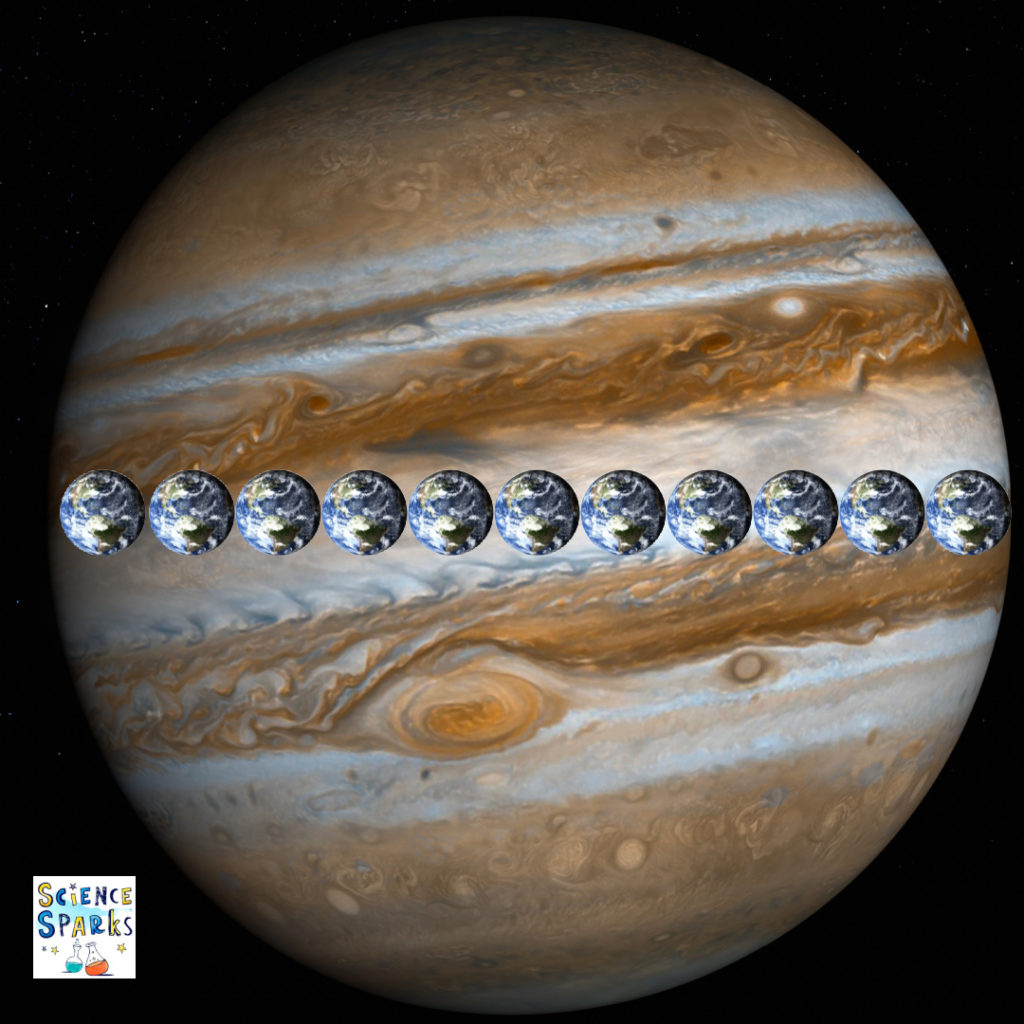
How Many Earths Can Fit In Jupiter
Humans have always been captivated by size and scale. We love to compare things, to understand the relative magnitude of the universe around us. Whether it's visualizing how many Empire State Buildings it would take to reach the moon or contemplating the number of grains of sand on all the Earth's beaches, these thought experiments ignite our curiosity and help us grasp the vastness of reality. One particularly popular and mind-boggling comparison? Figuring out how many Earths could fit inside Jupiter!
Why does this kind of cosmic comparison matter? Well, for starters, it's fun! But beyond simple entertainment, it helps us develop a better intuitive understanding of astronomy and the sheer scale of our solar system. We often read about planets and stars, but the numbers can be abstract and hard to truly appreciate. Visualizing these relationships, like Earth-to-Jupiter ratios, makes the information more tangible and memorable. It allows us to appreciate the relative insignificance of our own planet in the grand cosmic scheme, fostering a sense of wonder and perhaps even humility. Understanding these size differences is also crucial for scientists when studying planetary formation, gravitational forces, and even the potential for life beyond Earth. They need accurate models and a firm grasp on the dimensions involved.
You might see this comparison applied in various educational settings, from elementary school science classes to planetarium shows. It's a fantastic way to introduce kids to the concept of planetary science and get them excited about learning. You'll also encounter it in popular science articles, documentaries about space exploration, and even in casual online discussions. For example, when talking about the search for habitable exoplanets, the size of the planet relative to its star is a critical factor. Understanding the relative size of Earth and Jupiter provides a valuable frame of reference.
Must Read
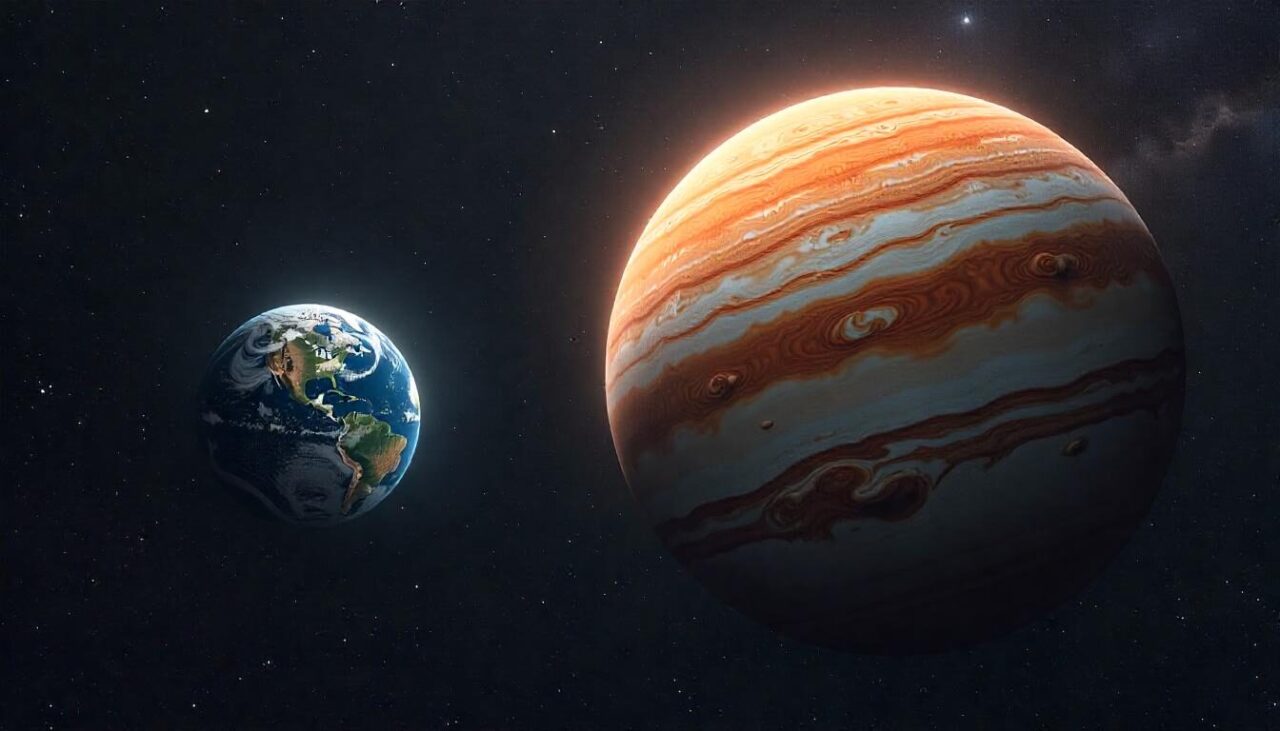
So, how many Earths can actually fit inside Jupiter? Brace yourself: the answer is roughly 1,300! Yes, you read that right. Jupiter, the king of our solar system, is so massive that it could swallow over a thousand Earths whole. That's based on volume, of course. If you were trying to squish them in like packing peanuts, you might get a different (and messier) result.
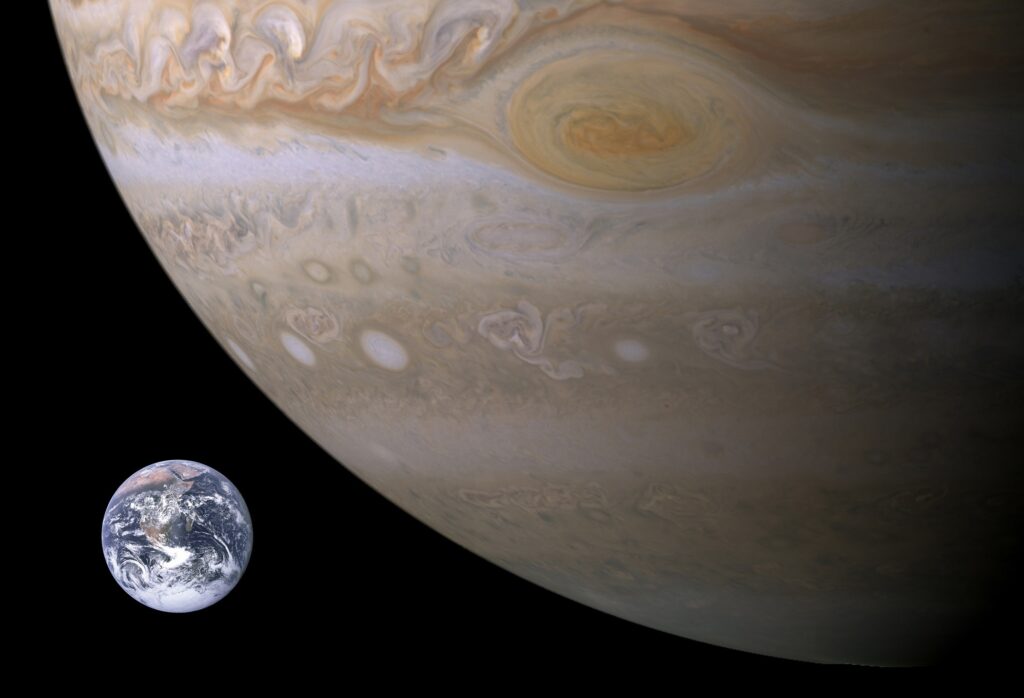
How can you further enjoy and better understand this comparison? Here are a few practical tips:
- Use Visual Aids: Don't just read about it; look at images or videos that visually represent the difference in size between Earth and Jupiter. Many online resources offer excellent comparisons.
- Consider Mass: While Jupiter can fit 1,300 Earths by volume, its mass is only about 318 times that of Earth. This is because Jupiter is a gas giant and much less dense than our rocky planet. Thinking about both volume and mass gives you a more complete picture.
- Explore Interactive Tools: Several websites and apps allow you to play around with planetary sizes and distances, offering a more engaging learning experience.
- Apply the Concept: Think about other celestial bodies. How many Jupiters could fit inside the Sun? How many Suns could fit inside a supergiant star? Applying the same comparative thinking to other astronomical objects will deepen your understanding and appreciation of the universe.
Ultimately, comparing the sizes of celestial objects is a fantastic way to explore the universe from the comfort of your own home. It's a simple yet powerful way to engage with science, foster curiosity, and appreciate the incredible scale of the cosmos around us. So, next time you look up at the night sky, remember that image of 1,300 Earths nestled inside Jupiter, and let your imagination soar!