
How Many Calories Are In A Joule
Okay, so picture this: I'm in the kitchen, staring intensely at a single peanut. I'm trying to figure out exactly how much energy is packed into that tiny little thing. I even tried setting it on fire once (don't tell my landlord!). It was... less scientific and more "almost set the smoke alarm off" than I'd hoped. But it got me thinking. We talk about calories all the time, especially when we're trying to justify that extra slice of pizza (guilty!). But what about Joules? They seem way more... official. Like something a scientist would use.
So, naturally, I dove down a rabbit hole. And that rabbit hole led me to the burning question: How many calories are in a Joule? Because honestly, knowing that could totally change the way I think about energy, right?
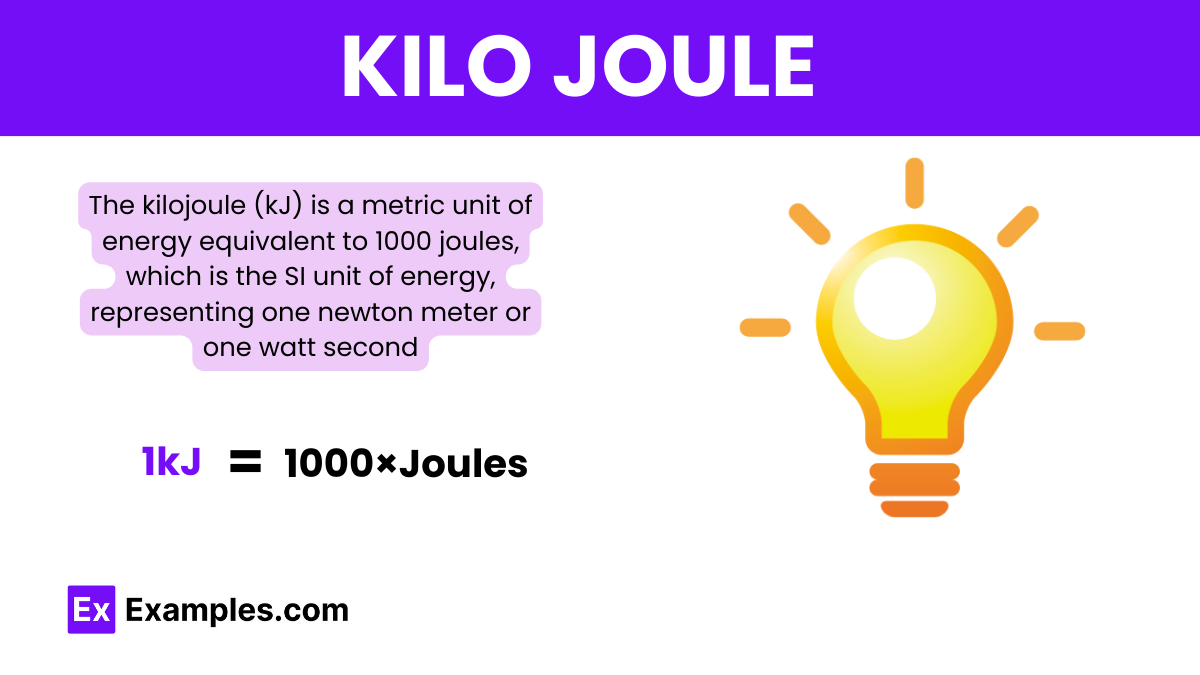
The short answer? It's not a super neat and tidy number, but stick with me. You see, we're talking about converting between two different units of energy measurement. Think of it like converting inches to centimeters. You need a conversion factor. In this case, the magic number is approximately:
Must Read
1 Joule = 0.000239 Calories (small 'c' calories)
Or, and this is where it gets slightly confusing, because science loves to make things complicated:
1 Joule = 0.000000239 Kilocalories (big 'C' Calories)

Yeah, those are a lot of zeros. Stick with me!
But Wait, There's More! (Of Course There Is)
Now, you might be saying, "Whoa, hold on. What's the difference between the small 'c' calorie and the big 'C' Calorie?" Good question! That's the kind of inquisitive mind I like! See, the small 'c' calorie is the amount of energy required to raise the temperature of 1 gram of water by 1 degree Celsius. The big 'C' Calorie (usually what we see on food labels) is actually a kilocalorie – 1000 small 'c' calories. It's a bit of a misnomer, but hey, that's just how it is. Basically, think of the big 'C' Calorie as the "food calorie."
So, when you're looking at the nutrition label on that bag of chips, and it says "150 Calories per serving," they're using big 'C' Calories, which are actually kilocalories. Got it? Good!

Key Takeaway: Don't get tripped up by the capitalization!
Why Even Bother Converting?
Okay, so maybe you're thinking, "This is interesting and all, but why do I even need to know this?" Well, it's all about understanding energy in different contexts. Joules are used extensively in physics, engineering, and other scientific fields. Calories (or kilocalories) are primarily used in nutrition and dietetics.
Imagine you're trying to calculate how much electrical energy it takes to heat up a cup of tea. You'd likely be working with Joules. But then, you might want to know how many "food Calories" that corresponds to so you can compare it to, say, the energy you burn during a workout. That's where the conversion comes in handy!

It’s like being bilingual, but for energy! You can translate between the languages of science and the languages of nutrition.
Think of it as unlocking a secret code! You're now fluent in both Joule-speak and Calorie-speak!
Practical Examples (Because Theory is Boring)
Let's put this into perspective. Let's say you burn 1000 Joules of energy during a particularly vigorous arm-waving session (don't judge). That's roughly equivalent to 0.239 Calories (big 'C' Calories). Not a whole lot, right? You'd need to wave those arms a lot longer to burn off that slice of pizza!
Or, on the flip side, a single peanut (remember my experiment?) might contain around 30,000 Joules of energy. That's about 7 Calories. See, everything's connected! (And now you know why peanuts are so calorie-dense!)
The takeaway? Energy is everywhere, and it's measured in different ways!
So, next time you're contemplating the energy content of your food, or marveling at the power of electricity, remember the humble Joule. It's a fundamental unit of energy that connects the seemingly disparate worlds of physics, engineering, and, yes, even that bag of chips you're trying not to eat (but probably will anyway!).