
How Many Btus Per Square Foot

Hey there, comfort connoisseur! Ever stood in a room that's either sweating like a sauna or shivering like a polar bear, and thought, "There has to be a better way?!" Well, my friend, you're not alone. Welcome to the wonderful world of BTU, where we figure out how to make your living space feel just right, without turning your energy bill into a supervillain!
Today, we're unraveling the mystery behind "How many BTUs per square foot?" It sounds super technical, like something only a wizard in a lab coat would understand, but I promise, it's actually pretty straightforward and super important for keeping your pad comfy and your wallet happy. Think of it as the secret sauce to perfect climate control!
What in the BTU is a BTU, Anyway?
First things first: what's a BTU? No, it's not a new acronym for "Binge-Watching TV Uninterrupted" (though that's a worthy goal!). BTU stands for British Thermal Unit. In layman's terms, it's simply a unit of heat energy. One BTU is the amount of energy it takes to raise the temperature of one pound of water by one degree Fahrenheit. See? Not so scary! It's basically how we measure how much oomph a heating or cooling system needs.
Must Read
So, when you see an air conditioner or a furnace rated in BTUs, it's telling you its superpower level – how much heat it can move around in an hour. More BTUs mean more heating or cooling power. Simple!
Why Does "Per Square Foot" Even Matter?
Ah, now we're getting to the crux of it! You wouldn't buy a tiny toy car to transport a whole family, right? And you wouldn't get a huge, gas-guzzling truck just to pick up a single coffee. The same logic applies to heating and cooling your home. Your system needs to be the right size for your space. Too small, and it'll run constantly, never quite getting comfortable. Too big, and it'll short-cycle (turn on and off too frequently), waste energy, and still leave you feeling clammy.
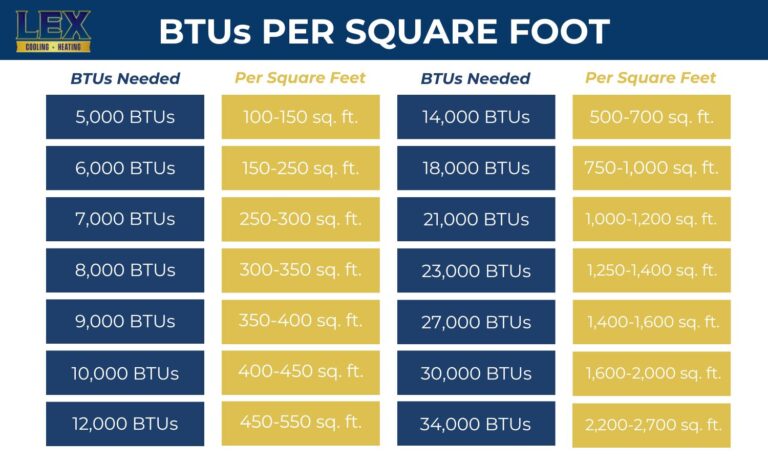
That's where the "per square foot" part comes in. It helps us match the system's power to the size of your space. It's like finding the perfect pair of shoes – just right, not too loose, not too tight!
The Magic Number (Spoiler Alert: There Isn't Just One!)
Okay, so you're probably itching for that golden number, right? The universal "X BTUs per square foot" that solves all your problems. Well, here's the kicker: there isn't one single, magic number that fits every situation. (I know, I know, I hyped it up, but trust me, this is for your own good!)

However, we can give you a super handy starting point! For many average homes, a good rule of thumb for heating or cooling is roughly 20-30 BTUs per square foot. So, if you have a 100-square-foot room, you might be looking at needing 2,000 to 3,000 BTUs.
But hold your horses! This is just a base. We need to account for all the quirky, wonderful things that make your home uniquely yours. Think of it like a recipe – the base ingredients are there, but you might add a pinch of this or a dash of that depending on your taste!

Factors That Mess With Our "Magic" Number (The Fun Part!)
This is where it gets interesting, because your home isn't a sterile lab. It's full of personality! Here are some key factors that totally change the BTU game:
- Your Climate: Are you chilling in sunny Florida or bundling up in snowy Minnesota? A house in a hot climate will need more cooling BTUs, while a cold climate home will demand more heating BTUs. Duh!
- Insulation Superpowers: Is your home insulated like a cozy thermos or leaky like a colander? Good insulation means fewer BTUs escape, saving you energy and money. Poor insulation means your system has to work overtime, like trying to cool a swimming pool with a hand fan.
- Window Woes: Those beautiful windows can be energy villains! Single-pane windows are notorious for letting heat in (summer) and out (winter). Double or triple-pane, energy-efficient windows are like superheroes, keeping those BTUs where they belong.
- Ceiling Height: High ceilings look grand, but they also mean more air volume to heat or cool. Think of it like filling a really tall glass of water – it takes more water than a short one!
- Sunlight Exposure: South-facing windows can bake your rooms in summer but offer free warmth in winter. West-facing windows can get a real afternoon sun blast. Consider the sun's journey through your home.
- Occupancy & Appliances: More people mean more body heat (and more BTUs needed to cool!). Same goes for heat-generating appliances like ovens, computers, and even that giant TV for your epic movie nights. Your house party isn't just fun, it's also a mini-heater!
So, How Do I Actually Figure It Out?
Great question! Here's the simplified rundown:

- Measure Your Space: Get the square footage of the room or area you're trying to heat/cool. Length x Width = Square Footage. Easy peasy!
- Start with the Base: Multiply your square footage by that 20-30 BTU/sq ft range.
- Adjust, Adjust, Adjust! This is where you factor in all those fun variables above. If you have poor insulation, lots of windows, or live in a very hot/cold climate, you'll need to nudge that number up. If you're super insulated, have great windows, and live in a mild climate, you might be able to go a little lower.
A pro tip: When in doubt, it's always best to consult with an HVAC professional. They have fancy tools and years of experience to do a precise "load calculation" for your specific home. They'll ensure you get a system that's just right, like a custom-tailored suit for your house!
The Uplifting Conclusion!
Understanding BTUs per square foot might seem like a small detail, but it's a huge step towards making your home the most comfortable, energy-efficient, and budget-friendly sanctuary it can be. No more sweating through summer nights or shivering through winter mornings! By getting your heating and cooling just right, you're not just saving energy; you're creating a little slice of heaven where you can truly relax, unwind, and enjoy every single moment.
So go forth, armed with your new BTU knowledge, and embrace the joy of perfect indoor comfort. Your cozy toes and happy wallet will thank you!