
How Many Btu To Cool 200 Sq Ft

Ever walked into a room in your house and immediately felt like you’d stumbled into a forgotten corner of the Sahara Desert? You know the one. Maybe it’s your cozy home office that turns into a personal sauna by noon, or that guest bedroom that guests politely describe as "warm" but secretly mean "the gates of Hades." You crank the AC, it groans, and you’re left wondering, "Is this thing even trying?"
If this sounds familiar, you've probably, at some point, Googled something like "AC not cooling" or "why is my room a broiler?" And somewhere in that rabbit hole, you likely encountered a mysterious term: BTU. Sounds intimidating, right? Like something a mad scientist yells when their experiment goes wrong. But fear not, my warm-blooded friend, because we’re about to demystify it.
What in the World is a BTU, Anyway?
Think of a BTU, or British Thermal Unit, as the AC world's way of measuring coolness muscle. It’s essentially how much heat an air conditioner can remove from a space in one hour. If heat were a tiny, annoying fire, a BTU is how many tiny fire extinguishers your AC can deploy per hour. More BTUs? More fire extinguishers. Simple as that.
Must Read
Imagine you have a hot cup of coffee. A BTU is like the amount of cooling power needed to drop its temperature by a single degree. Now scale that up to your entire room! It’s less about being British and more about being brilliantly efficient.
So, How Many BTUs to Cool My 200 Sq Ft Oasis (or Oven)?
Alright, let’s get down to brass tacks for your 200 square foot space. This is a common room size – maybe a bedroom, a small living room, a generous home office. The general rule of thumb, the kind that HVAC pros whisper to each other over lukewarm coffee, is that you need about 20 BTUs per square foot.

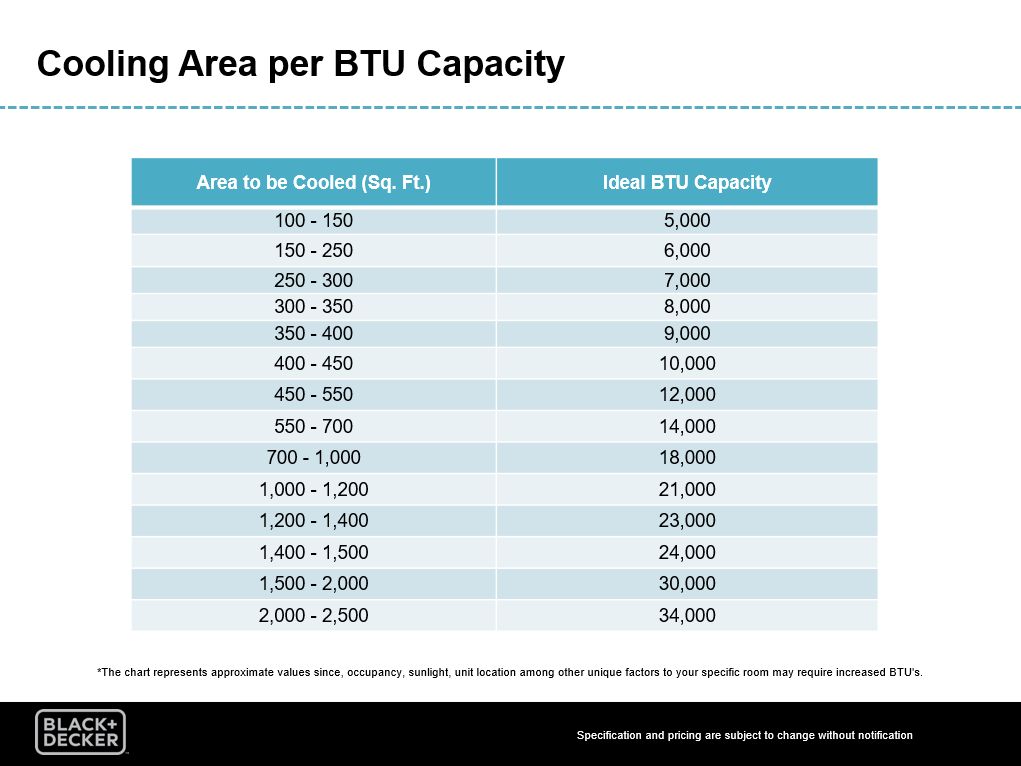
Do the math with me: 200 sq ft x 20 BTUs/sq ft = 4,000 BTUs. Nope, wait! That's a common simplification that often leaves people a bit chilly, or worse, still sweating. The more commonly accepted and slightly safer bet, especially for those warmer climates or sun-drenched rooms, often starts around 5,000 BTUs for 150-250 sq ft. Some recommendations even push it to 6,000 BTUs for 200-250 sq ft if you want to be truly comfortable.
So, for 200 sq ft, we’re typically looking at a unit in the 5,000 to 6,000 BTU range. This is your sweet spot, your Goldilocks zone – not too little, not too much.

But Wait, There's Always a "But," Right?
Of course, nothing in life (especially climate control) is ever just a number. That 5,000-6,000 BTU recommendation is a great starting point, but your room is unique, like a snowflake... a really hot snowflake. Several factors can crank up the "heat dragon" in your room, meaning you might need to nudge that BTU number up a notch or two:
- The Sun’s Stare: Does your 200 sq ft room have a big, beautiful window that faces west? Ah, yes, the dreaded afternoon sun. It turns your room into a passive solar oven. For every sun-drenched window, you might want to add 10% more BTU power.
- Human Hot Spots: Are there more than two people regularly occupying this space? Humans are basically walking, talking mini-furnaces. Each extra person beyond two adds about 600 BTUs to your cooling needs. Hosting a poker night in your 200 sq ft den? Plan accordingly!
- Gadget Galaxy: Laptops, gaming consoles, TVs – they all generate heat. It’s not much, but if your 200 sq ft is also your tech hub, those glowing boxes are secretly conspiring to make you sweat.
- The Ceiling Shuffle: Is your ceiling unusually high? More air to cool means more work for your AC. A cathedral ceiling isn’t just dramatic; it’s a BTU hungry beast.
- Insulation Blues: Old houses, drafty windows, poor insulation – these are like trying to cool a sieve. The cold air just waltzes right out, and the hot air waltzes right in.
The Goldilocks Dilemma: Too Little vs. Too Much
You might be thinking, "Well, if in doubt, just go for the biggest BTU number, right? More power!" Wrong! It’s a common misconception that more is always better. Let’s explore why:
Too Few BTUs: The "Struggling Hamster" AC

If your AC doesn't have enough cooling power for your 200 sq ft space, it will run constantly. Like a tiny hamster on a giant wheel, it’s working its little heart out but getting nowhere fast. You'll still be warm, your energy bill will skyrocket because it never cycles off, and the unit will wear out faster. It’s a lose-lose-lose situation.
Too Many BTUs: The "Ice Palace & Damp Dungeon" Paradox
This is where it gets tricky. An AC unit that’s too powerful for your 200 sq ft will cool the room down too quickly. It will reach the thermostat setting and shut off before it has a chance to properly remove humidity from the air. The result? A room that feels cold and clammy, possibly even damp. Cold and sticky isn't exactly comfortable, is it? Plus, you’re spending more on an oversized unit and likely still paying more on your energy bill due to inefficient short-cycling.
Finding Your Cool Comfort Zone
So, for your 200 sq ft room, aim for that 5,000-6,000 BTU sweet spot. Then, consider those mitigating factors. If your room is bathed in sun, has a high ceiling, and is a popular hangout for multiple people and gadgets, lean towards the 6,000 BTU end (or even slightly higher, perhaps 7,000 BTU, if it's truly a heat magnet).
Remember, the goal isn't just to make the room cold; it's to make it comfortably cool and dry. Getting the BTU sizing right means your AC runs efficiently, keeps you comfortable, and doesn't make your wallet cry. Happy cooling!